Spain’s top environmental prosecutor says wildfire sentences can exceed those for homicide. As 200,000 hectares burn in 2026—the third worst year in a decade—Javier Rufino warns society must learn to “live with fire,” criticizes climate change deniers, and notes that private owners hold 72% of Spain’s forest land. He also explains that proving arson is difficult, with over 40% of cases ending in acquittal.
---
**Wildfire crimes can carry longer sentences than homicide, says Spain’s top environmental prosecutor**
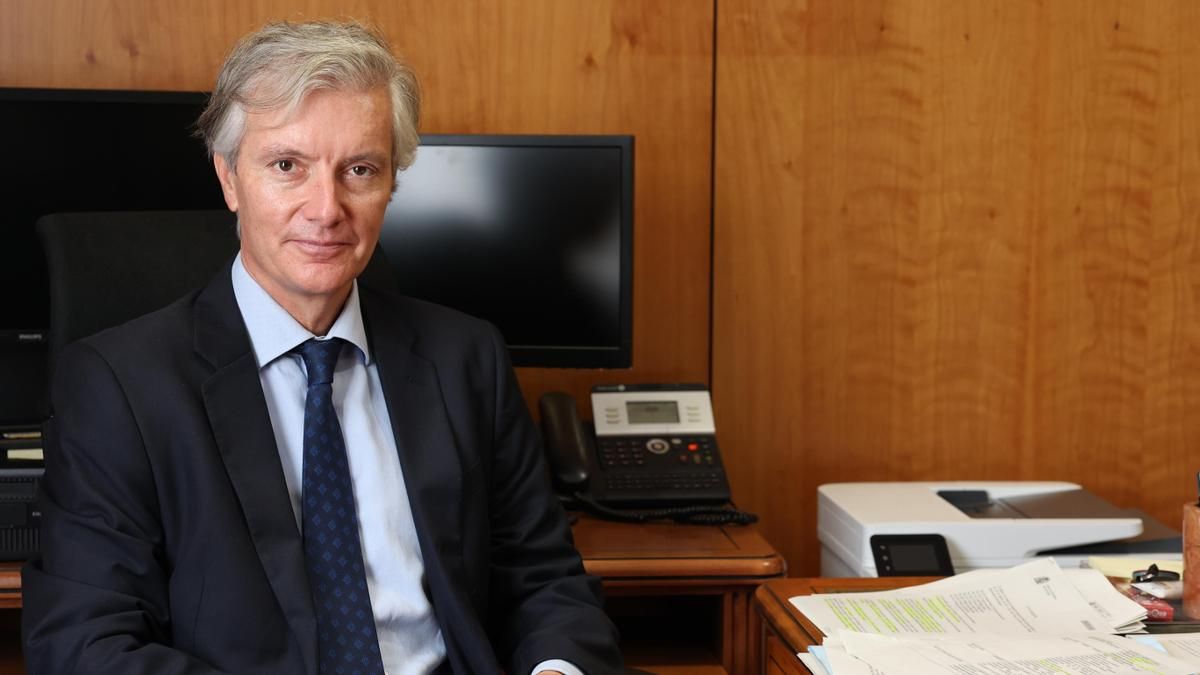
Spain has already seen 200,000 hectares burn in 2026, making it the third worst year in a decade. The fire in Burgohondo, Ávila, which destroyed 45,000 hectares, is now the largest in the country’s recorded history. As firefighters and residents battle the flames, Javier Rufino, Chief Prosecutor of the Environmental Unit, is fighting a different battle: holding those responsible to account.
Rufino says most current investigations are police-led, not judicial. He explains that prosecutors usually act after a complaint, but can open cases on their own initiative in exceptional cases. However, he says it makes little sense to do so before police finish their inquiries.
“We investigate only when there is a sign of human involvement—intentional or seriously negligent,” Rufino says. If negligence is minor, it is not a crime, but the culprit must still repair the damage to people, property, wildlife, or forests.
Rufino also addressed a complaint from HazteOir, which accuses the government of delaying firefighting resources. He said he had not yet reviewed it, but noted that “it is not easy to build a wildfire crime case based on a mere omission.”
He did confirm that prosecutors have received complaints about missing fire prevention plans. Under the 2003 Forestry Law, local councils and even private landowners must have such plans. “The 72% of Spain’s forest area is in private hands,” Rufino stressed. “They are also obliged to maintain it.”
If someone ignores a prosecutor’s request to clean high-risk areas and a fire breaks out, they can face investigation. Penalties vary, but Rufino warned: “If there is a risk to people, prison terms can range from 10 to 15 years. In some cases, sentences exceed those for homicide.”
Still, he said a missing prevention plan alone is not a crime. “Criminal law is an exceptional resource. The response to mere omission, without a fire, must be administrative.”
Rufino criticized outdated approaches to fire management. “We have to live with fire,” he said. “Forests are no longer in the climate that saw them born.” He noted that Spain’s forest area has grown 12% in 20 years, while Europe’s grew just 1%.
He also lamented that some politicians still deny climate change. “Questioning it today makes no sense. 97% of authorized scientific publications confirm it exists.”
Proving wildfire crimes is difficult, Rufino admitted. “It is the hardest crime to prove.” In 2025, there were 86 convictions and 39 acquittals for wildfire crimes—over 40% acquittals. He added that false expert reports generated by artificial intelligence are making things worse, as they mimic real science but spread misinformation.