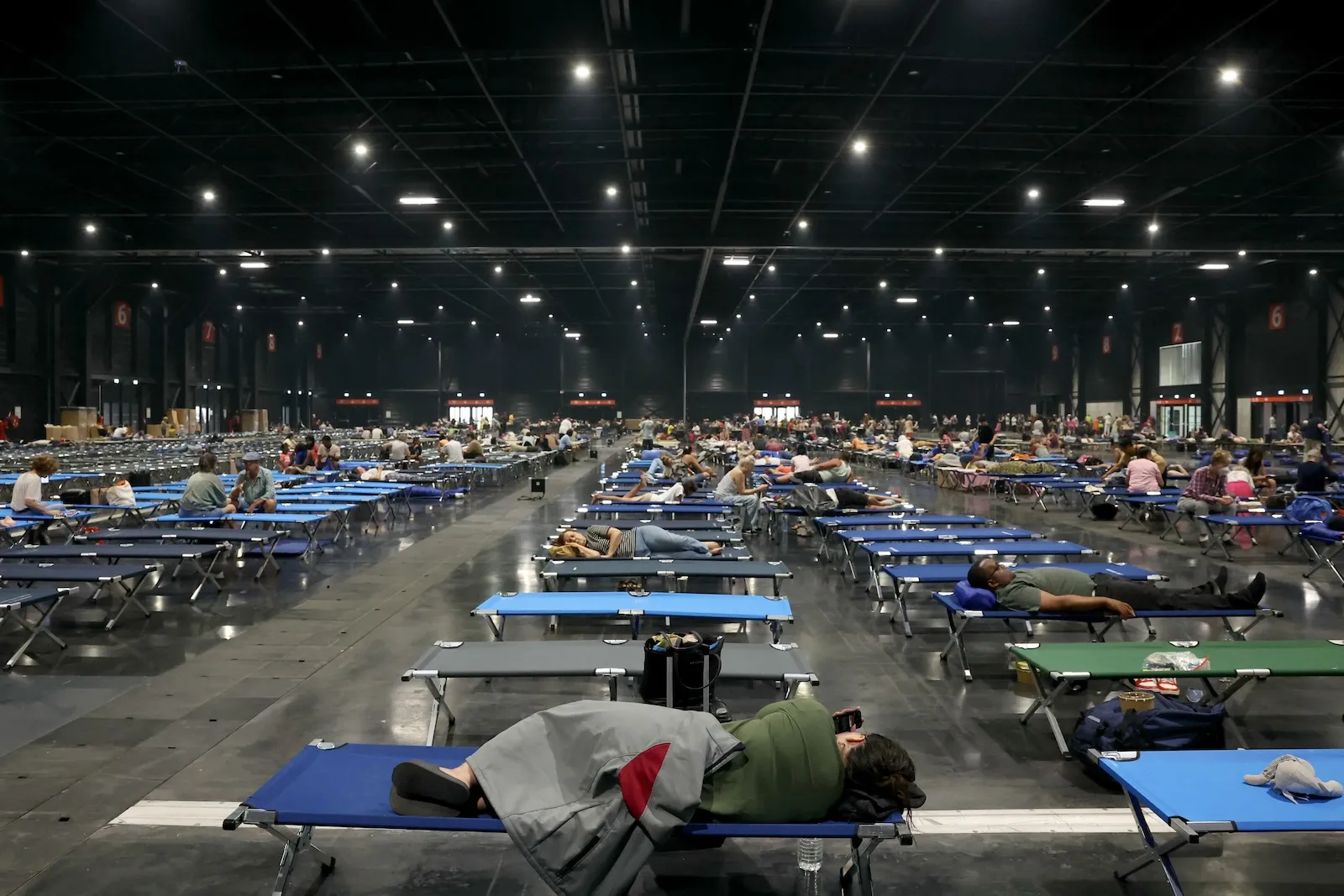
Europe’s wildfires are getting worse. This year is on pace to break last year’s record—the most destructive fire season on the continent ever recorded. The main culprit? A combination of extreme heat, prolonged drought, and strong winds. These conditions, scientists say, are being amplified by climate change, turning normal summer fires into megafires that are harder to contain and faster to spread. In Spain and France, the blazes have already forced mass evacuations and destroyed thousands of hectares of land. The message from experts is clear: what once was a seasonal threat is now a year-round danger.
Human emissions made France and Spain wildfires twice as likely, study finds
Europe’s fire season is breaking records, with blazes in France and Spain forcing mass evacuations and burning hundreds of thousands of acres—and scientists say climate change is making it far worse.
Wildfires are raging across Europe at record levels, with France and Spain hit hardest as extreme heat, drought, and strong winds turn forests into fuel. In France, flames have consumed more land this year than in all of 2025, including an area larger than Paris near Bordeaux in under four days [205090]. Spain’s Madrid region is battling its worst fires on record, with over 170,000 hectares burned—compared to 29,000 last year [205482]. More than 100,000 people have fled their homes in Spain, while in France’s Gironde region alone, 220,000 have been evacuated [205482].
The blazes have grown so intense that they are creating their own thunderstorms—a phenomenon known as pyrocumulonimbus, which whips up unpredictable winds and makes containment even harder [205482][206445]. A new heatwave is expected to push temperatures in France to 95 degrees Fahrenheit, stretching firefighting resources to their limits [205616][205387].
A rapid analysis finds that human greenhouse gas emissions made the fire-prone weather at least twice as likely in France and 20 times more likely in Spain [208797]. “What we are seeing in France and Spain is not just bad luck. It is a clear sign of the escalating effects of human-caused warming,” said researcher Clair Barnes [208797].
France has officially requested international assistance, and Spain has declared a state of emergency [204142]. Firefighters from multiple European countries are struggling to contain the flames as the crisis deepens [205246]. Experts warn that without rapid cuts to emissions, such conditions will only become more common [208797].