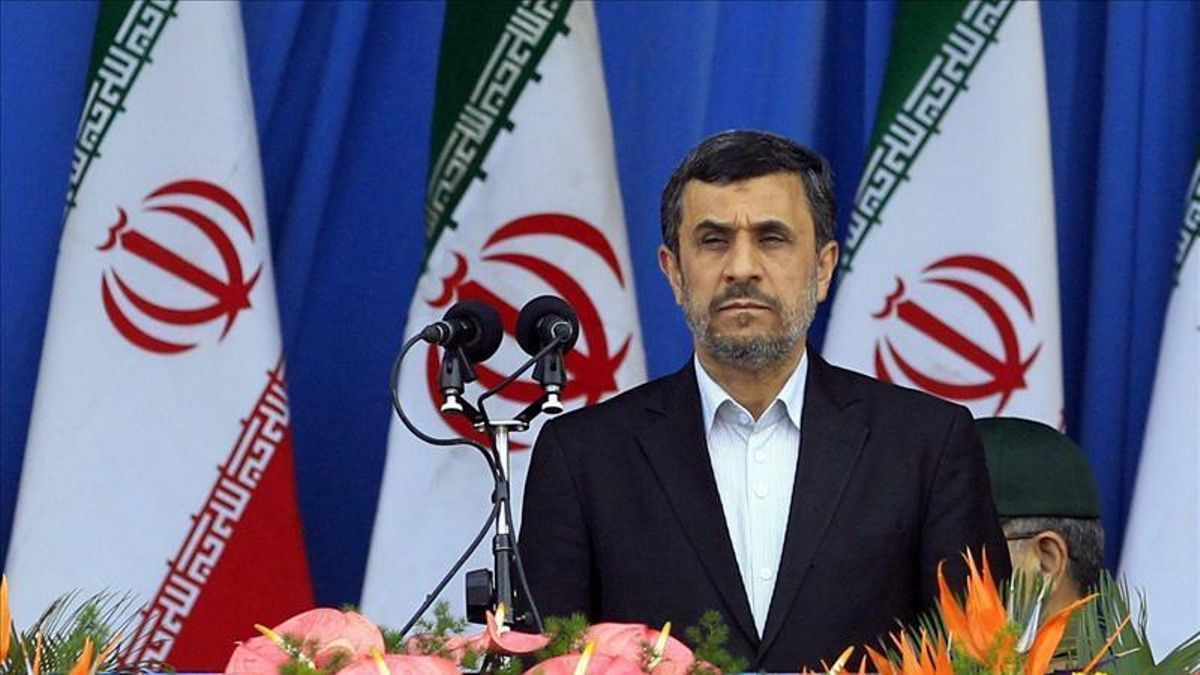
Mossad plotted to make Ahmadinejad Iran's leader, reports say
Israel’s intelligence agency, the Mossad, tried to recruit former Iranian President Mahmoud Ahmadinejad—a well-known anti-Israel figure—to lead a new government after the Islamic regime, according to reports from The New York Times and Israeli newspaper Haaretz.
The plan began in 2022, years after Ahmadinejad had distanced himself from Iran’s Supreme Leader, Ali Khamenei. The former president had started to soften his hardline views, improve his English, and change his appearance, including trimming his beard and getting Botox.
In 2025, the Mossad’s then-director, David Barnea, traveled to Budapest, Hungary, to meet Ahmadinejad. The meeting was so important that Barnea reportedly skipped a security meeting with Prime Minister Benjamin Netanyahu about the war in Gaza.
After the meeting, the Mossad told the CIA about its contact with Ahmadinejad. Israeli officials allegedly paid for his travel and hotel costs, and Mossad agents met him several times in Hungary, a country led by Prime Minister Viktor Orbán, a close ally of Israel and Donald Trump.
The plan, called “Operation Puss in Boots” by Israel, faced internal opposition. National security adviser Tzachi Hanegbi called it “wild fantasies,” and the Israeli military chief of staff, Eyal Zamir, ordered it stopped three days before it was set to begin. Netanyahu overruled them.
The effort gained momentum after the U.S. and Israel launched military strikes against Iran on February 28, killing several top Iranian figures, including Khamenei. Ahmadinejad appeared at Khamenei’s funeral, his first public appearance in months.
According to the NYT, four Mossad agents then rescued Ahmadinejad from his home and kept him in a safe house in Tehran. But the former president became angry at the “frantic” rescue mission and lost faith in the plan. He left the safe house under “mysterious circumstances” and is now believed to be in the custody of Iran’s Islamic Revolutionary Guard Corps (IRGC) intelligence unit.
Ahmadinejad’s shift began after he concluded that Iran could not survive international sanctions over its nuclear program, which he saw as a burden, Haaretz reported. He also started criticizing the regime’s crackdown on protests, despite having overseen the brutal suppression of the “Green Movement” after his disputed 2009 election victory.
Iranian authorities had grown suspicious of Ahmadinejad after he twice escaped his security escort during a trip to Budapest in 2025, shortly before the 12-day war last summer.
Alex Vatanka, director of the Iran program at the Washington Institute for Near East Policy, said Ahmadinejad’s estrangement from the regime was well known. But he questioned the timing of the reports. “Why did the Mossad let Ahmadinejad leave after rescuing him?” he asked. “Would you, if you had invested so much? Maybe it’s just an attempt to create tension within the regime.”