US Signs Two Conflicting Middle East Deals, Risking Collapse
Part of composite article US Signs Two Conflicting Middle East Deals, Risking Collapse View full article →
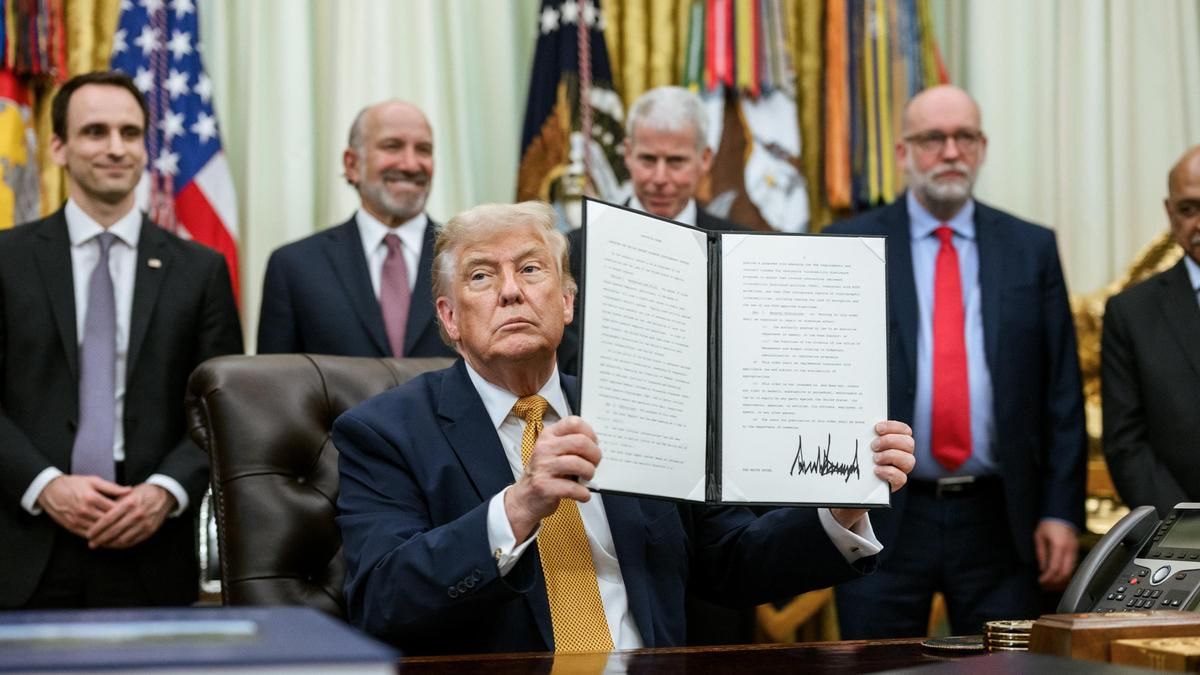
The United States has signed two agreements to calm the Middle East that directly contradict each other. One deal may even block the success of the other. Experts say both are difficult to enforce and unlikely to lead to lasting peace.
In June 2025, the Trump administration signed a memorandum of understanding with Iran. It promises an "immediate and permanent end to military operations on all fronts, including Lebanon." It also guarantees Lebanon's territorial integrity.
Just ten days later, the US helped broker a separate agreement between Israel and Lebanon. That deal allows Israel to keep troops in southern Lebanon. It does not set a timeline for withdrawal. Israel can also attack Lebanon if it says security conditions are not met.
The two texts are "widely incompatible and contradict each other," says Daniel Levy, a former Israeli negotiator and president of the US/Middle East Project. He says the Lebanon deal is a direct path to collapse the US-Iran agreement.
According to the Soufan Center, a New York-based think tank, the Trump administration was in a hurry to finalize the Iran deal to end the blockade of the Strait of Hormuz. That is why the US agreed to Iran's demand to include Lebanon in the deal. US officials insist the two agreements are consistent.
But Levy sees it differently. He says the contradictions come from deep divisions inside the Trump administration. "The contradictions between the two agreements should be understood as the continuity of US policy: the continuity of inconsistency and incoherence," he says.
Levy believes Israel will try to make the Lebanon deal override the US-Iran deal. Israel wants to keep military freedom in Lebanon. It sees Hezbollah as an arm of Iran. "Israel sees in Lebanon a way to weaken and ultimately nullify the memorandum of understanding between the United States and Iran," he says.
For Iran, the situation creates a dilemma. Tehran pushed hard to include Lebanon in its deal with the US. Now, the Lebanon-Israel agreement weakens that achievement. Analyst Hamidreza Azizi says Iran's position is eroding. "The ability of Iran to invoke Israeli operations in Lebanon as a violation of the general ceasefire is crumbling," he writes.
The US and Iran are still negotiating the details of their deal. They met in Qatar this week but made no major progress. Talks will continue after the funeral of Iran's Supreme Leader, who was killed in US and Israeli bombings earlier this year.
Levy warns that Israel wants the Iran deal to fail. "Israel wants a situation where it has justification and legitimacy to maintain its military presence" in Lebanon, he says. This could lead to more war, not peace.