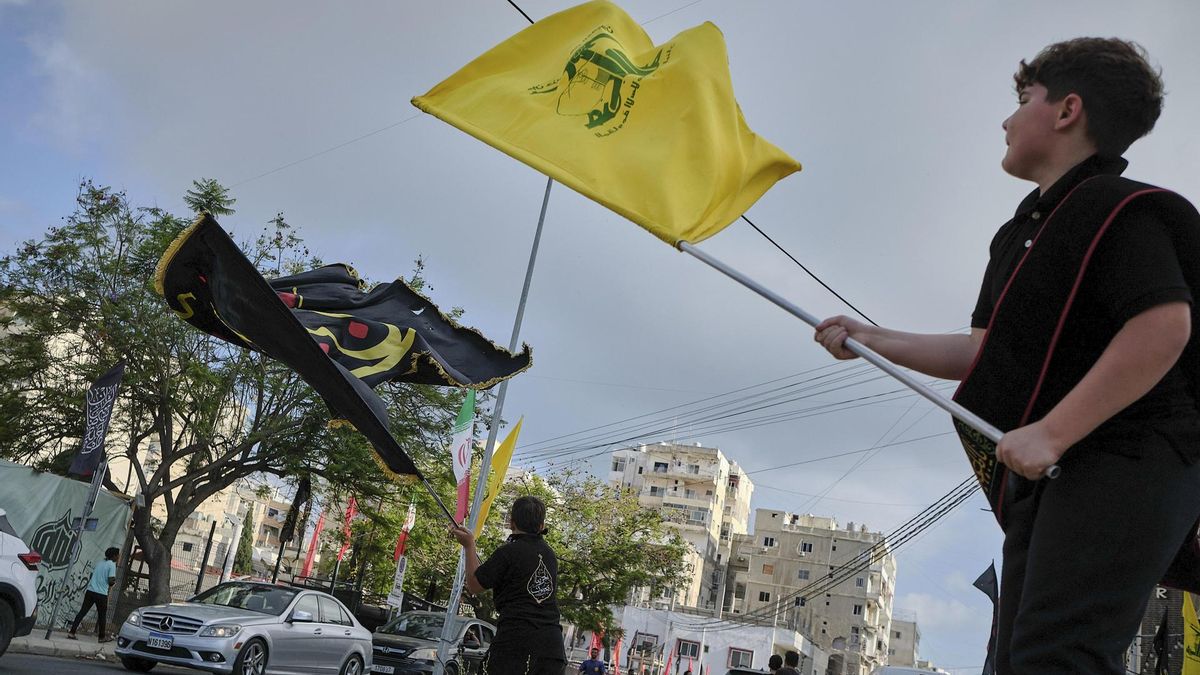
Hezbollah Rejects Deal: Israel, Lebanon Sign US-Backed Peace Framework
Israel and Lebanon signed a framework agreement in Washington on Friday, brokered by the United States. The 14-point document sets a roadmap for what it calls "lasting peace and security" between the two countries.
The agreement, published by the U.S. State Department, details a gradual security handover in southern Lebanon. A non-public "Security Annex" states that the Lebanese Armed Forces (FAL) will take over control in pilot zones. As this happens, the Israeli Defense Forces (FDI) will withdraw from the south.
According to the text, "The FDI and the FAL have agreed on two initial zones." Once non-state armed groups are disarmed and their infrastructure dismantled in those areas, the FAL will assume full security responsibility.
Israeli Prime Minister Benjamin Netanyahu said troops would leave two areas in southern Lebanon, but only after Hezbollah disarms and ceases to be a threat.
The agreement also links reconstruction to the handover. Point 3 says international rebuilding efforts and the return of Lebanese civilians will begin only when the Lebanese army controls those areas, with U.S. oversight.
Point 4 commits the Lebanese government to "full sovereignty" over its territory and the "complete disarmament" of all non-state armed groups, specifically naming Hezbollah once.
Point 7 states that nothing in the deal prevents Israel or Lebanon from exercising their "inherent right to self-defense." Both governments will create a military coordination group, with U.S. support.
In points 10 and 11, Washington promises to mobilize international aid for Lebanon’s reconstruction, including humanitarian help and investment. It also agrees to block funds from reaching armed groups.
Point 12 calls for working groups to negotiate a comprehensive peace treaty, with both governments acting "in good faith" to achieve "full and lasting peace."
The document does not set specific dates or timelines. It also does not explain how Lebanon’s small army will replace Hezbollah.
**Hezbollah's rejection**
Hezbollah lawmaker Hassan Fadlallah called the pact "a gift to the Israeli enemy" and said it would not affect the group's resistance.
Hezbollah leader Naim Qassem accused the Lebanese government of crossing "red lines." He called the deal "humiliation, a shame, and a renunciation of sovereignty." He added, "Weapons will not be handed over at all. No one has the right to deprive the Lebanese of their right to defend themselves."
**Support from Lebanon, Arab states, and Europe**
Lebanese President Joseph Aoun called the agreement "the first step" toward full sovereignty.
Parliament Speaker Nabih Berri, a Hezbollah ally, urged his followers to avoid internal conflict after the deal was announced.
Foreign ministers from Egypt, Jordan, and the UAE called Lebanese officials to congratulate them. European Commission President Ursula von der Leyen called the pact "a fundamental step for peace in the Middle East." She announced €100 million in EU aid for displaced people.
One day after the signing, the Israeli army bombed southern Lebanon near Nabatieh. No casualties were reported.