"Abandoned for decades": Zaragoza's neglected housing block faces crisis
Part of composite article Spain’s Housing Crisis: 87-Year-Old Faces Eviction as Church and Funds Cash In on Greed View full article →
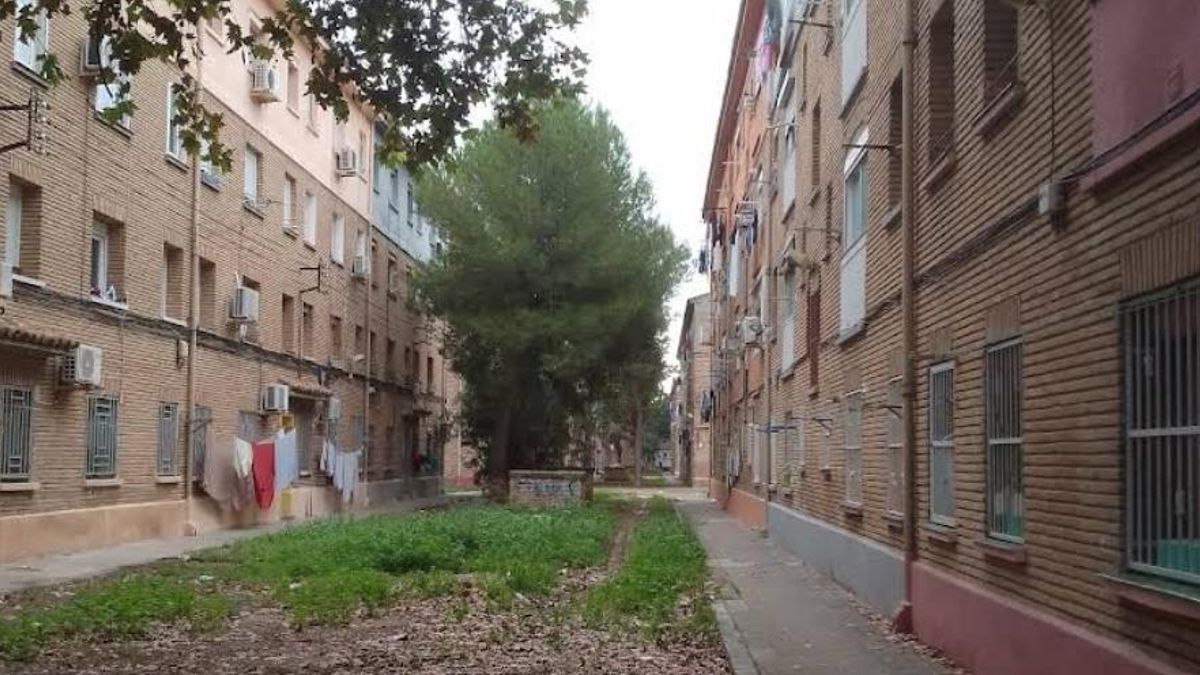
In the Las Fuentes neighborhood of Zaragoza, a group of aging homes called Andrea Casamayor has become a symbol of urban decay. Residents, social groups, and experts say the area needs urgent, comprehensive help.
Built in the 1950s as union housing under Franco's regime, the homes were later sold to occupants by the regional government. Residents gave up control of outdoor spaces, creating a legal mess. "Since then, everything has gone adrift," says Pilar Catalán, head of the Las Fuentes neighborhood association. "No one took care of the exteriors."
The results are clear. Buildings lack elevators despite having four floors. They have poor insulation and old sewage systems. Last summer, raw sewage surfaced in one area. "Technicians found terrible unsanitary conditions," Catalán recalls. Emergency fixes were made, but the root problem remains.
**More than just old buildings**
The problems go beyond physical decay. A study by the University of Zaragoza looked at access, safety, housing, and services. Sociologist Chabier Gimeno says Andrea Casamayor shows trends appearing across the city.
"The housing protest ended in Aloy Sala-Tenerías. Everything happening there affects northern Las Fuentes," Gimeno explains. He warns that Zaragoza is seeing patterns from larger Spanish cities. "We are receiving what other parts of the city are pushing out."
Gimeno links this to rising rents, large property owners, and housing shortages. "There is a lot of tension. It is an example of what is happening in other areas with these types of blocks: impossible rents, overcrowding, multiple owners, and large landlords."
He also warns that without public policies, social conflicts can worsen. "When someone is stirred up against a neighbor, coexistence degrades," he says. "The conflict is the absence of public policies." Physical repairs must come with social support, he insists.
**An aging population needs services**
The situation is worse because the population is aging. Catalán says the area has many elderly people but no community center. "In that zone where everyone is elderly, we have no meeting center," she says. Many residents cannot travel to other services because they have mobility issues and no elevators.
Residents also want better sports facilities, public spaces, and community services. "We are a neighborhood next to the city center. In 20 or 25 minutes you can walk to Plaza de España. But we are really forgotten," Catalán says.
She also criticizes a planned project at the old Giesa factory. The "Distrito 7" film city will offer private vocational training. "This budget is not for the neighborhood. It does not serve the neighborhood. It is a service for the whole city. We regret giving it to private centers. We could have used a public facility. We have very little space to grow."
**Political pressure grows**
Local Socialist councilor Marta Aparicio, who also heads the Las Fuentes district council, says the situation needs urgent action. She has asked the city government to launch a comprehensive plan combining urban, social, and community measures.
"The decay affects both public spaces and the homes themselves," Aparicio says. "It cannot be that in this city, more and more, there are first-class and second-class citizens."
She points to broken sidewalks, dirty streets, old sewage systems, aging residents, inaccessible buildings, and many low-income households. "We are talking about the neighbors who most need the city council's intervention," she stresses.
Pilar Catalán sums it up: "It is the most degraded area of the neighborhood." Without a plan that tackles both physical and social problems, she warns, the crisis will only get worse.