Spain’s Housing Crisis: 87-Year-Old Faces Eviction as Church and Funds Cash In on Greed
An 87-year-old woman in Madrid faces her third eviction attempt in two years, as a UN committee demands Spain stop the forced removal or provide alternative housing—exposing the raw financial mechanics of a housing market where investment funds, the Catholic Church, and local governments are all playing the same extraction game.
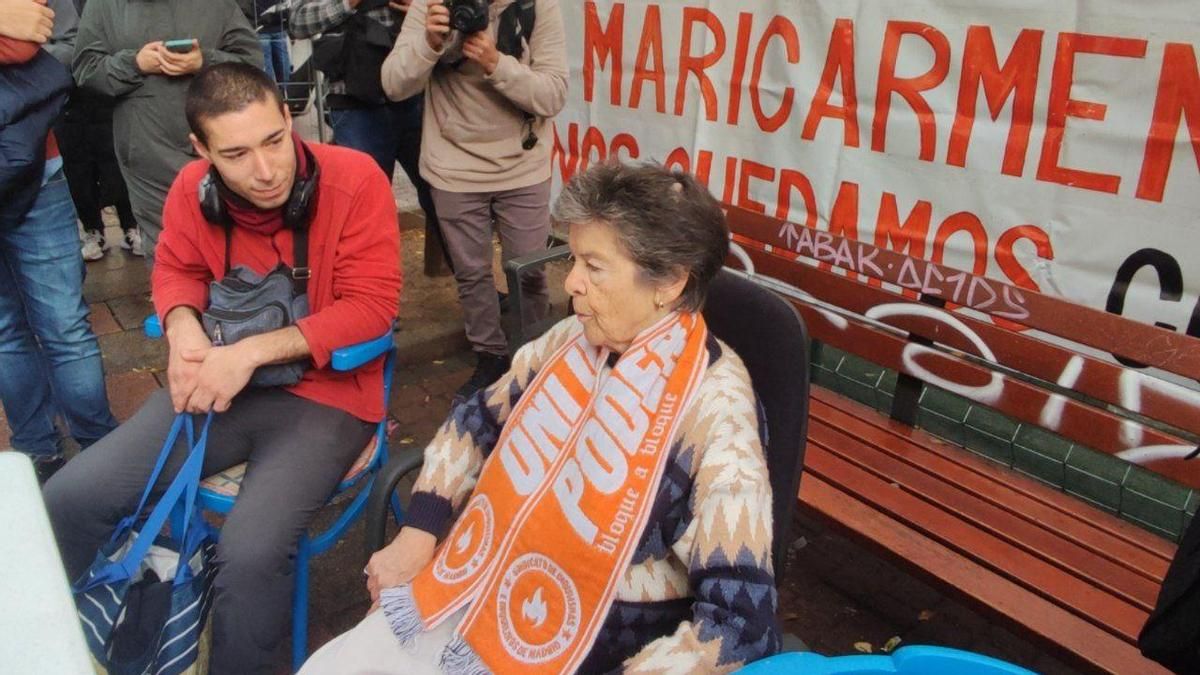
The United Nations has given Spain until December to report on measures to prevent the eviction of Maricarmen, an 87-year-old Madrid resident who has lived in her home for over 70 years [170207]. The UN Committee on Economic, Social and Cultural Rights has asked for the eviction to be suspended or for the state to provide adequate alternative housing. The complaint was filed by her lawyer with the Madrid Tenants’ Union.
The property was bought in 2018 by the investment fund Urbagestión, which wants to evict her to speculate on the property [170207]. The next eviction attempt is set for June 24, the third try. The first was stopped in October 2025 after public pressure; the second was postponed on June 3, which the Tenants’ Union called a “blunt attempt” to weaken public support.
The Catholic Church is also a major player in this market. The Spanish Tenants’ Union sent a letter to Pope Francis highlighting the eviction of Mariano Ordaz, a 67-year-old man forced from his Madrid home in May [168691]. The property was owned by the Venerable Third Order of Saint Francis (VOT), a Catholic order. The letter states: “Unfortunately, real estate speculation has reached entities of the Catholic Church itself.” It accuses the Fusara Foundation, managed by the Archdiocese of Madrid, of refusing to renew hundreds of rental contracts to sell buildings to investment funds.
Neither the Madrid regional government led by Isabel Díaz Ayuso nor the Madrid city council has offered any housing alternative to Maricarmen [170207]. Meanwhile, the Madrid regional government has approved a new regulation requiring ten years of official residency before anyone can buy public housing—a rule housing rights groups call discriminatory against migrants [167571]. The Observatory DESC, a social rights group, is challenging the measure. The region is also facing criticism for allowing nearly 10,000 public housing units to revert to the private market since 2019 [167571].
In Zaragoza, a group of aging homes called Andrea Casamayor, built in the 1950s as union housing under Franco, has become a symbol of urban decay [170932]. Residents, social groups, and experts say the area needs urgent help. Buildings lack elevators, have poor insulation, and old sewage systems. Last summer, raw sewage surfaced in one area. Sociologist Chabier Gimeno warns the area shows patterns from larger Spanish cities: “impossible rents, overcrowding, multiple owners, and large landlords.”
A judge in Barcelona ruled that Pope Leo XIV’s visit included a meeting with a six-year-old boy named Renzo, whose family is about to be evicted [170166]. The Pope told the boy: “It is not easy to find an answer to your question” about why bad things happen.