Europe’s Energy Crisis Is a Design Flaw, Not an Accident
For years, European policymakers boasted about building the world’s most advanced energy system—one that would be green, cheap, and secure. But when Russia invaded Ukraine in 2022, that promise collapsed.
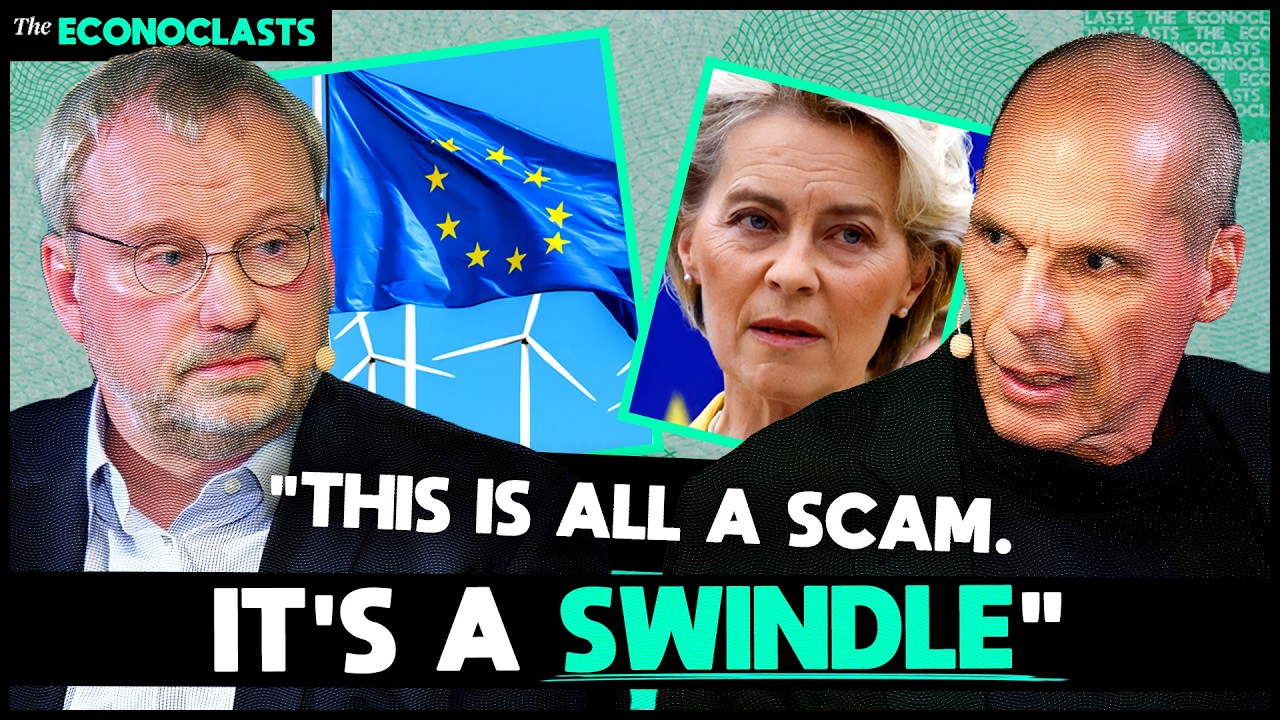
For years, European policymakers boasted about building the world’s most advanced energy system—one that would be green, cheap, and secure. But when Russia invaded Ukraine in 2022, that promise collapsed. Electricity prices soared, industries shut down, and governments scrambled for emergency bailouts. According to economist Yanis Varoufakis and journalist Wolfgang Münchau, the crisis was not a natural disaster or a geopolitical surprise. It was the predictable result of a deeply flawed market design—a “scam” that has been hiding in plain sight.
The Mechanism of the Scam
At the heart of Europe’s electricity market lies a principle called “merit order.” Power plants are dispatched from cheapest to most expensive. The last plant needed to meet demand sets the price for all electricity sold at that moment. This system works well when the most expensive plants are coal or gas, whose costs are relatively stable.
But the European Union made a fateful decision: it linked the price of all electricity to the price of natural gas. This means that even when wind, solar, or nuclear plants produce power at near-zero marginal cost, they sell it at the gas price. The result is windfall profits for renewable and nuclear operators, while consumers pay gas-indexed prices for every kilowatt-hour.
Varoufakis calls this “a transfer of wealth from the many to the few.” Münchau adds that the design was not an oversight. It was a deliberate choice, lobbied for by utilities and traders who benefit from price volatility.
Why the Crisis Hit So Hard
When Russia cut gas supplies, the price of natural gas exploded. Because the entire electricity market is indexed to gas, power prices followed. Households in Germany, France, and Italy saw their bills double or triple. Industrial users faced even steeper increases, forcing factories to halt production.
The irony is stark: Europe has abundant renewable capacity, but that capacity cannot lower consumer prices under the current rules. A wind farm in the North Sea, generating power at zero fuel cost, charges the same price as a gas plant in Italy. The system, as Münchau explains, “turns a cheap source of energy into an expensive one.”
The Role of Financial Markets
The problem is not limited to physical power markets. Financial speculation amplifies the damage. Energy derivatives—futures, options, and swaps—are traded on exchanges where hedge funds and investment banks take positions. When traders anticipate higher gas prices, they drive up futures prices, which then feed into real-world electricity contracts.
Varoufakis points out that this creates a self-fulfilling prophecy: “Speculators bet on high prices, and their bets make high prices a reality.” The European Central Bank and national regulators have largely stood by, arguing that these markets provide liquidity. But for consumers, the result is a hidden tax paid to financial intermediaries.
Who Profits?
The biggest winners are incumbent energy companies and commodity traders. TotalEnergies, Shell, and RWE reported record profits in 2022 and 2023. Renewable operators also benefited enormously, even though they did nothing to cause the price spike. Meanwhile, governments collected windfall taxes—but only after public outrage forced their hands.
Münchau notes that the European Commission’s initial response was to propose a cap on gas prices, but it was watered down by member states with strong fossil fuel lobbies. The final reform, agreed in 2023, introduced a limited cap on “excessive” gas prices, but left the merit-order system intact.
The Path Forward
Both analysts agree that fundamental reform is needed. Varoufakis advocates for breaking the link between electricity and gas prices entirely. He proposes a system where renewable and nuclear power are sold at their actual low costs, with gas plants used only as backup. This would require a state-backed “green pool” that buys renewable power at cost and sells it to consumers at a regulated price.
Münchau is more cautious. He warns that any reform must account for investment incentives. If renewable producers cannot earn high prices, they may not build new capacity. But he concedes that the current system is “economically irrational and politically unsustainable.”
Conclusion
Europe’s energy crisis is not a story of bad luck or external aggression. It is a story of a market designed to maximize profits for a few at the expense of the many. The solution is not more subsidies or temporary caps—it is a structural redesign that decouples electricity prices from the volatility of natural gas. Without that change, the next crisis is already guaranteed.
Related Coverage
Global Economy Buckles Under War, Climate Chaos, and Financial Greed
A global economy built on the promise of open trade and cheap energy is buckling under the weight of geopolitical conflict, strategic blockades, and a climate crisis that is no longer a distant warning but a lived reality. From the battlefields of Ukraine and the besieged oil routes of the Middle East to the drought-parched heart of Europe, the pursuit of geopolitical power and corporate profit is increasingly colliding with fundamental human needs, leaving the world’s most vulnerable populations to bear the heaviest burden of inflation, fuel shortages, and a widening gap between the wealthy and the rest [1][2].
War, Drought, and Debt: How a Strained Global Economy Is Crushing the Vulnerable
A global economy built on the promise of open trade and cheap energy is buckling under the weight of geopolitical conflict, strategic blockades, and a climate crisis that is no longer a distant warning but a lived reality. From the battlefields of Ukraine and the besieged oil routes of the Middle East to the drought-parched heart of Europe, the pursuit of geopolitical power and corporate profit is increasingly colliding with fundamental human needs, leaving ordinary citizens to bear the brunt of inflation, fuel shortages, and a widening gap between the wealthy and the rest.
Global Economy Buckles Under War, Climate Chaos, and Financial Greed
A global economy built on the promise of open trade and cheap energy is buckling under the weight of geopolitical conflict, strategic blockades, and a climate crisis that is no longer a distant warning but a lived reality. From the battlefields of Ukraine and the besieged oil routes of the Middle East to the drought-parched heart of Europe, the pursuit of geopolitical power and corporate profit is increasingly colliding with fundamental human needs, leaving the world’s most vulnerable populations to bear the heaviest burden of inflation, fuel shortages, and a widening gap between the wealthy and the rest [15315][15322].
Global Economy Buckles as War, Climate Chaos, and Financial Greed Reshape the World Order
A global economy built on the promise of open trade and cheap energy is buckling under the weight of geopolitical conflict, strategic blockades, and a climate crisis that is no longer a distant warning but a lived reality. From the besieged oil routes of the Middle East and the battlefields of Ukraine to the drought-parched heart of Europe, the pursuit of geopolitical power and corporate profit is increasingly colliding with fundamental human needs. This convergence of crises is leaving the world’s most vulnerable populations to bear the heaviest burden of inflation, fuel shortages, and a widening chasm between financial accumulation and human welfare [1][2].
Power, Profit, and a Planet in Peril: How War, Climate Chaos, and Financial Greed Are Reshaping the Global Order
A global system built on the promise of open trade and shared prosperity is buckling under the weight of interconnected crises. From the battlefields of Ukraine and the besieged oil routes of the Middle East to the drought-parched heart of Europe, the relentless pursuit of geopolitical power and corporate profit is colliding with fundamental human needs, leaving the world’s most vulnerable populations to bear the heaviest burden of inflation, fuel shortages, and a widening gap between the wealthy and the rest [15339][15322].
# A World Under Siege: How Climate Chaos, Energy Wars, and Financial Speculation Are Crushing the Vulnerable
The global system is buckling under the weight of interconnected crises, where the pursuit of geopolitical power and corporate profit is colliding with fundamental human needs. From the closed oil routes of the Strait of Hormuz and the battlefields of Ukraine to the drought-parched rivers of Europe and the besieged villages of the West Bank, a cascade of emergencies is leaving the world's most vulnerable populations to bear the heaviest burden of inflation, displacement, and violence [1][2].
Related Editorials
Britain’s Broken State: Why the Machinery of Government Needs a Total Rebuild
The United Kingdom is running on a system designed for a different era. From sluggish infrastructure to a crisis in public services, the evidence suggests that the current model of governance is no longer fit for purpose.
Britain’s Real Crisis Isn’t a Bad Leader—It’s a Broken State
For years, the world has watched Britain cycle through prime ministers with alarming frequency, from Brexit turmoil to the brief, chaotic tenure of Liz Truss. Yet focusing on the failures of individual leaders misses the deeper, more systemic problem.
Iceland’s Quiet Revolt: The End of Europe’s Political Illusion?
For decades, the European Union has sold itself as a project of perpetual integration—a political and economic engine designed to smooth over national differences and deliver shared prosperity. Yet, according to two of Europe’s most prominent economic thinkers, the recent actions of a small Nordic
The Metaverse Collapse: A $46 Billion Lesson in Tech Hype
In 2021, the technology world declared a new digital frontier. The metaverse, a persistent, shared virtual space, was supposed to be the next evolution of the internet.
Germany Just Broke the EU’s Firewall
A conversation between Yanis Varoufakis and Wolfgang Münchau reveals how Berlin’s fiscal about-face is rewriting the rules of Europe—and why the bond markets may be the only referee left. For years, the European Union’s fiscal architecture rested on a simple promise: no member state would be allowe
The Coming Energy Market Meltdown: Why Experts Are Sounding the Alarm
Global energy markets are approaching a critical inflection point. While the transition to renewable sources dominates headlines, a less visible but equally dangerous crisis is brewing beneath the surface—one that could destabilize power grids, spike electricity prices, and trigger widespread econo