The Stock Market Is Now the US Economy's Biggest Vulnerability
American households have never held so much of their wealth in stocks, and the usual tools for fighting a downturn are unavailable. That combination makes a market crash far more dangerous than it used to be.
American households have never held so much of their wealth in stocks, and the usual tools for fighting a downturn are unavailable. That combination makes a market crash far more dangerous than it used to be.
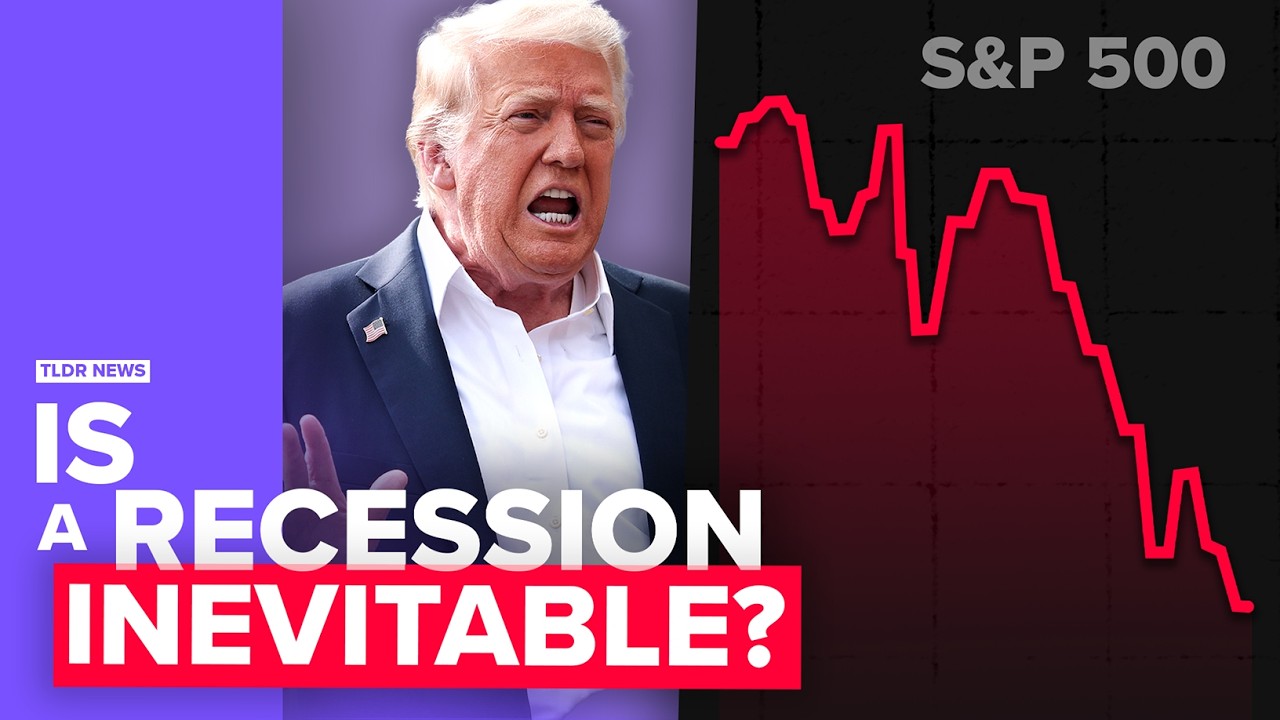
The US stock market is behaving erratically. The Nasdaq 100, a tech-heavy index tracking the largest non-financial companies on the Nasdaq Stock Exchange, fell 10% late last week, rose 7% on Monday, and dropped another 3% on Tuesday. The VIX index, which measures US stock volatility and is popularly known as the fear gauge, hit its highest level since April 2025, when Trump unveiled his Liberation Day tariffs. The turbulence has revived speculation that a long-anticipated crash may be near.
The critical question is how a crash would affect the wider US economy, and whether the economy could cope.
The main reason for concern is the record share of US household wealth tied up in stocks. According to the Federal Reserve Bank of St. Louis, about 34% of all US household wealth was held in stocks as of mid-2026, the latest quarter for which data is available. That is the highest level on record, well above the dot-com bubble peak of roughly 27%. It also far exceeds other developed economies. A 2025 analysis of national data by Aberdeen found that 33% of US household wealth was held in stocks, compared with 22% in Canada, 19% in Italy, 13% in France, 9% in Germany and Japan, and just 8% in the UK.
So far, this heavy exposure to equities, meaning stock holdings, has served the US well. It has allowed American companies to raise and invest enormous sums, one reason startups still flock to the US and why the country has financed the AI build-out more effectively than any other economy. It is arguably a better outcome than in the UK, where savings flow disproportionately into property, worsening an existing housing crisis. The stock market boom has also given US households the confidence to keep spending. Consumer spending is by far the largest component of US GDP, and it has held up remarkably well in recent years despite considerable turmoil. This also helps explain why the richest households account for a growing share of all spending: they are more likely to own stocks and have benefited most from the boom, while poorer households have seen their purchasing power eroded by persistent above-target inflation.
The downside is equally clear. Pouring money into stocks works while the music plays and the market rises, but it leaves the wider economy more exposed to a downturn. Consumer spending would be hard-pressed to hold up in a crash, given how much household wealth would be wiped out. The savings rate, which measures how much US households have set aside, is at a post-2008 low outside the pandemic, leaving little of a buffer if portfolios turn negative. If Americans tighten their belts, that alone could plausibly push the US into recession, since household spending accounts for roughly 70% of all economic activity.
The problem compounds. Most recent growth in business investment, the second-largest component of US GDP, has come from AI companies. Those same companies account for much of the stock market's recent gains, so they would probably be hit hardest by a reversal. That could push business investment into the red and would almost guarantee a recession.
Worse still, if a recession arrived, the usual policy remedies would not obviously be available. The standard response to a slowdown is fiscal or monetary stimulus: lower interest rates and more government spending. Neither suits the current macroeconomic context. The Federal Reserve cannot really cut rates while inflation runs hot, and it has recently signaled it is considering further hikes. Nor is it obvious that bond markets would tolerate a massive fiscal stimulus, which would require the government to borrow heavily. America's debt-to-GDP ratio has risen to 121%, and the IMF forecasts a budget deficit of 8.5% of GDP in 2026. That is the highest in the G7 by a wide margin, well above France, which is expected to run a deficit of 5.4% of GDP and is often presented as the poster child for fiscal recklessness. This, combined with elevated inflation, is why US borrowing costs have trended upward for the past two years, and why markets might struggle to absorb another surge in borrowing to finance stimulus.
None of this means the US economy could not withstand a crash. It has proved remarkably resilient to the shocks thrown at it in recent years, most notably Trump's tariffs and the war in Iran, or more precisely the closure of the Strait of Hormuz. On each occasion, many smart people forecast a recession, and on each occasion the economy defied expectations. Consumers have also been surprisingly prudent with their gains. Analysis by the Peterson Institute for International Economics (PIIE) found that the average consumer has spent only about one cent of every dollar gained from the stock market, so a correction would not necessarily trigger an immediate pullback in spending.
It is also worth remembering that the stock market is not always a good indicator of the wider economy. Only nine of the 17 bear markets the US has experienced since 1946, defined as a peak-to-trough decline of at least 20%, have been accompanied by recessions. In at least some of those nine cases, the bear market was a symptom of the slowdown rather than its cause. During COVID, for instance, the S&P 500 fell more than 20%, but the market was plainly not the cause of the accompanying recession.
The big difference today is the unprecedented share of household wealth tied up in stocks. The US economy has defied naysayers before, but it now looks particularly vulnerable, and the line between the stock market and the real economy is blurrier than ever.
Related Coverage
Hedge Funds Now Run the $27 Trillion Treasury Market — And That’s a Problem
Wall Street’s safest corner has become its riskiest bet: hedge funds now dominate the $27 trillion U.S. Treasury market, using heavy borrowing to chase tiny price differences, a strategy that could trigger a sudden sell-off and spike government borrowing costs if one major fund fails.
AI Debt Panic Wipes 27% Off CoreWeave as Fear Gauge Jumps Past 22
A violent selloff in AI-linked stocks and debt markets is exposing how much the artificial intelligence boom depends on borrowed money, with CoreWeave at the center of the storm.
Yen Crash Warning: Your U.S. Stocks Are One Bad CPI Report Away From a Bloodbath
A perfect storm of currency collapse, record bearish bets, and a looming inflation report is putting global markets on edge. The Japanese yen is near a 30-year low, traders are piling on record short positions, and Bank of America warns that today’s U.S. inflation data could trigger a sudden, violent reversal—forcing investors to dump stocks and bonds in a fire sale.
South Korea’s KOSPI Crashes 44%—$2 Trillion Wiped Out in 40-Day AI Chip Selloff
South Korea’s main stock index has plunged nearly 44% in just 40 days, erasing about $2 trillion in market value as a brutal selloff in artificial intelligence and semiconductor stocks shakes the country’s export-driven economy [207274]. The KOSPI suffered its worst single-day drop in years, falling 11% in one session, as investors panicked over rising competition from Chinese chipmakers and fears that the AI boom is overinflated [206335][206120].
Chip Stocks Crash 20% Into Bear Market as China AI Shock Wipes Out $1 Trillion
Wall Street was hit by a double blow this week as semiconductor stocks plunged into a bear market, falling more than 20% from their peak, while a new Chinese artificial intelligence model sparked fears of a "DeepSeek moment" that could upend America's tech dominance [199049][199055].
stock_market
The stock market is the global system where ownership stakes in companies are priced and exchanged, now dominated by a handful of AI-linked giants whose swings move trillions in household wealth. A November 2025 selloff pushed the S&P 500 into correction even as American families hold more money in stocks than ever before.
Related Editorials
The 50% Wipeout: Why This Market Crash Could Be Different
The warnings are growing louder. According to a growing chorus of financial analysts, the stock market is not merely due for a correction—it is facing a potential collapse that could erase half of its value.
The World’s Best Stock Market Is Also Crashing: What Investors Need to Know
For years, one stock market has been the envy of the world—a relentless bull run that made early investors rich and attracted global capital. But now, that same market is experiencing a dramatic reversal.
The Next Financial Crash: Why “Uninvestable” Assets Are the Real Threat
The global financial system is a complex web of interdependencies. When a major shock occurs—like a pandemic or a sudden spike in interest rates—the initial damage is often visible.
The US Government Cannot Go Bankrupt. Wall Street Can.
The relationship between the United States government and Wall Street is often misunderstood. Many assume that if the stock market crashes, the federal government is next in line for insolvency.