When Warships Come to Port: Libya, Ukraine, and Africa's New Battlefield
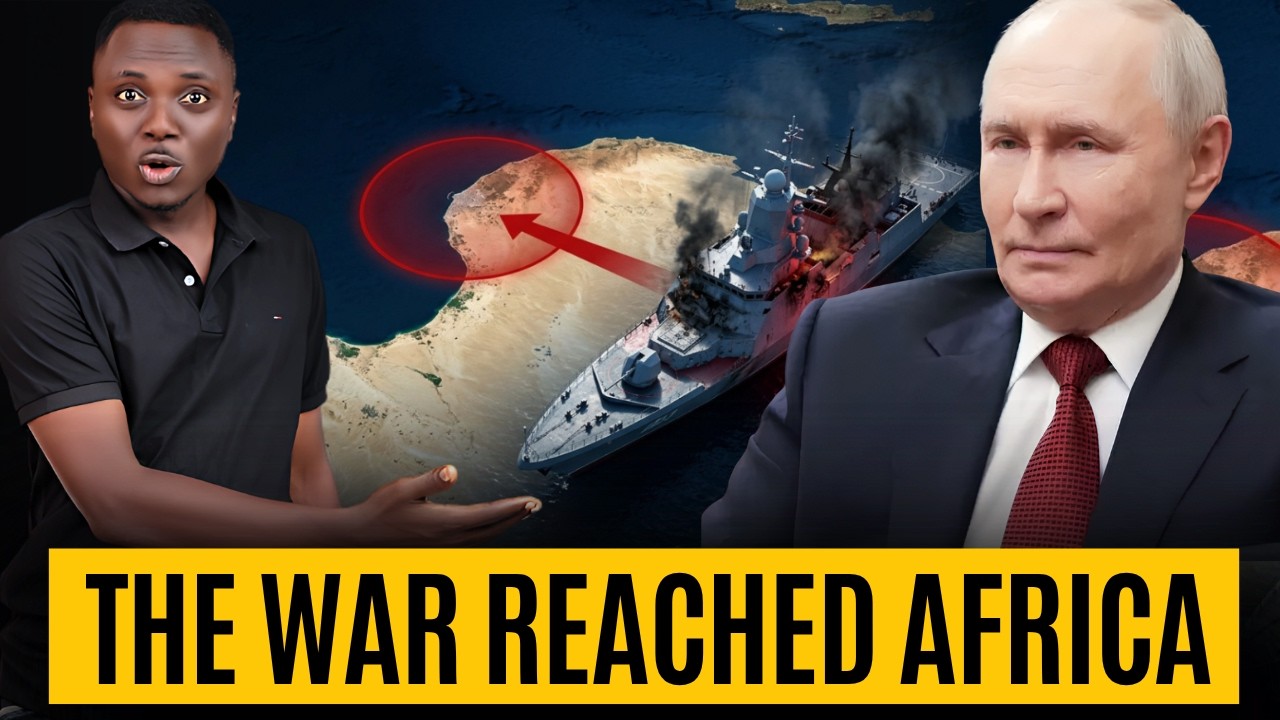
A Russian warship named Mercury lies capsized in the port of Benghazi, on Libya's Mediterranean coast. On November 22, Ukrainian naval drones—small, unmanned boats packed with explosives—struck the vessel.
A Russian warship named Mercury lies capsized in the port of Benghazi, on Libya's Mediterranean coast. On November 22, Ukrainian naval drones—small, unmanned boats packed with explosives—struck the vessel. A nearby Russian cargo ship was also hit. Ukraine has not hidden its involvement.
"Russia feels our response from western Siberia, where its oil refineries burn, to the coast of Libya, where its warships sink," a Ukrainian statement declared.
Local authorities report that the attack killed Russian and Libyan crew members. Two days later, the military command of Khalifa Haftar—the general who controls eastern Libya—announced that two of its soldiers had died of their wounds. Their names are unknown. Their location is not: they died in Libya, in a war between two countries thousands of kilometers away.
What was a Russian warship doing in an African port so far from the fighting?
Russia and Ukraine have clashed in Africa before. But this appears to be the first time Ukraine has openly claimed an attack inside an African port. And the story begins with a line on a map heading south.
The ship did not arrive by accident. The Associated Press reported that it docked in Benghazi to refuel and obtain supplies under a cooperation agreement with the government running eastern Libya. That detail matters.
Russia has long used this coastline. Before the attack, the American research group C4ADS, which monitors shipping, tracked Russian supply vessels entering eastern Libya. The French newspaper Le Monde went further, reporting that military equipment unloaded in Libya in September was transported as far as Bamako, the capital of Mali in West Africa. Mali lies on the other side of the Sahara.
The attack occurred in Benghazi, but much of the shipping evidence points to Tobruk, another Libyan port farther east near the Egyptian border. C4ADS and other trackers followed a Russian cargo ship that entered Tobruk in January 2026. Satellite images taken during its stay showed what appeared to be military vehicles lined up alongside it. Gaps exist in the tracking because ships often disable their location signals, so the dotted lines on these maps connect only the last known points. Yet the pattern holds: equipment arrives by sea, moves overland to desert airbases such as Al-Khadim, and continues farther south.
Why does Russia go to such lengths? Look at the countries it supports in West Africa: Mali, Burkina Faso, and Niger. Their military governments expelled France and turned to Russia for security. Now examine their borders. None of them has a coastline. Everything Russia sends—armored vehicles, missile platforms, trucks—must first pass through another country's port and then across its territory. This gives states with long coastlines significant leverage. They control the gates. Libya is the northern gate.
That gate became more valuable in December 2024, when Russia's ally in Syria, Bashar al-Assad, lost power. Russia's bases in Syria suddenly seemed less secure. Weeks later, the Institute for Security Studies, a research group based in South Africa, issued a warning: if Russia also lost Libya, it would struggle to supply its forces in Mali, Burkina Faso, and Niger. They wrote that nearly two years before the drones arrived.
Was this Ukraine's first move against Russia in Africa? No. It began years earlier. In 2023, CNN investigated drone strikes in Sudan targeting a paramilitary force that Russian Wagner mercenaries were assisting. A Ukrainian military source told CNN that Ukraine was likely behind those strikes. In Mali, it became public.
In July 2024, near a town called Tinzaouaten in the far north, rebels seeking independence for northern Mali, fighting alongside the al-Qaeda-linked Jama'at Nusrat al-Islam wal-Muslimin (JNIM), ambushed Malian soldiers and Wagner fighters. Many were killed. Days later, Andriy Yusov, spokesman for Ukrainian military intelligence, said the rebels had received all the information they needed. Mali's government treated this as an admission and severed diplomatic relations with Ukraine. Niger did the same. Together with Burkina Faso, they filed a complaint with the United Nations Security Council. At the time, the rebels said they had received no foreign assistance. Their account did not last long. In September 2026, CNN interviewed Ukrainians who said they were working with the same separatist movement. One described watching a rebel drone video online and guiding the operators by radio on where to fly. A Ukrainian intelligence source told CNN that Ukraine was turning its drone expertise into an instrument of foreign policy.
Assemble the pieces and a pattern emerges: Ukraine is pressuring Russia from both sides. It struck Libya, where supplies originate, and Ukrainians say they helped rebels in Mali, where Russian forces fight. Kyiv calls this self-defense and says it respects sovereignty.
Now consider who died: Malian soldiers in 2024, Libyan soldiers this November. Russia did not impose its presence by force in either country. It was invited. Mali's military government requested its arrival. In Libya, someone allowed that warship to dock. So who agreed?
In Libya, that question is far harder than it appears. Libya does not have one government. It has two. Since Muammar Gaddafi's fall in 2011, the country has split. In the west, a government in the capital, Tripoli, is recognized by the United Nations. In the east, a rival government is backed by Haftar's army. The two sides have fought wars against each other and are still trying to agree on how to unify.
The eastern side brokered the deal. For years, Russia has been one of Haftar's main supporters, providing weapons, fighters, and political backing. Haftar met Vladimir Putin in Moscow in May 2025. In return, Russia gains access to ports and bases in territory Haftar controls. Russia gives Haftar weapons and support; Haftar gives Russia his ports.
You might expect Tripoli's government, Haftar's rival, to be quietly pleased. Ukraine had just struck its enemy's ally. It was not pleased. Tripoli's foreign ministry condemned the attack and demanded an explanation from Kyiv, stating that the war between Russia and Ukraine does not give either side the right to fight on Libyan soil or in Libyan waters. The eastern government also condemned the attack and opened a joint investigation with Russia. Moussa al-Koni, deputy head of the Presidential Council that leads the internationally recognized side, said Libya would raise the matter with the UN Security Council. Two governments that agree on almost nothing agree on this.
Now reconsider the deal under which the warship docked. One side of a divided country brokered it. When war came to target that ship, the entire country objected.
Did the drones come from inside Libya? Officials in the east told the Associated Press that their preliminary investigations point to a Ukrainian base in western Libya. That has not been proven. But it is not a new idea. In April, the Associated Press reported, citing Libyan officials, that Ukrainian forces were operating in western Libya under a secret agreement with the Tripoli government. In September, CNN reported that Ukrainian drone teams were operating there as well. Tripoli denies granting Ukraine bases and says it will not allow Libyan territory to be used to launch attacks.
If both sides are right, then each faction in Libya has brought in a foreign partner from this war. One hosts Russia. The other may be hosting Ukraine. In both cases, ordinary Libyans were never asked about Russian ships or about any Ukrainians.
Some might argue this video overstates a single attack. That view deserves a hearing. The Mercury was a warship, one of Russia's newest, commissioned in 2023. Russia and Ukraine are at war, and the warship was a military target. There is no evidence that this strike severed Russia's supply line to the Sahel, and so far no reports indicate delays or shortages in Mali because of it. Russia has other routes, and some Libyan analysts believe the damage can be contained.
Two of these points are simply correct: the target was military, and no one has proven the strike cut Russian supplies. This video never claimed it did. The other two points warrant closer scrutiny.
Start with the other routes. C4ADS tracked Russian supply vessels to two other ports: Conakry, the capital of Guinea, and Lomé, the capital of Togo. Both lie on West Africa's Atlantic coast. Russia can therefore bypass Libya. In either case, the route still passes through African ports, which means African governments have more say in this network than first appeared.
Libyan analyst Osama Touba told Al Jazeera he does not expect the attack to sabotage peace talks between eastern and western Libya. If he is right, Libyans are choosing to protect their own path. Still, the UN mission in Libya has warned that the country must not become a battlefield for foreign conflicts. In August, the two sides reached an agreement aimed at holding elections and forming a unified government. It is fragile. An attack like this, followed by angry statements from both sides and reported threats of retaliation from Haftar's command, places it under strain.
Farther south, there is a cost that may last longer. According to data from the ACLED conflict-monitoring group cited by Reuters, JNIM has carried out 187 drone attacks since 2003. Researchers believe some drone skills may have passed from Malian rebels to JNIM because the two groups fought side by side. No one has proven that Ukraine trains JNIM, but skills learned in one battle can transfer to others.
Now step back and look at the whole map. Russia's power in the Sahel depends on African ports in Libya to the north and in Guinea and Togo to the west. Ukraine has begun striking that network openly. That is what Africa should worry about: a country hosting one side in someone else's war can become a place where that war is fought.
So what can African governments do? First, determine who has the right to approve when a foreign military requests a port: the national government publicly, or one faction privately? Libya has just shown that the second option carries a steep price. Making such deals public would help, as would neighbors cooperating to stop the flow of weapons and fighters across the Sahara. Researchers and the UN mission in Libya have called for exactly this.
Watch where Russian ships dock next: Tobruk, Conakry, or Lomé. Watch whether any government in Tripoli moves against any Ukrainians in the west, and whether Haftar's command carries out its threat.
Now return to the port in Benghazi. That warship entered to refuel under an agreement with Haftar's side. That deal had already paid Haftar's side in weapons and support from Russia. This part of the arrangement was plain to see. The other part came later. Russia arrived, and war came with it. The war followed into the port.
The lesson here is old and familiar. When you host a guest who has enemies, you invite those enemies too. Haftar's side received the weapons. Two of its soldiers paid part of the price, and the rest of the bill went to people who never knew about the deal: a government in Tripoli forced to protest, and a peace agreement already fragile. Hosting a guest may still be worth it. Every host is free to make that choice. But whoever makes the decision must know the full price before the ship docks. Eastern Libya said yes to Russia and is now paying part of the cost. Togo also said yes to Russian helicopters, a training camp, and port access.
Related Coverage
Ukraine Says It Sank Russian Warship in Libya Port
Ukraine attacked and sank a Russian navy vessel docked at a port in Libya, according to President Volodymyr Zelenskyy.
Ukraine Strikes Russian Warship in Libya, Zelensky Says
Ukraine attacked a Russian warship docked at a port in Libya, President Volodymyr Zelensky said Monday. He said maritime drones sank the navy vessel in a surprise assault the day before.
Ukraine Expands Drone Attacks to the Mediterranean Sea
Ukrainian naval drones have struck Russian ships near Libya, marking a major expansion of Ukraine's drone campaign far beyond its own waters.
Ukraine's Sea Drones Strike Russian Ships in the Mediterranean
New footage shows Ukrainian sea drones attacking Russian vessels, sinking a warship and setting a tanker on fire.
Ukraine Strikes Russian Warship Near Libya, Zelenskyy Confirms
Ukrainian President Volodymyr Zelenskyy confirms Ukraine carried out drone attacks on Russian vessels off Libya's coast, signaling an expansion of its military operations far from home.
Drone Attacks Hit 3 NATO Countries and Black Sea Ships as Russia and Ukraine Target Each Other's Economies
Russia's war on Ukraine is spilling across borders, with drone crashes and airspace alerts hitting three NATO countries while both sides strike economic targets.