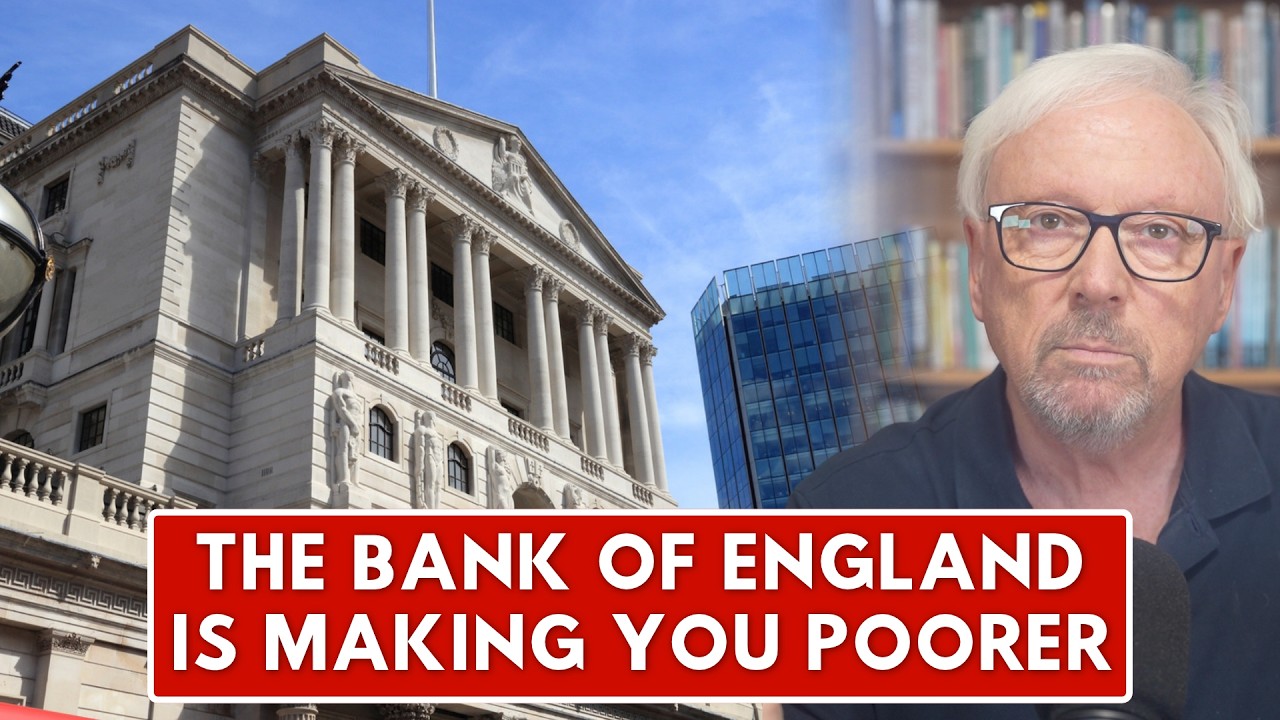
Bank of England's Rate Hikes: A Deliberate Policy to Make Britons Poorer
The Bank of England raised interest rates again this month, and expectations are mounting for another increase in December. The stated rationale: rising inflation risk attributed to conflict in the Middle East.
The Bank of England raised interest rates again this month, and expectations are mounting for another increase in December. The stated rationale: rising inflation risk attributed to conflict in the Middle East. Yet a closer examination reveals a troubling disconnect between the Bank's actions and economic reality. Higher interest rates cannot produce oil. They cannot end a war. They cannot repair disrupted supply chains. So why is the Bank of England pursuing a policy that inflicts economic pain on ordinary households when the underlying causes of inflation appear to be receding?
The facts warrant scrutiny. On November 5th, the Bank's Monetary Policy Committee voted 8 to 1 to raise the base rate from 3.75% to 4%. The Bank forecast inflation of around 4.5% in early 2027, against its target of 2%—a target whose origins and appropriateness remain unexplained. The justification offered was rising energy prices caused by Middle East conflict. The Bank argued that higher rates would prevent inflation from spreading into wages and other prices, ensuring that people cannot maintain their living standards. This is not an unintended consequence. It is the explicit aim of policy: to ensure that although living costs have risen, wages do not rise in response. The goal is to make most people in the UK worse off.
But the energy picture has shifted dramatically since that decision. Brent crude fell below $90 a barrel on November 10th, down from around $110. The International Energy Agency forecasts potential oversupply of 1.7 million barrels per day in the fourth quarter of 2026, as global markets adapt to disruptions. While oil remains roughly 50% more expensive than before the conflict began in February 2026, the direction of price movement has reversed. Prices are now falling, not rising.
This matters because energy markets move rapidly while interest rate policy takes months or years to take effect. This lag imposes a particular obligation on the Bank of England: it cannot react to short-term fluctuations. It must respond to long-term trends. If the long-term trend in energy prices is downward, the Bank has a duty to cut rates accordingly. The inflation risk is receding. High interest rates are not needed to achieve that outcome. Market forces will deliver falling inflation regardless of the Bank's intervention.
To impose economic pain after the original price shock has dissipated is ludicrous, wrong, unethical, and irresponsible. The inflationary shock of 2026 came from restricted energy supplies created by war. It did not come from excessive British wages or consumer spending. The Bank knows this. British wages are flatlining and consumer spending is stagnant because people lack confidence. There is no internal economic reason within the UK to raise interest rates. The only justification was oil prices—and oil prices are falling.
The effects are already visible at petrol stations. Petrol prices have dropped at least 15 pence per litre. Diesel has begun to fall slightly. Inflation is declining before our eyes. The Bank does not need to suppress demand to contain inflation. Yet it persists, deliberately making people poorer to prevent a supply shock from becoming persistent inflation—in other words, to keep wages down so that people cannot recover what they lost during 2026.
What do higher interest rates actually achieve? They increase borrowing costs for households and businesses. They push up rents. They reduce spending, investment, and employment. They weaken workers' bargaining power by increasing unemployment. They increase interest income for some savers, banks, and financial institutions. They increase government interest payments on central bank reserves, creating pressure to cut public spending on essential services. None of these are unintended consequences. They are exactly what the Bank desires.
This is income and wealth redistribution by the Bank of England—redistributing wealth upwards and making working people worse off. Every pound of interest paid is received by someone. Borrowers pay more. Some savers and financial institutions receive more. Banks earn higher interest on reserves held at the Bank of England. Government bondholders see their interest rates rise. The government faces increased interest costs on reserves and newly issued debt. These decisions always redistribute income between different groups in society. If the Treasury had proposed equivalent measures through taxation and spending—redistributing income against the interests of the majority to benefit the wealthy—there would be intense political outcry. But because the Bank of England does it, framed as technical necessity, nobody raises a murmur.
These deliberate political actions, disguised as monetary policy, are as repugnant as they would be if implemented by the government. Interest rate changes designed to punish the British people are straightforwardly wrong. They are designed to make the rich richer and everyone else poorer.
The government has better tools available to control inflation. In the short term, it could tax windfall profits from energy scarcity—oil companies are making record profits. It could protect households from exceptional energy price increases by changing fuel pricing arrangements. It could provide targeted support for those most affected. It could use fiscal policy to manage inflation without damaging employment and investment—for example, by adjusting the VAT rate. All of this is within its power.
In the longer term, the government could invest more in renewable energy and energy efficiency, turning every building in the UK into a power station and reducing energy consumption—key to achieving net zero targets. It could reduce dependence on imported fossil fuels and build a more resilient energy generation and distribution system. This is essential, because the UK's energy distribution system is holding back economic development and the transition to sustainability.
The government can address the causes and consequences of an energy shock without any assistance from the Bank of England. The Bank, in any case, can have no impact on these essential changes.
Interest rates do not cure imported inflation. They only determine who pays for it. Higher interest rates cannot end a war. They cannot produce oil. They cannot repair disrupted supply chains. They cannot improve economic resilience. But they can make households poorer. They can weaken businesses and increase unemployment. They can increase the income of financial wealth owners, increasing inequality. The Bank of England cannot cure imported inflation at its source. But it can and does decide who bears the economic pain. That is a political choice, not merely a technical one.
If oil prices continue falling—as they appear to be—the Bank must reverse its November decision. It needs to cut rates now, as quickly as possible. If energy prices are falling, there is no reason to impose rate rises with long-term consequences when inflation will fade away, as it invariably does in such situations.
The Bank's next decision is scheduled for December 17th. It has the opportunity to cut rather than increase rates. It should begin a process of rapid rate cuts on that day, with rates falling heavily during 2027 to manage the consequences of falling energy prices and the anticipated AI bubble burst. The Bank of England must open its eyes to economic reality. It must do what the economy needs. If the government will not act using fiscal policy, the Bank must step into the role of responsible partner. That means cutting rates.
Related Coverage
Oil Shock and Realignment: How War, Chokepoints, and Rising Rates Are Reshaping the Global Economy
A wave of attacks on oil infrastructure and shipping lanes has pushed crude above $100 a barrel, reigniting inflation and forcing central banks to tighten — all while deepening inequality and exposing how fragile the global economic order has become.
Oil Shocks, Chokepoint Wars, and the Squeeze on Ordinary Households
A wave of attacks on Middle East oil routes has pushed crude past $100 a barrel, reigniting inflation and forcing central banks to tighten credit — while energy companies post record profits and working families absorb the costs.
Oil Shocks, Chokepoint Wars, and a Divided BRICS: The Crises Reshaping the Global Economy
A wave of attacks on oil routes and shipping lanes has pushed crude above $100 a barrel, reigniting inflation and forcing central banks to tighten — all while deepening inequality and exposing how fragile the global economic order has become.
Oil Shocks, Chokepoint Wars, and the Squeeze on Ordinary Households: How War, Energy, and Tightening Credit Are Reshaping the Global Economy
A wave of attacks on Middle East oil routes has pushed crude past $100 a barrel, reigniting inflation and forcing central banks to tighten credit—while energy companies post record profits and working families absorb the costs. From the Red Sea to Ukraine to the halls of the Federal Reserve, the global economic order is being tested as never before.
Fed Set to Hike Rates Three Times as Oil Tops $100 and Inflation Fears Roar Back
Markets are bracing for a series of Federal Reserve rate hikes after oil prices surged past $100 a barrel and new inflation data showed consumer prices climbing again, reviving fears that borrowing costs will keep rising.
US-Iran Tensions Push Oil Up, Stocks Down as Rate Hike Looms
US equity futures slipped and bond yields stayed elevated as renewed hostilities between Washington and Tehran drove oil prices higher, keeping the possibility of a September interest rate hike firmly on the table [233232]. The market moves come as investors weigh the risk of further supply disruptions in the Middle East against signals from the Federal Reserve that it may act again next month [233232].
Related Editorials
The Bank of England’s Deliberate Choice: Why Unemployment Rises to Control Inflation
Central banks are traditionally viewed as guardians of economic stability, tasked with balancing growth, employment, and price stability. However, a hard look at the Bank of England’s (BoE) operational playbook reveals a stark reality: the institution sometimes *deliberately* engineers a rise in un
The Bank of England Is Fighting Inflation with the Wrong Weapon
Britain's central bank keeps raising interest rates to cool prices. Critics argue the real culprit—a supply-side energy shock—cannot be tamed by making mortgages more expensive.
Inflation Is Rising. Will the Bank of England Finally Pull the Trigger?
The debate over the cost of living has shifted from academic circles to the kitchen table. As global supply chains strain and energy prices climb, the United Kingdom is facing a familiar yet uncomfortable specter: rising inflation.
Britain’s Perfect Storm: How Record Oil Profits and a Hawkish Bank Could Trigger a Recession
The British economy is walking a tightrope. On one side, energy giants are posting historic windfall profits.
Is Inflation About to Get Much Worse? The Warning Signs You Can't Ignore
After months of declining inflation rates, a new threat is emerging that could reverse all the progress central banks have made. Recent economic data suggests that the forces driving prices higher are not only persistent but may be accelerating.
The Bond Market’s New Class War: Why Austerity Is a Choice, Not a Law of Nature
A quiet but brutal battle is being waged in the corridors of global finance. As government debt levels climb and inflation persists, a familiar chorus has emerged from the world’s most influential financial institutions.