Argentina's Libertarian Gamble Backfires: Milei's Recession Trap
Argentina has entered a recession, and President Javier Milei's libertarian economic experiment is under mounting pressure. The country's economy contracted by 0.
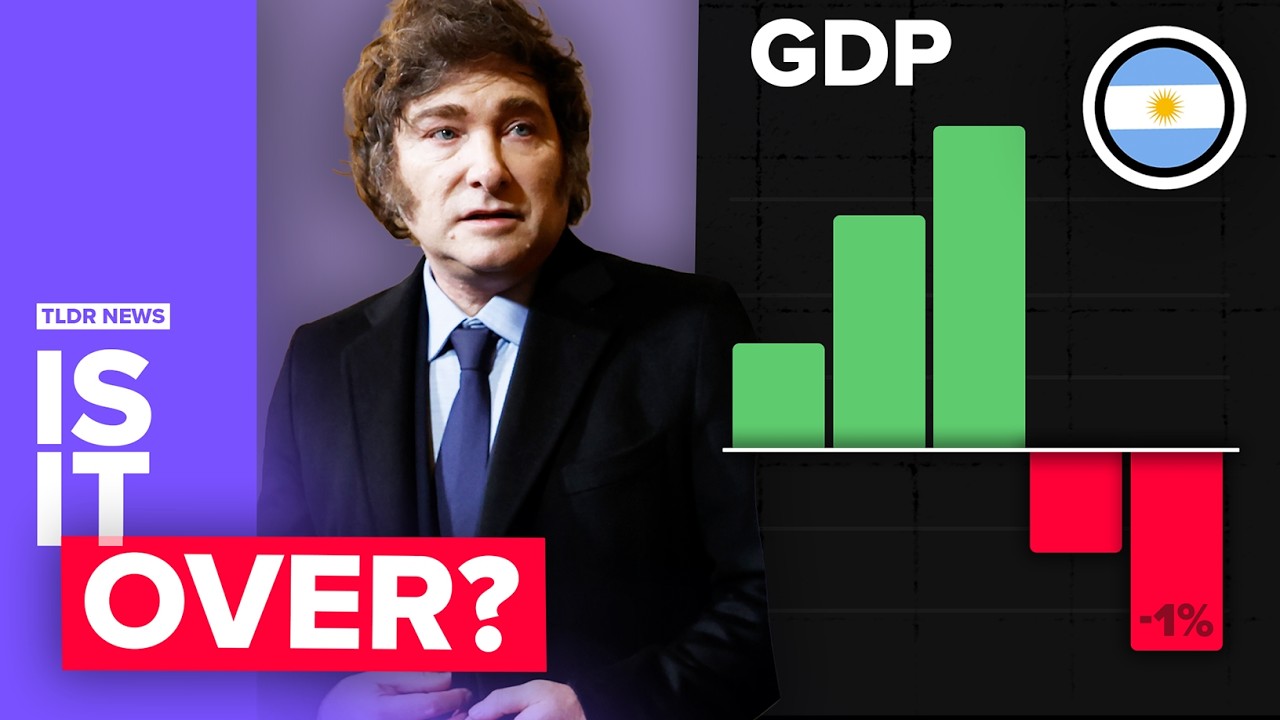
Argentina has entered a recession, and President Javier Milei's libertarian economic experiment is under mounting pressure. The country's economy contracted by 0.6% in the second quarter of 2024, and the Argentine central bank forecasts a further contraction of approximately 1% in the third quarter. Two consecutive quarters of negative growth meets the standard definition of a recession, and it raises a pointed question: is Milei's political project running out of road?
The Stakes of Milei's Experiment
Milei came to power in late 2023 promising to stabilise an economy long plagued by chronic inflation and fiscal imbalance. In the first half of his term, he made notable progress in balancing Argentina's trade and budget deficits. However, the economy has not rebounded as he promised. Understanding why requires examining the forces driving the downturn, beginning with the collapse in household spending.
Why Argentina Slipped Into Recession
Household consumption is the largest component of Argentina's economy, accounting for roughly 70% of GDP. Business investment and government spending each contribute about 15%, while net exports play a negligible role. When household spending falters, the broader economy follows. After holding up surprisingly well through 2024 and early 2025, Argentine household consumption has finally slumped.
Persistent Inflation Erodes Purchasing Power
Inflation remains the primary culprit. When Milei took office, year-on-year inflation exceeded 100%. While his policies brought inflation down from its peak in early 2024, it has since stabilised at around 30% year-on-year, registering 33% in October, the most recent month for which data is available. For context, that is nearly ten times the current inflation rate in the United States or the United Kingdom, where rising prices remain a source of public frustration.
Persistent inflation has steadily eroded Argentine purchasing power. Real wages in the formal sector, adjusted for inflation, are well below their level when Milei took office and have been declining since June of this year, roughly when the recession began.
Rising Unemployment Compounds the Problem
Unemployment has worsened the situation. Since Milei assumed office, the number of Argentines in registered private-sector employment has fallen by more than 200,000. Fewer employed workers means less household spending, as unemployed individuals typically have little disposable income. Some displaced workers may have found work in Argentina's informal economy, which accounts for approximately 45% of all jobs, a far larger share than in most countries. However, informal jobs are generally lower-paid and less secure than formal employment, so they still generate less household demand.
The End of a Credit Boom
Beyond inflation, the other major factor behind the slump in household demand is the end of a credit boom. After Milei imposed severe austerity and inflation surged above 200%, largely due to a sharp devaluation of the peso, Argentine households responded by borrowing heavily to make ends meet. Policy encouraged this behaviour. Milei deliberately loosened credit restrictions to push Argentine banks, which had previously avoided private-sector lending and focused on government bonds, toward lending to the private sector. He also encouraged the growth of the private credit market, a term encompassing non-bank lenders such as digital wallet providers, which have become increasingly popular in Argentina.
This credit boom was a key reason household spending held up during the first two years of Milei's presidency. Households spent borrowed money, sustaining consumption even as investment slumped. That strategy has now run its course. Burdened by debt, Argentine households have stopped borrowing. Meanwhile, lenders, anxious about their customers' ability to repay outstanding debts, have stopped lending.
Delinquency data illustrates the shift clearly. Rates of overdue debt have risen sharply since early 2025, particularly among non-bank lenders who typically serve riskier, lower-income customers. The issue has become a flashpoint in Argentine politics. The otherwise fragmented left-wing Peronist bloc has coalesced around the problem, blaming Milei for loosening credit restrictions and demanding government debt relief. Milei has rejected the idea. In an August interview, he characterised the matter as a problem between private actors and, when asked about delinquent borrowers, retorted: "Did anyone put a gun to their head?"
Milei's Policy Dilemma
Milei now finds himself in a difficult position. There is no obvious policy remedy available, especially none that could deliver results before the next presidential election in late 2027. The conventional response to a recession is fiscal or monetary stimulus, meaning lower interest rates or increased government spending to revive growth. For Milei, both options would be politically embarrassing and potentially inflationary, a risk he cannot afford when inflation already stands at 30%.
More fundamentally, a recession undermines Milei's core pitch to the electorate: that he is an economic miracle worker, the only figure capable of stabilising Argentina's notoriously fragile economy. A prolonged downturn risks trapping his entire political project in a self-reinforcing cycle of decline.
The Doom Loop Between Economics and Politics
Milei's economic program and his political prospects have always been intertwined. In the best-case scenario, his enduring popularity was meant to attract foreign investment, fuelling an economic boom that would bolster his popularity further, creating a virtuous cycle. As his popularity and the economy have slumped, that feedback loop has reversed direction.
The now-plausible prospect of a Peronist victory at the next election has unsettled markets, triggering a sell-off that has further weakened the economy and contributed to Milei's declining electoral standing. The bond market offers the clearest evidence. As Milei has fallen in the polls, yields on Argentine bonds have surged, making it far more difficult for his government to roll over existing debt.
If Milei is indeed caught in a vicious cycle, optimism about his prospects at the next presidential election is hard to sustain. Argentina's economic trajectory, and the political future of its libertarian president, remain deeply uncertain.