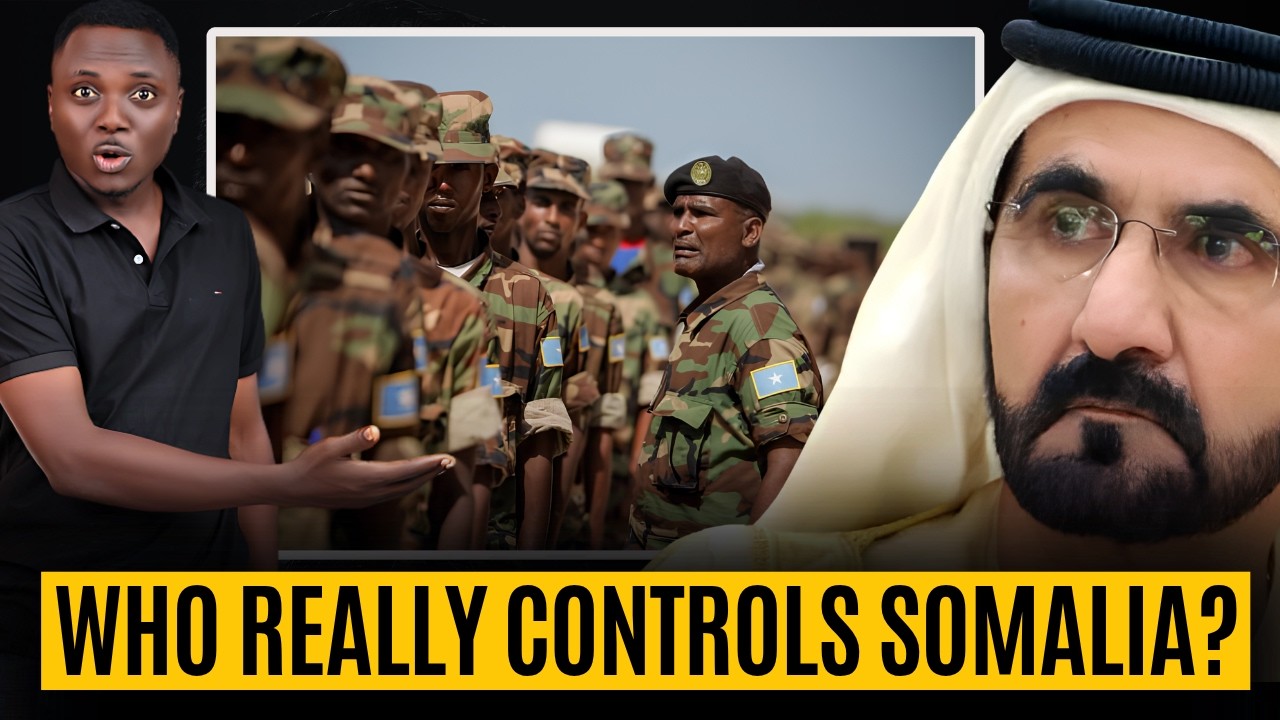
Somalia Expels UAE Ambassador While the Emirates Reportedly Pays 3,400 Soldiers Guarding the Capital
Somalia has ordered the United Arab Emirates ambassador to leave within 72 hours, a dramatic rupture between Mogadishu and one of the most influential foreign powers in the Horn of Africa. Yet the confrontation exposes an uncomfortable reality: the Emirati government reportedly pays the salaries of
Somalia has ordered the United Arab Emirates ambassador to leave within 72 hours, a dramatic rupture between Mogadishu and one of the most influential foreign powers in the Horn of Africa. Yet the confrontation exposes an uncomfortable reality: the Emirati government reportedly pays the salaries of roughly 3,400 Somali security personnel, including units that protect the capital. A government is confronting a foreign country that helps pay the men responsible for its own security. What exactly is Somalia trying to achieve, and why does the UAE retain so much influence after Mogadishu cancelled every agreement between the two countries?
Start with those 3,400 men. Reuters obtained the figure from unnamed senior Somali officials, and no payroll has been published. The force includes military police and special forces in and around Mogadishu, a small fraction of the national army. The military police is a unit the UAE helped create and train. In the past, the Emirates paid stipends to Somali troops directly, not through the government's own books. Paying soldiers does not mean commanding them, but it does mean that if the money stops, someone must replace it. In January, two Somali officials told Reuters the country could turn to Qatar or Saudi Arabia. So far, no new backer has been announced.
The UAE's response deepened the puzzle. Its foreign ministry said it had closed its embassy in Mogadishu since January and that its diplomats had already left. January is when the crisis truly began.
Tensions had been building over Somaliland, a region in the north that has run its own affairs since 1991 and seeks independence. Israel had just recognised Somaliland, and many Somalis believe the UAE helped bring that about. The UAE has not confirmed any role. Then a Yemeni separatist leader, Aidarous al-Zubaidi, was reportedly flown through Somali airspace on a UAE-registered plane that departed from Berbera, Somaliland's main port. The Somali government called it the last straw. Four days later, Mogadishu cancelled every agreement with the UAE, covering ports, security and defence. It has since closed its airspace to Emirati military and cargo aircraft.
On paper, that should have ended the matter. It did not. Three parts of Somalia rejected the decision: Somaliland, Puntland in the northeast, and Jubaland in the far south. Jubaland called the cancellation null and void and said its security and development agreements with the UAE would continue. Mogadishu cut the ties it controls; other parts of Somalia kept theirs.
Mogadishu has been here before. In April 2018, under a different president, Mohamed Abdullahi Farmajo, Somali security officers searched a UAE plane at Mogadishu airport and found three bags holding $9.6 million. The UAE said the money was meant for wages of 2,470 Somali soldiers it was paying. Mogadishu kept the cash and said it would pay those soldiers itself. Within a week, the UAE ended its training mission. But it did not leave. It kept funding a maritime police force in Puntland and kept working on a base in Somaliland. Just as today, Mogadishu closed its main door while the UAE kept working through the regions. The current president, Hassan Sheikh Mohamud, was in opposition at the time. He had built the UAE relationship during his first term and once called the Emirates one of the greatest pillars in Somalia's fight against al-Shabaab, the armed group that has fought the government for nearly two decades. In 2022, as he returned to power, Somalia handed back the $9.6 million.
How can a region simply refuse to obey its own capital? The answer lies in what each region owns.
The first door is Berbera in Somaliland. In 2016, DP World, a port operator owned by the government of Dubai, signed a 30-year deal to run the port. The deal came with up to $442 million of investment. A highway now links Berbera to Ethiopia. Ethiopia has more than 100 million people but no coast of its own, and it sends most of its trade through tiny Djibouti. A study paid for by one of the port investors found that about 2,490 jobs depended on the port in 2024. Somaliland has no seat at the United Nations, so for its government Berbera has long been the main source of income and the best link to the world.
The second door is Bosaso in Puntland, on the Gulf of Aden. In 2017, P&O Ports, a DP World company, signed a 30-year deal for the port worth $336 million. Here the port comes with security: the UAE trains Puntland's maritime police. In 2024, the UAE was reported to have a small special forces team near Bosaso airport.
The third door is Jubaland, around the southern port of Kismayo. Here the tie is mainly political and military. The UAE has trained and equipped Jubaland's forces. On 17 November, Mohamud accused the UAE of signing a deal over Kismayo's port directly with regional leaders.
The fourth door is Mogadishu itself, through those 3,400 men. The doors are not the same. Two are ports with security attached, one is a military partnership, and one sits inside the capital.
Omar Mahmood, who studies Somalia for the International Crisis Group, points to the money. Regions that run ports earn their own revenue, and in his view that money gives them more freedom from Mogadishu. But money alone does not explain why these regions are so ready to defy their capital. A second fight explains it, one that began without the UAE at all.
Somalia has run on a temporary constitution since 2012. It established a federal system but left the hardest questions open: how much power the regions keep and how leaders are chosen. Until now, presidents have been selected indirectly. Clan elders choose members of parliament, and parliament chooses the president. Mohamud wants one person, one vote and a finished constitution. His supporters say the national government needs clear authority over matters such as foreign relations and security. In March this year, after two years of changes, parliament passed the final amendments and he signed them. Puntland and Jubaland say the changes were forced through without them, and more than 60 national lawmakers refused to take part in the vote. Both regions say they will stick to the old constitution. Puntland stopped recognising the federal government in 2024. In Jubaland, a dispute over the re-election of its leader, Ahmed Madobe, turned into armed clashes with federal troops. Mohamud's own term was due to end this year, and critics say his government extended it without the regions' agreement.
Place the two fights side by side. Puntland and Jubaland, the regions keeping their UAE doors open, are the same regions fighting the president over the constitution. The UAE's statement about its empty embassy said something else as well: it accused Mogadishu of dragging its internal power struggles into the relationship. When first issued, that sounded like a standard denial. Set against this map, it is harder to ignore.
So is this really about the UAE, or about power struggles at home? Mohamud's answer is clear. In a speech on 17 November, he accused the UAE of setting up military bases and forces in Somalia that the national government does not control. Ahmed Soliman, a Somalia expert at Chatham House, a London research institute, rates it differently. He says the fight with the UAE is more about local politics than about Somalia's right to run its own affairs. The evidence supports both readings. The two fights are not the same, but each makes the other stronger. A region that resists a president at home is in a stronger position if it also has a foreign partner, a port and its own money.
What does Somalia risk if it keeps pushing the UAE out? Return to the 3,400. They guard the capital while al-Shabaab is still fighting. In December, the mandate of the African Union force that helps protect Somalia expires. Mogadishu is already looking for new partners, and some of its own officials worry about repeating the old problem of soldiers paid directly by foreigners. The UAE's military work in Somalia has also cost lives. In February 2024, a gunman at a base in Mogadishu killed three Emirati soldiers and a Bahraini officer who were training Somali forces. Researchers at the Institute for Security Studies, a research group based in South Africa, see another risk: Mogadishu and the regions work together so poorly that fighting piracy off Somalia's coast has already become harder.
This coast matters far beyond Somalia. Berbera and Bosaso sit on the Gulf of Aden, which ships cross on their way between Asia and Europe through the Red Sea and the Suez Canal. For the UAE, Berbera and Bosaso are two pieces of a much wider network of ports run by its companies across Africa and the Arabian Sea. The head of the Gulf Cooperation Council, which groups six Gulf states, condemned Somalia's statements. Turkey, one of Mogadishu's main military partners, could gain if the UAE steps back. None of this proves a master plan. It shows something simpler: when a country's regions can make their own deals, every outside power has more than one door to knock on.
The 72 hours are over. The embassy doors are shut, though the UAE says they already were. The other doors remain open: two ports, the ties in Jubaland and the salaries in Mogadishu itself. Since the order on 19 November, the reports reviewed show no confirmed change on the ground in Somalia.
Here is the answer to the question we began with. Somalia's government has the legal right to make foreign policy. What it lacks is control over the places where foreign money enters, and many of the people running those places are the same people fighting the president at home. That is why expelling an ambassador changes so little. Paul-Simon Handy, another researcher at the Institute for Security Studies, makes a wider point about the region: when every player signs its own deals with outsiders, each may gain something in the short term, but Africa loses the power to bargain together. Somalia is that problem inside a single country. Pushing the UAE out may be the easier part. The harder question is whether Somalia's leaders can agree on who should lead the country. Until they do, any partner with money will find a door.
Related Coverage
Russia Fires Top Economist Who Warned War Effort Is Unsustainable — Kremlin Cracks Show as Election Nears
A senior Russian economist has been fired after warning the Kremlin that the country cannot sustain a prolonged war with Ukraine, while a Swedish TV host’s on-air slip has become a national story about political masks falling on election night.
US Troops in Gulf at Risk as Allies Lose Patience with Iran War
A prolonged standoff over the Strait of Hormuz is pushing Gulf allies to question the cost of hosting American forces, while Washington weighs new economic pressure that could hit China’s oil purchases.
Kenya Sends Top Diplomat to Russia Over “Forced” Fighters in Ukraine
Kenya’s foreign minister will travel to Moscow for urgent talks after the government accused recruiters of tricking its citizens into fighting for Russia in Ukraine.
Ukraine’s Drone Chief Turns on Zelensky as Sacked Minister Demands Election
Ukraine’s wartime leadership is fracturing from within. The official who built the country’s drone program has launched the most serious political challenge to President Volodymyr Zelensky since the start of the invasion, while the recently dismissed defense minister is publicly demanding a presidential election.
Kenya Sends Top Diplomat to Russia Over "Forced" Fighters in Ukraine
Kenya is sending its foreign minister to Moscow for urgent talks after accusing recruiters of tricking its citizens into fighting for Russia in Ukraine.
Kenya Sends Top Diplomat to Russia Over “Forced” Fighters in Ukraine
Kenya is sending its foreign minister to Moscow for urgent talks after accusing recruiters of tricking citizens into fighting for Russia in Ukraine.