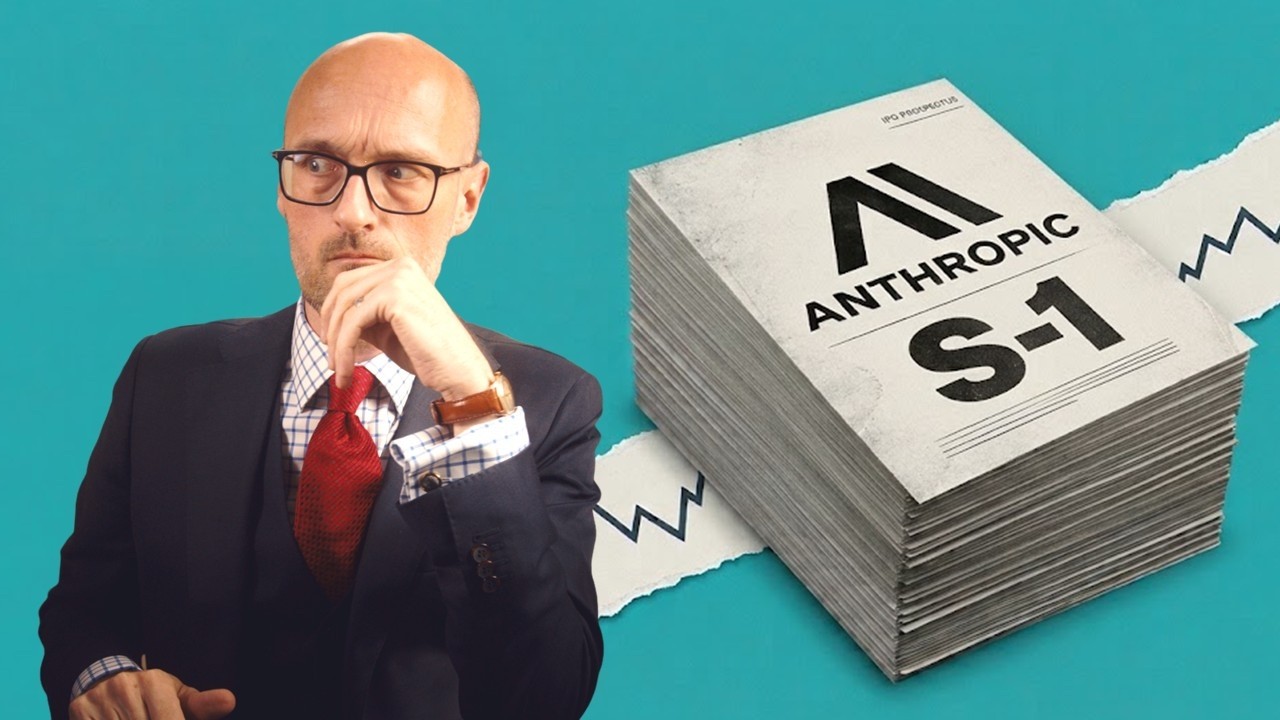
Anthropic Opened Its Books. What Is It Really Worth?
Introduction Anthropic, the artificial intelligence company behind the Claude chatbot, has released an unusual level of financial detail about its business. The disclosure offers a rare window into the economics of a leading AI lab—and raises a pointed question: does the company's valuation ref
Introduction
Anthropic, the artificial intelligence company behind the Claude chatbot, has released an unusual level of financial detail about its business. The disclosure offers a rare window into the economics of a leading AI lab—and raises a pointed question: does the company's valuation reflect its underlying performance, or the market's faith in future growth?
A Business Built on Enterprise AI
Anthropic generates revenue primarily by selling access to its AI models, both directly to businesses and through cloud partners. Its core product, Claude, competes with offerings from OpenAI, Google, and other major labs. The company has positioned itself around safety and reliability, a pitch aimed at corporate customers who need dependable tools rather than novelty.
The Numbers Behind the Hype
The disclosed figures reveal a company growing quickly but spending heavily. Revenue has climbed sharply, yet costs—particularly computing power and research—remain substantial. Training and running large AI models demands enormous infrastructure, and Anthropic relies on cloud partnerships to meet that demand. The result is a business with strong top-line momentum and significant cash burn, a profile common among high-growth technology firms but one that invites scrutiny when valuations reach the tens of billions.
What the Valuation Rests On
Anthropic's valuation depends less on current profit than on expectations. Investors are betting that enterprise demand for AI will keep expanding and that Anthropic will capture a durable share of that market. The disclosed numbers support part of that thesis: revenue growth is real, and customer adoption is broadening. But they also show how much depends on continued access to capital and computing capacity. If either tightens, the path to profitability lengthens.
The Competitive Picture
The AI market is crowded and moving fast. OpenAI remains the best-known player, while Google and others bring vast resources of their own. Anthropic's differentiation—safety-focused positioning and strong enterprise relationships—offers an edge, but not an unassailable one. Model quality changes quickly, and customers can switch providers. The disclosure makes clear that Anthropic must keep improving its products while managing costs, a balancing act that will define its next phase.
The Bottom Line
Anthropic's financial disclosure shows a company with genuine momentum and real expenses. Its valuation reflects confidence in the AI market's growth rather than present-day profitability. Whether that confidence is justified depends on execution: converting revenue growth into sustainable margins while fending off well-funded rivals. The books are open; the verdict is still being written.
Related Coverage
Anthropic Files for IPO to Raise $100 Billion, Reveals $16.3 Billion in Revenue and Massive Losses
Anthropic, the AI company behind the Claude chatbot, has filed for an initial public offering that could become one of the largest in US history. The filing reveals explosive revenue growth alongside steep losses and warns of significant risks from the technology it is building.
Anthropic Files for $100 Billion IPO, Warns Its Own AI Could End Humanity
Anthropic has filed for what could be the largest IPO in Wall Street history, seeking to raise $100 billion while simultaneously warning investors that its AI technology could cause catastrophic harm.
AI Firms Cry ‘Apocalypse’ Right Before Their $1 Trillion Stock Debuts
AI companies like Anthropic and OpenAI are warning the public about the dangers of their own technology while simultaneously preparing for blockbuster stock market debuts that could value them at over $1 trillion [170924][169730].
AI Investors Demand Answers as $675M Factory AI Deal Lands
CalPERS and other major pension funds are pushing for board-level oversight of artificial intelligence, while Japanese automation giant Omron pays $675 million for a US industrial computer maker in the rush toward physical AI.
AI’s $3 Trillion Gamble: Big Tech Spends Big, But Will It Pay Off?
Big Tech companies have poured billions into artificial intelligence, but a growing number of signals suggest the massive spending may not deliver the expected returns, raising the stakes for investors and entire economies.
China’s AI Giant DeepSeek Targets $71B Shanghai IPO Next Year, Fuels Race with US Rivals
Chinese artificial intelligence company DeepSeek plans to list its shares on the Shanghai stock exchange next year, aiming to raise fresh capital as it battles US rivals like Anthropic in the global AI race [196364]. The move comes as the company reportedly seeks $1.5 billion in new funding, valuing it at $71 billion, with a potential initial public offering (IPO) also eyed for 2027 [195999].
Related Editorials
# Anthropic’s IPO Ambitions: Does the Math Justify the Hype?
The AI giant has taken a major step toward public markets. But with soaring valuations and unproven revenue models, investors must ask: is this a generational opportunity or a bubble waiting to burst?
The Hidden Debt Crisis Threatening the Future of Artificial Intelligence
Article: The artificial intelligence industry is facing a financial reckoning that most investors and policymakers have yet to fully grasp. While the public conversation focuses on breakthrough capabilities and existential risks, a quieter but equally dangerous problem is building beneath the surfa
The Specialist Paradox: Why AI Isn’t Making Experts Obsolete—It’s Redefining Them
A provocative question is circulating in boardrooms and research labs alike: Has artificial intelligence rendered human specialists obsolete? The short answer, according to emerging evidence, is no.