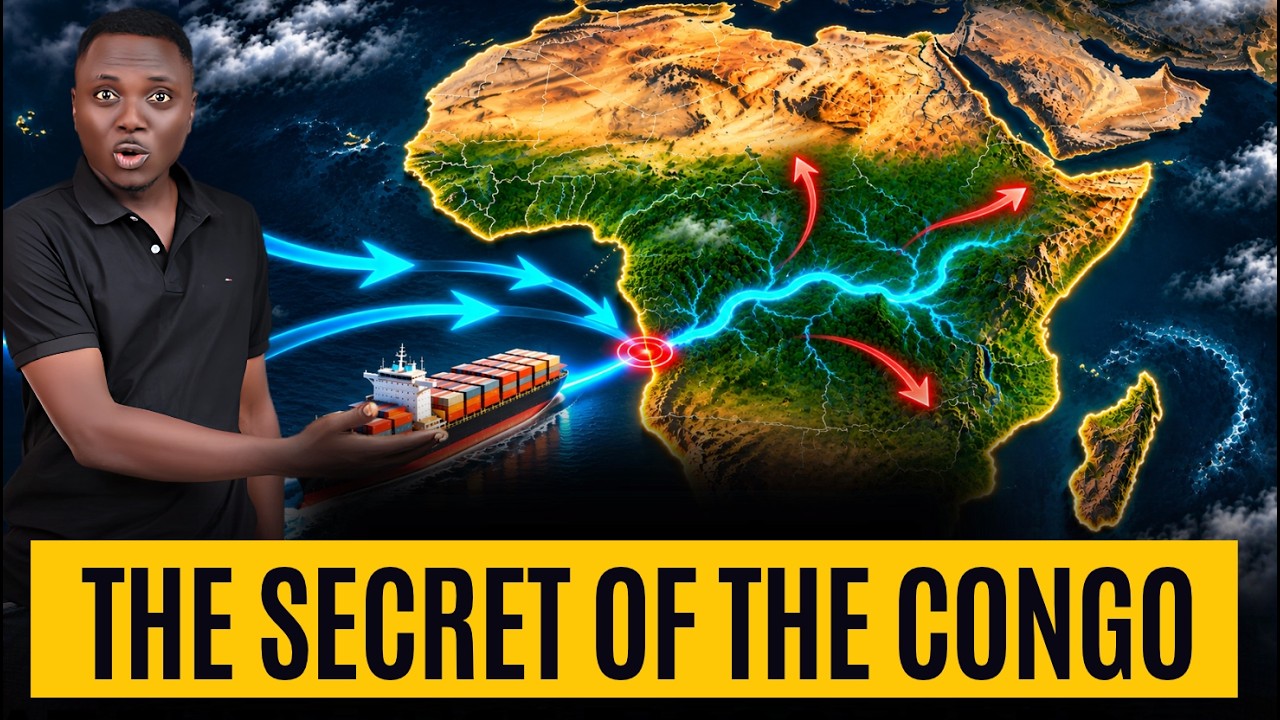
The Continent Without a Coast: Why Ships Can’t Reach the Heart of Africa
Africa is the world’s second-largest continent, home to 1. 4 billion people and some of the fastest-growing economies on Earth.
Africa is the world’s second-largest continent, home to 1.4 billion people and some of the fastest-growing economies on Earth. Yet vast swaths of its interior remain unreachable by sea. Unlike Europe, where barges glide from the North Sea to the Black Sea, or South America, where the Amazon carries ocean-going vessels 1,500 kilometers inland, Africa has no comparable water highway. Ships cannot reach the heart of the continent—and the reasons are geological, historical, and economic.
A Continent That Sits on a Plateau
Most continents have coastlines that slope gently into broad coastal plains. Africa is different. Geologically, much of the continent rests on a massive elevated plateau. The land rises sharply from the coast, often within a few dozen kilometers, creating steep escarpments and cliffs. A ship approaching the African coast encounters shallow coastal shelves, then a sudden wall of rock.
This plateau structure means rivers must descend from the interior to the sea through a series of rapids and waterfalls. The Congo River, for example, drains an enormous basin, but its final stretch to the Atlantic passes through a gorge and a series of cataracts. Ocean vessels cannot navigate past them.
The Waterfall Problem
Africa’s rivers are not short of water. The Congo carries more water than any river except the Amazon. The Nile stretches over 6,600 kilometers. The Niger and the Zambezi are mighty systems. The problem is where they meet the sea.
Most African rivers reach the coast through steep gorges or drop over waterfalls. The Zambezi plunges over Victoria Falls, one of the largest waterfalls on Earth. The Nile is interrupted by cataracts between Khartoum and Aswan. The Orange River drops through a series of rapids near its mouth. These natural barriers block navigation from the ocean to the interior.
In Europe, by contrast, rivers like the Rhine and the Danube flow through broad plains for most of their length, making them naturally navigable. Africa’s plateau geography denies it that advantage.
Shallow River Mouths and Sandbars
Even where rivers lack waterfalls, they often end in shallow deltas or sandbars. The Niger Delta, one of the largest in the world, disperses the river’s flow into a maze of mangroves and creeks. Sediment carried downstream settles at the mouth, creating shifting sandbars that prevent deep-draft vessels from entering.
The Congo’s mouth is deep enough for ocean ships to enter, but the river then narrows and shallows before the cataracts begin. The Gambia River is navigable for a considerable distance inland, but it is an exception, not the rule.
The Historical Consequence
Geography shaped history. For centuries, Europeans traded along the African coast but rarely penetrated the interior. The continent’s rivers, unlike those of Asia and Europe, did not serve as highways for trade or conquest. The Niger River, despite its length, was not navigated by Europeans until the 1830s, and then only with difficulty.
When steamships arrived in the 19th century, they could not overcome the cataracts. Colonial powers built railways instead, often from the coast to inland mines and plantations. These railways were expensive and limited in reach. Even today, Africa has fewer kilometers of railway per capita than any other continent.
The Economic Cost
The lack of navigable waterways has real economic consequences. Transporting goods by river is far cheaper than by road or rail. In Europe, a barge can carry hundreds of tons of cargo with minimal fuel. In much of Africa, goods must travel by truck over poorly maintained roads, raising costs and slowing trade.
Landlocked countries like Chad, Niger, and Uganda depend on their neighbors’ ports and roads. Their exports face higher transport costs than coastal nations, making them less competitive in global markets.
Can It Be Fixed?
Engineers have proposed dams and locks to make African rivers navigable. Some projects have been built, but they are expensive and often controversial. Dams can disrupt ecosystems, displace communities, and reduce water flow downstream. The Congo’s Inga Falls, for example, could generate enormous hydropower, but taming the river for navigation would require massive investment and careful planning.
For now, the plateau remains. Africa’s rivers will continue to flow over their cataracts, and ships will continue to stop at the coast. The continent’s interior will remain reachable by road, rail, and air—but not by sea.
Related Editorials
The Hidden Leverage: How a Global Pause in African Exports Would Trigger a Worldwide Crisis
The global economy runs on a fragile web of supply chains, and no continent is more central to its survival than Africa. Yet, the world often overlooks this dependency.
Africa’s Silent Giant: The $5 Billion Megaproject Reshaping the World’s Economy
While global attention fixates on trade wars and energy crises, a quiet revolution is underway in North Africa. Morocco has just completed a project that analysts are calling the most consequential infrastructure development for the continent in decades—yet it has barely made headlines.