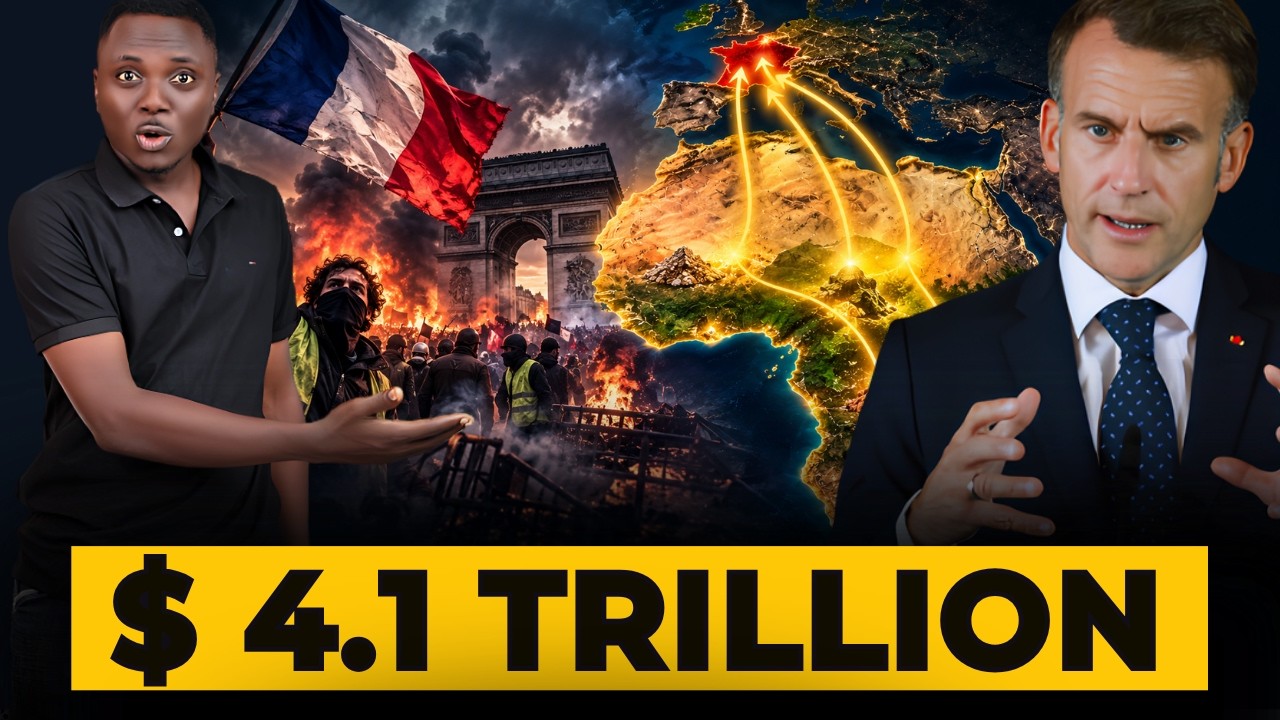
# The €3.6 Trillion Debt Crisis: Why Africa Is Demanding a Bigger Share of France's Wealth
Introduction France is drowning in debt. The country's obligations have ballooned to €3.
Introduction
France is drowning in debt. The country's obligations have ballooned to €3.6 trillion—a figure so large it exceeds the entire annual economic output of many nations. Yet even as Paris struggles to balance its own books, a growing chorus of voices from Africa is demanding a larger share of French resources, citing decades of exploitation and unpaid obligations. This tension raises a fundamental question: Can a nation buried under crushing debt afford to pay its historical debts?
The Scale of France's Financial Burden
France's €3.6 trillion debt represents a staggering 110% of its GDP. To put this in perspective, the French government spends more on servicing its debt than on defense and education combined. Each year, billions of euros flow out of the treasury simply to pay interest—money that could otherwise fund public services, infrastructure, or international commitments.
This financial strain has real consequences. President Emmanuel Macron's government has faced fierce opposition over pension reforms and budget cuts, as it attempts to rein in spending. Austerity measures have sparked nationwide strikes and protests, revealing deep public anxiety about the country's economic trajectory.
Africa's Grievance: The Colonial Legacy
The demand from Africa is rooted in history. For decades, critics have argued that France maintains a neo-colonial relationship with its former African colonies through mechanisms like the CFA franc—a currency used by fourteen African nations and historically pegged to the French franc, now to the euro.
Under this system, African countries deposit a portion of their foreign reserves with the French Treasury. Critics contend this arrangement limits monetary sovereignty and forces African nations to rely on French economic policy. While France has made some reforms—including renaming the currency to "Eco" in West Africa—many argue the fundamental structure remains unchanged.
Beyond currency, France maintains significant military presence in the Sahel region and has extensive economic interests across the continent. French companies dominate key sectors in several African economies, from telecommunications to mining. Activists argue these arrangements extract wealth from Africa while offering limited benefits to local populations.
The Debt Paradox
The irony is striking: France, a nation grappling with its own debt crisis, faces calls to compensate for historical extraction. African activists and some political leaders argue that the wealth France accumulated during colonial rule—and continues to extract through economic arrangements—represents an unpaid debt that should be addressed.
Some estimates suggest that colonial powers extracted resources worth trillions of dollars from Africa over centuries. While these figures are difficult to verify precisely, the moral argument resonates across the continent. A growing pan-African movement demands reparations, debt cancellation, and a fundamental restructuring of economic relationships with former colonial powers.
Political Pressure Mounts
The issue has gained political traction. In several African nations, leaders have publicly challenged French influence. Military coups in Mali, Burkina Faso, and Niger have led to the expulsion of French forces and a reevaluation of ties with Paris. These developments signal a broader shift in Africa's relationship with its former colonizer.
Meanwhile, France faces its own domestic pressures. Rising nationalism, economic stagnation, and public fatigue with foreign commitments have made French politicians increasingly reluctant to expand international obligations. The question of paying reparations or restructuring economic relationships with Africa is politically fraught in a nation already struggling to manage its finances.
What Comes Next?
The tension between France's debt burden and Africa's demands creates a complex diplomatic challenge. Neither side can easily ignore the other. France maintains significant economic and strategic interests in Africa, while African nations seek to assert greater sovereignty over their resources and economic policies.
Possible paths forward include debt restructuring, renegotiation of currency arrangements, and increased investment in African economies. However, meaningful progress requires political will on both sides—and a willingness to confront uncomfortable historical truths.
For now, the standoff continues. France struggles under the weight of its €3.6 trillion debt, while Africa's demand for a fairer share of wealth grows louder. How this tension resolves will shape not only Franco-African relations but also broader questions about reparations, economic justice, and the legacy of colonialism in the twenty-first century.
Conclusion
The intersection of France's debt crisis and Africa's demands for economic justice presents a defining challenge for both parties. As African nations increasingly assert their independence and France grapples with fiscal constraints, the old colonial framework is being tested. Whether through reparations, debt relief, or a fundamental renegotiation of economic ties, the outcome will reverberate far beyond Paris and its former colonies—offering a template for how nations reckon with historical injustice in an era of financial scarcity.
Related Coverage
When Power Trumps People: How War, Climate Chaos, and an AI Debt Bubble Are Reshaping Global Politics
The global order is buckling under the weight of interconnected crises, where the pursuit of geopolitical power and corporate profit is colliding with fundamental human needs, leaving the world’s most vulnerable populations to bear the heaviest burden of inflation, displacement, and violence. From the closed oil routes of the Strait of Hormuz and the escalating aerial war in Ukraine to drought-parched rivers across Europe and famine-stricken regions of Africa, a cascade of emergencies is diverting public resources away from social welfare and toward conflict [15614][15642]. At the center of this turmoil lies a massive arms trade and militarization drive that escalates global insecurity for the benefit of a few, while the financial system itself teeters on an artificial intelligence debt bubble that central banks and sovereign wealth funds warn is overheating [15672].
War, Oil, and a World Off Balance: How Conflict and Climate Are Reshaping the Global Economy
The global economy is buckling under the weight of escalating wars, a worsening climate crisis, and a financial system that prioritizes military spending and corporate profit over human welfare, leaving millions of ordinary people to bear the cost.
# War, Debt and the AI Gamble: How the Global Economy Buckled Under Its Own Priorities in 2026
A year of record military spending, spiraling government debt and a trillion-dollar artificial intelligence bet pushed the world economy to its breaking point in 2026, with ordinary people from Kyiv to Gaza to Nairobi absorbing the costs of decisions made by a handful of powers.
Strait of Hormuz, Drought, and Debt: The Global Economy Strains Under War and Climate Chaos
A global economy built on the promise of open trade and cheap energy is buckling under the weight of geopolitical conflict, strategic blockades, and a technological gold rush that is straining the very limits of infrastructure, leaving ordinary citizens to bear the brunt of inflation, fuel shortages, and a widening gap between the wealthy and the rest [15239].
# Global Power Plays and a Planet in Peril: How Financial Warfare, Climate Collapse, and the AI Boom Are Reshaping World Politics
The global order is buckling under the weight of interconnected crises, where the pursuit of geopolitical power and corporate profit is colliding with fundamental human needs. From the closed oil routes of the Strait of Hormuz and the escalating aerial war in Ukraine to drought-parched rivers across Europe and famine-stricken regions of Africa, a cascade of emergencies is diverting public resources away from social welfare and toward conflict, leaving the world's most vulnerable populations to bear the heaviest burden of inflation, displacement, and violence [1][2]. At the center of this turmoil lies a massive arms trade and militarization drive that escalates global insecurity for the benefit of a few, while the financial system itself teeters on an artificial intelligence debt bubble that central banks and sovereign wealth funds warn is overheating [3].
War, Tariffs, and Oil at $100: How a World Built on Profit Is Breaking the Global Economy
A cascade of escalating military conflicts, surging energy prices, and a breakdown in global trade is pushing the world economy to its breaking point, with ordinary citizens bearing the costs of a system that prioritizes corporate profit and military spending over human welfare.
Related Editorials
# The Bond Market Has Singled Out France — And Paris Is Running Out of Time
France now pays more to borrow than Spain, Portugal, and nearly Italy. The bond market is delivering a verdict, and it is not about deficits alone.
Britain's Debt Machine: How the Bond Market Moves Wealth from the Poor to the Rich
The UK's national debt stands at roughly 100% of GDP. The interest bill alone exceeds the defence budget.
# Has Macron Broken France? A Debate on Debt, Democracy, and the Future of Europe
Two leading economic thinkers argue that France's crisis is deeper than a budget deficit—and that the eurozone's rules may be making it worse. When French President Emmanuel Macron called snap parliamentary elections in the summer of 2024, he framed the vote as a moment of clarification for the
Paris Makes African Economic Decisions—Not Africans
For decades, the economic policies of many West African nations have been written not in their own capitals, but in Paris. This is not a conspiracy theory; it is the legacy of a colonial-era monetary system that persists into the present day.
Britain's Debt Time Bomb: Why the Budget's Blind Spot Could Sink the Economy
Introduction Britain's national debt has quietly become a crisis hiding in plain sight. While successive budgets have focused on headline spending figures and short-term giveaways, a far more dangerous problem has been building: the true scale of the country's liabilities is far larger than off
The Hidden Debt Crisis Threatening the Future of Artificial Intelligence
Article: The artificial intelligence industry is facing a financial reckoning that most investors and policymakers have yet to fully grasp. While the public conversation focuses on breakthrough capabilities and existential risks, a quieter but equally dangerous problem is building beneath the surfa