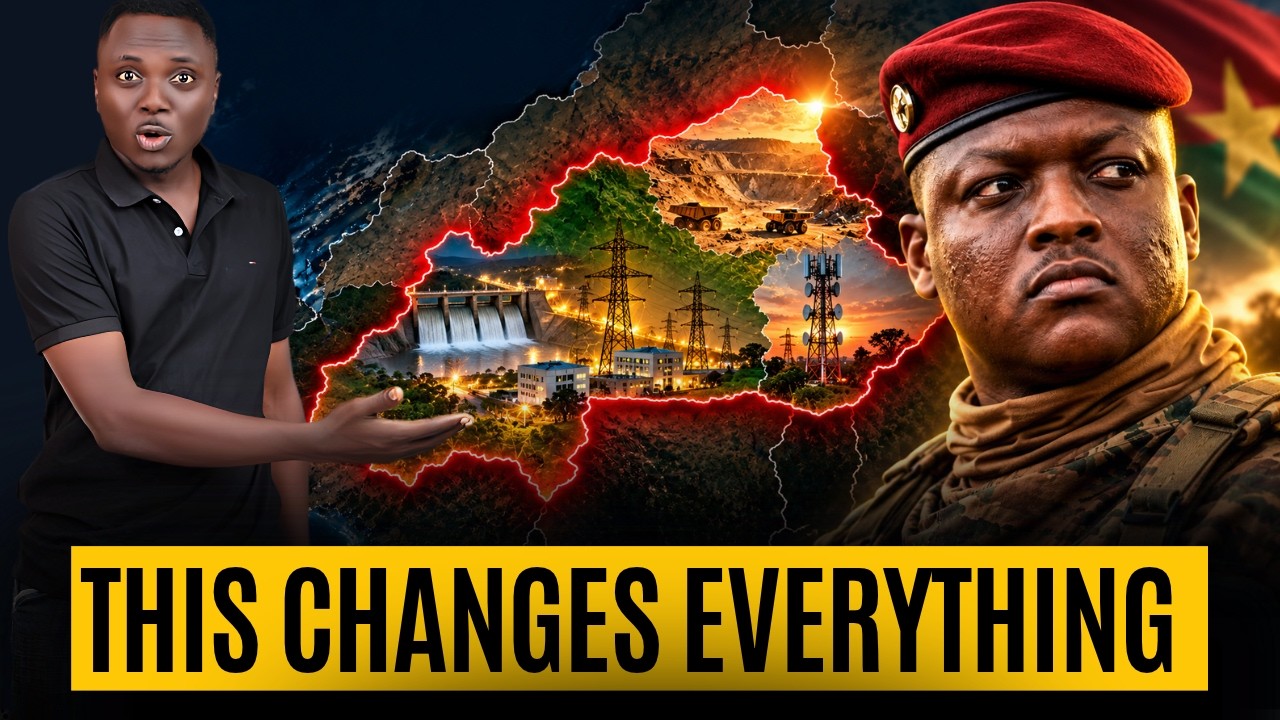
Burkina Faso Rejects Privatization: Traoré Rewrites a 33-Year-Old Law
Burkina Faso's government has moved to keep strategic state assets in public hands, revising a law that had opened the door to privatization for more than three decades. The decision, championed by Captain Ibrahim Traoré, marks a shift in how the country manages its national resources.
Burkina Faso's government has moved to keep strategic state assets in public hands, revising a law that had opened the door to privatization for more than three decades. The decision, championed by Captain Ibrahim Traoré, marks a shift in how the country manages its national resources.
A Law Built for a Different Era
Burkina Faso adopted its privatization framework in 1991. The law created a legal process for transferring state-owned enterprises to private ownership, part of a broader wave of market reforms across West Africa at the time. For 33 years, it served as the legal basis for selling off public assets.
Under the revised framework, the government is closing that pathway. The change signals that certain state enterprises will remain publicly owned rather than being offered to private buyers.
What the Revision Does
The amended law removes the presumption that state assets are candidates for sale. It restructures the legal process that previously governed privatization, shifting the default toward public retention of strategic holdings.
The government frames the move as a matter of economic sovereignty: decisions over national assets should rest with the state, not with private buyers or external creditors. Officials argue that public ownership protects jobs and keeps revenue from strategic sectors within the national budget.
Why It Matters
Burkina Faso's economy relies heavily on gold, cotton, and other primary commodities. Control over the enterprises that manage these sectors—and the revenue they generate—is a central question of economic policy. Keeping them public gives the state a direct role in allocating that revenue.
The revision also carries political weight. Traoré, who took power in 2022, has positioned his government around sovereignty and resistance to external influence. Rejecting privatization fits that agenda and appeals to citizens wary of foreign control over national resources.
The Counterargument
Critics of public ownership argue that state-run enterprises often operate at a loss, depend on subsidies, and lack the efficiency of private firms. Privatization programs across Africa were originally promoted for these reasons: to reduce fiscal burdens and attract investment.
The government's challenge will be demonstrating that public management can deliver results—maintaining productivity, attracting capital, and generating revenue without the discipline of private ownership.
What Comes Next
The law's revision changes the legal default, but implementation will determine its impact. The government must now define which enterprises fall under public protection and how they will be funded and managed. Details on those arrangements have yet to be fully specified.
For international investors and creditors, the shift introduces uncertainty about future access to state assets. For Burkina Faso's government, it is a test of whether sovereignty over resources can translate into economic benefit.
The revision closes a 33-year chapter of privatization policy. What replaces it is now the central question.
Related Editorials
Traoré’s 2026 Reforms: The Quiet Revolution That Changed a Nation’s Trajectory
For years, the narrative surrounding President Ibrahim Traoré’s leadership in Burkina Faso was dominated by speculation and polarized debate. Critics dismissed his tenure as a continuation of military rule without substance, while supporters hailed him as a pan-African savior.
The Sahel’s Quiet Revolution: Why Mali, Burkina Faso, and Niger Turned Their Backs on the West
In a move that has reshaped the geopolitical map of West Africa, three nations—Mali, Burkina Faso, and Niger—have collectively severed ties with their traditional Western allies. This is not a sudden coup or a fleeting protest; it is a calculated, strategic pivot that signals a new era of self-dete
Why Burkina Faso Severed Ties with Its Former Colonial Master
In a dramatic shift that has reshaped West African geopolitics, Burkina Faso has turned its back on France, its former colonial ruler. The move, driven by a wave of anti-French sentiment and a desire for national sovereignty, marks a decisive break from decades of political and military dependency.