Running on Fumes: Why Russia Is Losing the War It Started
In early July 2026, Russia's Deputy Prime Minister Alexander Novak joined a video call with President Vladimir Putin to deliver an update few officials would ever want to deliver. Despite the Kremlin's public insistence that the country is running with a "substantial margin of resilience," Novak an
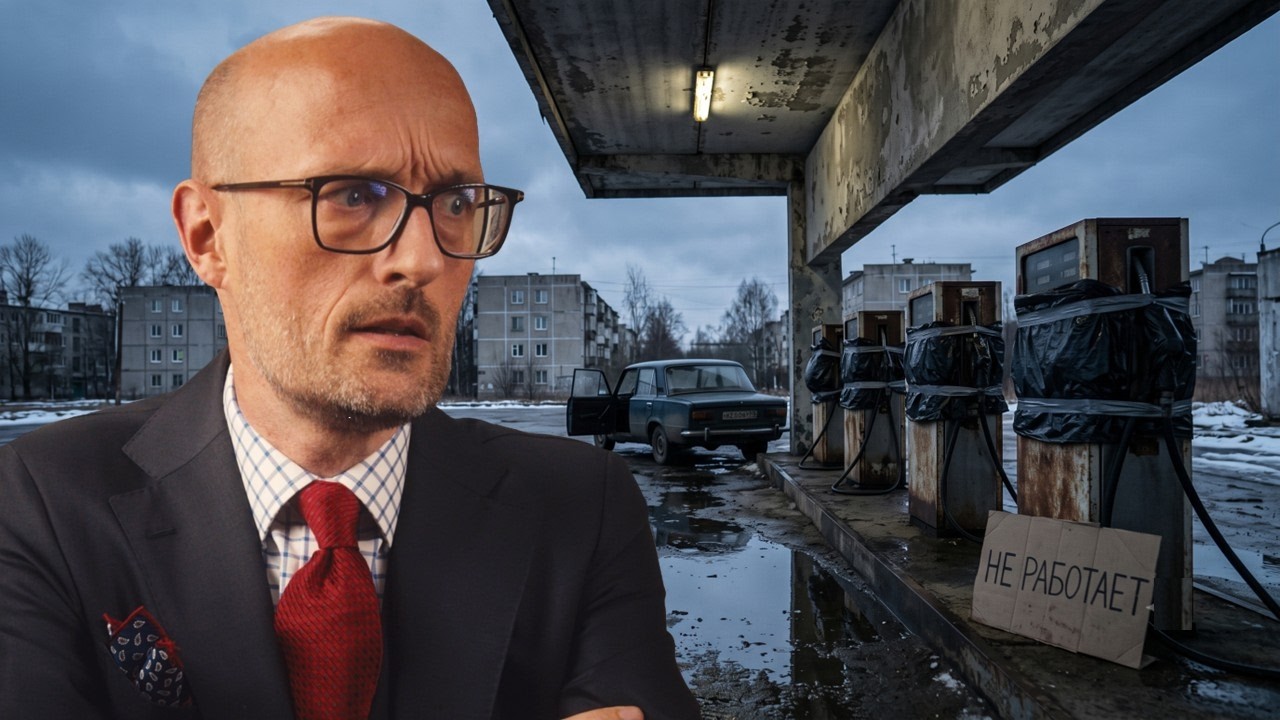
In early July 2026, Russia's Deputy Prime Minister Alexander Novak joined a video call with President Vladimir Putin to deliver an update few officials would ever want to deliver. Despite the Kremlin's public insistence that the country is running with a "substantial margin of resilience," Novak announced an immediate ban on diesel exports through July 31. The move was deeply embarrassing for a country that is, geologically speaking, mostly made of oil and markets itself as an energy superpower. Novak added that Russia would begin importing refined fuel from abroad, including emergency gasoline shipments from India.
For anyone who remembers 2003, the moment recalls Muhammad Saeed al-Sahhaf, Iraq's information minister during the American invasion. Nicknamed "Baghdad Bob," he stood before cameras insisting that US troops were nowhere near Baghdad while enemy tanks rolled past behind him. Russian state television has adopted a similar format. On air, troops advance confidently along the front line. Off air, in Moscow and roughly half of the country's regions, drivers queue for hours for a rationed daily allowance of fuel.
A parade without tanks
The management of appearances reaches the very top. In May, Russia held its annual Victory Day parade in Red Square, the event Putin uses to project military strength. For the first time in nearly two decades, the parade included no military hardware. No tanks, no missile launchers — only soldiers and the flyover. Rolling strategic equipment slowly through an open square is unwise when the other side's drones can reach Moscow. Ukraine had drones over the capital that same week.
So Putin accepted a guarantee. Ukraine's President Volodymyr Zelensky issued a formal decree declaring Red Square off-limits to Ukrainian strikes for the duration of the parade. He published the exact coordinates — in exchange for a prisoner swap of 1,000 for 1,000. The man who invaded Ukraine to restore Russian greatness held his greatness parade with his enemy's written permission. The Kremlin called the decree a silly joke.
The war moved to the refineries
The cause of the fuel shortages is no mystery. Ukraine has shifted the center of gravity of the war away from the trenches of the Donbas in eastern Ukraine and into Russia's refineries. Using drones that can fly 1,400 kilometers into Russian territory, Ukraine has destroyed roughly one third of the country's oil refining capacity. Kyiv's General Staff claims the true figure is closer to 43 percent. Independent energy analysts put it nearer a third. Either way, it is enough to force rationing in a country that exports oil for a living.
Over the summer, Ukraine widened the campaign to Crimea, the peninsula it lost to annexation in 2014 and, until recently, the one occupied territory where Russians could sunbathe and pretend the war was somewhere else. After weeks of drone strikes on power substations, oil terminals, and the ferries that supply the peninsula, Russian-installed authorities declared an indefinite state of emergency. Civilian petrol sales were halted outright, and cities went dark.
The air-raid sirens, meanwhile, have been switched off — not because Crimea is safe. A senior local official explained that the sirens would otherwise sound 22 hours a day, and nobody would get any sleep. Residents suspect a simpler motive: wailing sirens are bad for the tourist season. The beaches at Yalta stay full while, a short drive away, mobile air-defense teams fire machine guns at drones over the rooftops. Elsewhere on the peninsula, tourists spend their holidays stuck in traffic jams, trying to flee over bridges Ukraine has damaged but pointedly not destroyed. One analysis suggests Kyiv is leaving the last bridge standing on purpose — as an exit.
The daily costs spread wider still. To blunt the drones, Russian regions now routinely shut down mobile networks, which also disables card readers and cash machines. A drone alert three regions away can leave you unable to buy a coffee. And because there are not enough air-defense systems to cover everything at once, Moscow must choose what to protect. Photographs show Pantsir missile systems being lowered by helicopter onto the roofs of Moscow apartment blocks — with cover pulled from other sites to make it possible.
This is what the parades are built to hide. A war the Kremlin assumed would wrap up over a long weekend has now lasted longer than the First World War, with no end in sight. The numbers barely compute. The Center for Strategic and International Studies (CSIS), a Washington think tank, estimates Russian battlefield casualties — dead, wounded, and missing — at approximately 1.4 million between February 2022 and June 2026, including up to 450,000 deaths. Russia has lost more soldiers in Ukraine than the United States lost in every war combined since 1945 — four times over.
An economy running on fumes
If Kremlin supporters were right last year, Russia had found a loophole in the laws of financial gravity. This year, even the government's own figures disagree. A June 2026 report by the Kiel Institute for the World Economy, a German research organization, found that the Russian economy contracted 0.3 percent in the first quarter, despite sharply increased government spending. Moscow cut its own 2026 growth forecast to 0.4 percent — four tenths of one percent — from a government that spent four years describing sanctions as basically decorative.
Economist Thorsten Becker describes a "two-track economy." To control inflation, Russia's Central Bank has held interest rates above 14 percent, while the government keeps pouring money into defense. It is the macroeconomic equivalent of flooring the accelerator with the brakes locked on. The civilian economy chokes on borrowing costs, and the car goes no faster.
Russia is not collapsing — not dramatically, and not on any date anyone could schedule. The Kiel Institute's term is "structural exhaustion," which is a polite way of saying the economy is running on fumes. Russia's pre-war financial reserves are almost entirely spent, and the state is engaged in a dangerous game of off-the-books financial engineering to keep its war machine from seizing up.
The supermarket mirage
Russian citizens are not the only ones asked to believe the televised version of reality. For years, some Western commentators have looked at Russia and seen a cohesive, traditionalist paradise — looking past the military draft, crumbling infrastructure, and corruption to find a spiritually unified nation bravely resisting Western decadence.
The highest-profile example came when American commentator Tucker Carlson traveled to Moscow in 2024 to interview Putin. Carlson rode the subway, admired the stations, and visited an upscale grocery store, where he priced a week of shopping at $104 against a rough guess of $400 back home. He came away, in his own words, "radicalized" against American leadership.
Supermarket diplomacy is not new. In 1989, Boris Yeltsin visited a Houston supermarket and was so stunned by the shelves — and the absence of bread lines — that he went home and helped dismantle the Soviet Union. Thirty-five years later, an American walked into a Russian supermarket and had the opposite reaction. That works only if you visit the flagship store.
Judging a country's economy from a shop next to the Foreign Ministry is, as critics noted at the time, a bit silly. The conservative writer Jonah Goldberg called the segment "amazingly stupid," noting that Russia, per person, is about one fifth as wealthy as the United States, and that America's poorest regions are significantly wealthier than Russia. Russian GDP per capita — national output divided by population — sits around $13,000 to $15,000, versus more than $80,000 in the US. Of course the bread is cheaper in Russia.
The "traditional Christian values" argument fares no better. Surveys show religion plays an important role in the lives of about 15 percent of Russians — lower than the comparable US figure, not higher.
In fairness to Carlson, his judgment had already been tested. In a documentary interview released in late 2024, he claimed that in 2023 he woke with four bleeding claw marks on his ribs and shoulder — inflicted, in his words, by "something unseen," which he identified as a demon. Skeptics might prefer a more earthly explanation. In his autobiography, Putin describes chasing a large rat down the hallway of his childhood apartment in St. Petersburg. Cornered, the rat turned, lunged at his face, and chased him back into his parents' home. Between aging municipal plumbing, sparse pest control, and a head of state with firsthand experience of aggressive indoor rats, the simplest explanation — Occam's razor — points to a rodent.
How Moscow pays the bills
People impressed by the supermarket tour make the same mistake as people reading official GDP figures: they admire the display case and ignore the foundations. To understand how Russia actually pays for the war, look at the depleted national wealth fund — a state savings account — and the bankruptcy statistics.
Russia entered the war with a serious rainy-day account, built from years of excess oil and gas revenue. At the start of the invasion, the fund's liquid assets stood at 6.5 percent of GDP. As of April 2026, they were down to 1.8 percent. The cushion is mostly gone.
With savings depleted, the government is burning cash. In the first three months of 2026 alone, the budget deficit hit 4.6 trillion rubles. The official target for the entire year was 3.8 trillion. Moscow blew through its twelve-month limit in ninety days.
So how are the tank factories kept running? By moving costs off the books. The economist Matthew Klein, drawing on research by Craig Kennedy, lays out the arithmetic: military spending is up, oil and gas revenue is down, and the shortfall is coming from everywhere — higher taxes, spending cuts, more borrowing, and the steady sale of reserve assets, including the national gold. An energy superpower is selling its gold to cover the fuel bill.
Corporate debt has ballooned, driven largely by state-controlled banks ordered to flood military-related companies with cheap credit. The Kremlin has effectively commandeered the banking system to do through the back door what the budget cannot do openly. The state also keeps firms afloat by letting them simply not pay their bills. It sits on a mountain of uncollected taxes and fees from the corporate sector — debt by another name, filed under a friendlier heading. It is like a landlord letting a failing shop skip rent indefinitely, while the shopkeeper uses the unpaid rent to declare a record year. Eventually, someone must produce real cash before the building falls down.
The bill is arriving. Overdue corporate debt has climbed sharply, and a meaningful share of all corporate loans is now flagged as problem loans — money unlikely to be repaid. For a growing number of large Russian firms, the annual interest bill is bigger than their entire annual EBITDA — earnings before interest, taxes, depreciation, and amortization, a rough measure of operating profit. These businesses lose money at the raw operating level, before taxes or asset depreciation even enter the picture. At that point, "company" is a generous word. It is an organizational chart standing on top of an invoice someone else will eventually have to pay.
China's patient leverage
The shock that finally tips this over may not come from the West. It may come from Russia's most important partner. Days before the full-scale invasion, Putin and China's leader Xi Jinping signed a joint statement declaring a "no-limits" partnership. According to The Economist's Alicia Garcia Herrero, the trade data show this is not an alliance of equals.
China now accounts for roughly 35 percent of Russia's total foreign trade, up from 16 percent before the war. With European markets closed, Russia has become a captive supplier of raw materials with a single buyer able to take them at scale — and Beijing knows exactly how much leverage that gives it.
The Power of Siberia 2 pipeline shows the leverage in action. The project was meant to redirect gas that once flowed to Europe straight into China. Putin flew to Beijing in May hoping to close the deal. He came home with more than 40 signed documents on everything from trade to nuclear security — and nothing at all on the pipeline. China is content to let Russia wait while it keeps squeezing the terms.
Dependence extends deep into the military. The Kremlin likes to talk about "import substitution" — replacing Western goods with domestic production. Customs data tell a different story: Russia has mostly swapped a European dependency for a Chinese one. Its military-industrial complex now relies on China for the majority of its critical dual-use technology — goods with both civilian and military uses — including electronic components and CNC machine tools, the computer-controlled machines that cut and shape metal parts.
The Economist's Konstantin Ergashov went through Russian customs records. In 2021, most microprocessors entering Russia were made by American companies such as Intel and AMD. Today, those same Western brands still make up the overwhelming majority of Russia's chip imports. Only the paperwork has changed: the vast majority are now routed through China first. Beijing is not replacing Western technology. It is charging a toll on it.
With consumer goods, China skips the middleman act. Western appliance brands such as Electrolux and Indesit have all but disappeared from Russian shelves, replaced almost entirely by Chinese-made equivalents. China has not offered Russia a no-limits friendship. It is acting as a very patient landlord.
Europe rearms — without America
Moscow is burning through men and money in a war of attrition — a contest won by outlasting the enemy rather than outfighting him — and in the process it has mortgaged its economy to Beijing. The realization that sanctions are leakier than advertised, and that China is content to keep the Russian war machine running in exchange for discounted oil, has started to worry European capitals. They may one day have to fight a land war without American backup.
You might expect champagne corks in the boardrooms of US defense contractors. Instead, through early 2026, with Washington increasingly distracted, European governments opened their own wallets. Germany's Chancellor Friedrich Merz broke decades of fiscal discipline, committing to borrow more than 800 billion euros by 2030 to rebuild the military and infrastructure, with a target of defense spending at 3.5 percent of GDP by 2029 — from about 1.5 percent as recently as 2023.
Logically, the wealthiest nations on Earth rearming at once should send defense stocks soaring. Instead, in March 2026, the NYSE Arca Defense Index fell nearly 8 percent while the S&P 500 fell about 5 percent. The defense sector underperformed the broad market in the very month Europe announced its biggest rearmament since the Cold War.
Analysts offer several explanations. Much of the conflict premium was already priced in: the index had climbed more than 150 percent between 2020 and 2025. Modern defense manufacturing also runs on long production cycles — output cannot be doubled by next quarter. But there is a further reason the European checks are not all being mailed to the United States. Europe has begun to worry about depending on American technology. If Washington treats its alliances as transactional — an administration currently threatening to annex Greenland from a NATO ally is the obvious example — then building national defense around American jets starts to look less like a partnership and more like a subscription that can be canceled without notice. European officials now speak openly about American "kill switches": the possibility that a US government could restrict software updates or spare parts over a policy disagreement, turning an air force into a very expensive collection of parked aircraft.
There is also a growing suspicion that the doctrine itself is outdated. NATO planning was built on the 1990s Gulf War model: overwhelming, expensive, conventional force. In Ukraine, Russia's hundred-million-dollar weapon systems are being turned into scrap by disposable drones flown by people holding a tablet in a tree line.
Because European militaries cannot match the Pentagon's raw force, their basic strategy must look different. As a senior British official told the Financial Times, instead of matching Russia tank-for-tank, Europe will have to "thwart, create dilemmas," and build a kind of porcupine defense — making territory so decentralized, prickly, and expensive to invade that nobody bothers trying to swallow it.
To get there, Europe wants to copy Ukraine's agile, low-cost manufacturing. Ukraine went from a napkin sketch to combat-tested Flamingo cruise missiles in under nine months, and now builds them for roughly $500,000 apiece — about one fifth the price of an American Tomahawk, with double the range. The German defense firm Diehl is in talks to build the missile on German soil, rather than wait years for a more expensive American equivalent that Washington has not agreed to sell.
This raises an awkward question that European treasuries are beginning to ask out loud. Ukraine — and, in its own way, Iran — have shown that large numbers of cheap, expendable systems can blunt, bankrupt, or humiliate a far richer and more sophisticated military. A $100,000 drone that destroys a $50 million jet on the ground is not a fair fight, and it is not meant to be. So does Europe actually need fleets of expensive American fighter jets? Or is part of that spending less about deterrence than about paying tribute to Washington to keep the security relationship sweet? Nobody phrases it that way at a NATO summit, but the arithmetic is doing the talking.
Russia's nuclear arsenal, for its part, has been useless against every single thing that is actually going wrong. You cannot nuke a drone shortage.
There is a quieter point buried beneath the alarm about the Russian threat. Russia spends enormous sums on its military and still could not take Ukraine. Europe collectively already outspends Russia on defense, and it is wealthier, more populous, and further up the technology ladder. The country once said to be capable of reaching the English Channel in a matter of weeks has spent four years failing to capture towns a two-hour drive from its own border, advancing — by one CSIS measure — about 70 meters a day, slower than the trench advances of the Somme in 1916. The case for European rearmament is real. The case for outright panic assumes a ten-foot-tall Russia that the last four years have not delivered.
The irony is hard to miss. The US defense establishment spent decades lecturing Europe to spend more on its own military. Europe has finally started — and is deliberately designing a force that runs without American weapons, built in factories that are not in America.
The cornered-rat theory, revisited
Some foreign-policy commentators still hope the whole war can be wrapped up with one neat deal. The logic rests on a psychological framework known as the cornered Putin theory: never corner Russia, or the cornered rat — a nuclear superpower — might do something drastic. The diplomats who like this theory lean on the rat from Putin's hallway, the one from his autobiography. There is just one problem with using that story as a diplomatic roadmap. The people citing it seem to have forgotten how it ends. In the story, the rat did not negotiate, and Putin did not win. The rat attacked, and Putin ran away.
By launching a full-scale invasion, Putin did the cornering. He backed Ukraine into a corner and waited for it to fold. Instead, it turned around and lunged. Four years later, it is Putin who is backed against the wall, running a war of attrition that steadily dismantles his own economy, with no exit he would care to explain on television.
Ukraine's reluctance to sign a peace deal makes more sense once you work out who is actually cornered. Ukrainians are not uninterested in peace. They have learned that deals with Moscow tend not to survive contact with the next Russian offensive. In 1994, Ukraine signed the Budapest Memorandum, handing over the world's third-largest nuclear arsenal in exchange for explicit security guarantees from the United States, the United Kingdom, and Russia. In 2014, Russia annexed Crimea and started a war in the Donbas. A ceasefire produced an eight-year pause to rearm — then the rest of the invasion came in 2022. From Kyiv's perspective, a settlement with Moscow is not a peace treaty. It is a half-time.
This leaves Europe in an unusual position. As The Economist recently put it, NATO is simultaneously in the best and worst shape of its life: expanding, rearming, and better funded than ever, yet hollowed out by the prospect of America walking away. In that environment, European planners are concluding that they may need Ukraine roughly as much as Ukraine needs them. If the plan is a decentralized porcupine defense, letting Ukraine fall would mean surrendering the most combat-tested part of the entire perimeter.
That leaves the long-anticipated peace summit fairly dead in the water. Even if Putin wanted a diplomatic exit tomorrow, Europe has almost nothing to put on the table. It cannot hand over Ukrainian territory, and the strongest inducement it can realistically offer, The Economist notes, is the promise of somewhat lighter sanctions later on. That is not a triumph you bring home after four years, several hundred thousand casualties, and an emptied national wealth fund.
The Russian billionaire Andrey Melnichenko — currently eighth on Russia's Forbes list, and no dissident; ammonia from his plants goes into munitions — recently laid out the actual options in an essay for The Economist. He sketched five scenarios, most of them bleak: a collapsed state; a besieged, North Korea-style fortress economy; a slide back to the periphery of the West as a poor relation; or absorption into China's orbit as a supplier of raw materials and a strategic buffer. A triumphant return to superpower status was not among them. That verdict travels far up and down the country, and it is exactly what the Kiel Institute means by structural exhaustion. A tour guide in Feodosia, asked by The Economist what she wanted, put it slightly differently: no grand ambitions, no one trying to make things better — just the sun coming up in the morning and the tourists coming back in summer. The spreadsheet and the beach have reached the same conclusion.
Putin launched this war, ostensibly, to push back NATO and secure Russia's place as a fiercely independent great power. Four years on, Europe is running its largest military build-up since the Cold War, and the Russian economy has been reduced to a discount fuel supplier for Beijing. A wartime economy can be kept looking healthy for a surprisingly long time by cannibalizing the civilian sector to make tanks and shells. But when the rainy-day fund hits zero and your last remaining major customer is bleeding your margins, you are not an independent empire. You are a subsidiary.
Related Coverage
Putin Finally Admits It: Ukraine’s Drone Blitz Causes ‘Certain Shortage’ of Fuel
For the first time, Vladimir Putin has acknowledged that Ukraine’s relentless drone strikes on Russian oil refineries and fuel depots have caused a “certain shortage” of gasoline, as videos of desperate drivers queuing at empty filling stations spread across social media [186353].
Russia Forces Farmers to Use Fuel 90 Times Dirtier After Ukraine Strikes Destroy Diesel Supply
Russia’s Agriculture Ministry is now offering farms a type of boiler fuel that is 90 times dirtier than the diesel they used last year, following Ukrainian strikes that destroyed the country’s clean diesel supply [201802]. Experts warn the alternative fuel can cut an engine’s lifespan in half, leaving farmers with a difficult choice: use the dirty fuel or risk stopping work entirely [201802].
Putin’s War Machine Grinds Down: FSB Takes Over as Russia’s Economy Bleeds and Allies Defy Sanctions
Russia’s war in Ukraine is entering a critical phase, with President Vladimir Putin trapped between an unwinnable conflict and a crumbling economy, while his own spy agency has seized control of government and his inner circle openly flouts Western sanctions.
Ukraine's Drones Just Torched a Major Russian Oil Terminal — Fuel Crisis Worsens
Ukrainian drone strikes hit a key oil terminal near St. Petersburg, disrupting fuel exports and deepening a domestic fuel crisis that Russian President Vladimir Putin has now publicly acknowledged.
Russia’s Oil Crisis Deepens as Ukraine Drone Strikes Fuel Shortages—Moscow Weighs Import Plan
Russia is scrambling to ease a domestic fuel crisis after repeated Ukrainian drone strikes on its oil refineries caused supply disruptions, forcing the world’s third-largest crude producer to consider importing petrol and diesel for the first time in years.
Putin Refuses Peace Talks as Russian Economy Crumbles, Morale Hits 20-Year Low
Moscow – Russian President Vladimir Putin is refusing to negotiate an end to the war in Ukraine, even as the Russian economy strains under sanctions and public pessimism hits a two-decade high. Putin has doubled down on military goals, vowing to capture more Ukrainian territory while dismissing Kyiv’s leaders as “play actors” and ignoring growing domestic fatigue.