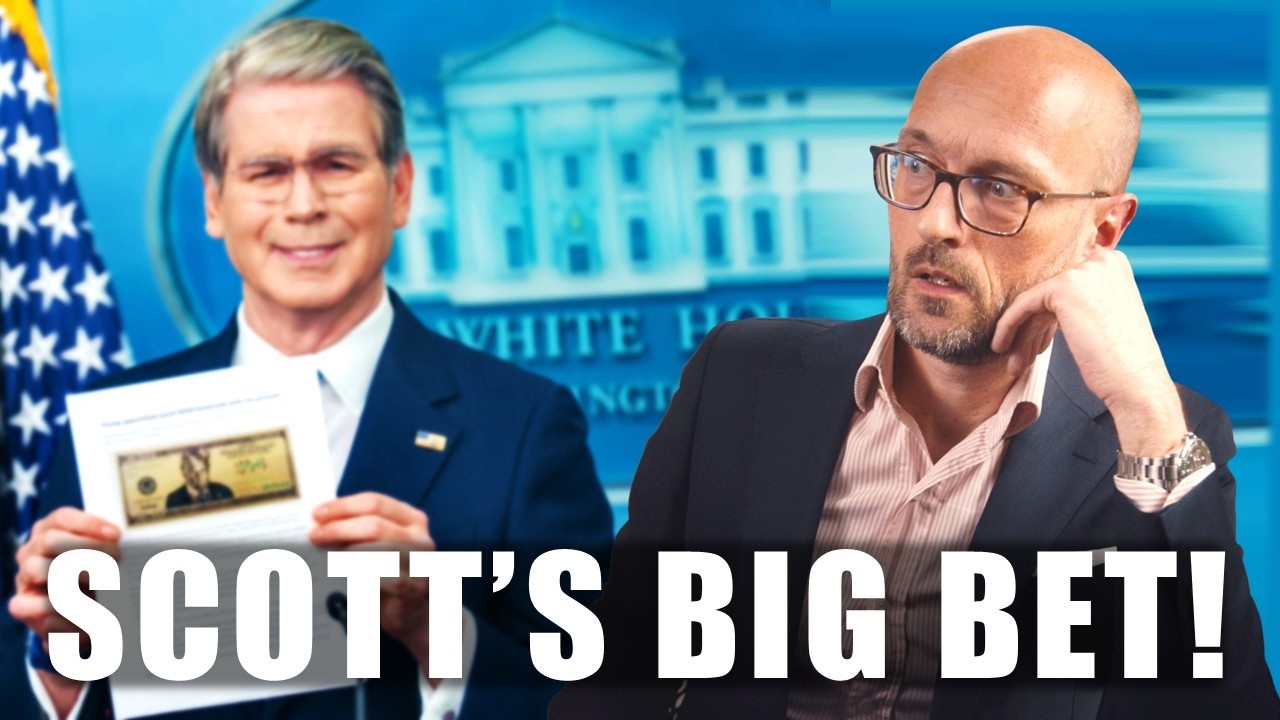
The Treasury Secretary’s Losing Battle: Why Prices Keep Defeating Scott Bessent
In the high-stakes arena of global finance, few figures project as much quiet confidence as U. S.
In the high-stakes arena of global finance, few figures project as much quiet confidence as U.S. Treasury Secretary Scott Bessent. Yet, despite his pedigree as a hedge fund mogul and his aggressive policy maneuvers, a formidable opponent is currently pinning him to the mat: the price of goods. Bessent has declared war on inflation, but the latest data suggests that prices are not merely holding the line—they are advancing. This is the story of a policy paradox where the cure risks becoming deadlier than the disease, and why the man tasked with steadying the American economy finds himself fighting a rearguard action against the very forces he was appointed to tame.
The Escalation of the Conflict
The battle lines were drawn early in Bessent’s tenure. His strategy, centered on fiscal restraint and a strong dollar, aimed to squeeze the excess liquidity that had driven consumer costs to multi-decade highs. However, the economic landscape has shifted. The primary drivers of inflation are no longer the overheated demand of the post-pandemic boom, but rather supply-side shocks and structural bottlenecks. By focusing his firepower on demand, Bessent is discovering that the enemy has changed its uniform.
Recent consumer price index reports reveal a troubling stickiness in core services and housing. While headline numbers have cooled from their 2022 peaks, the "last mile" of disinflation has proven brutally difficult. Bessent’s push for energy independence and deregulation was supposed to lower costs at the pump, yet geopolitical tensions and OPEC+ production cuts have kept crude prices volatile, directly undermining the Treasury’s projections.
The Tariff Tightrope
Perhaps the most controversial weapon in Bessent’s arsenal is the tariff. Viewed through his lens, tariffs are a negotiating tool and a means to reshore critical industries. But on the ground, they function as a direct tax on imports, and prices are reacting accordingly. Retailers, facing higher input costs, are passing those increases to consumers immediately. The administration’s hope that foreign manufacturers would "eat" the tariff costs has largely failed to materialize; instead, American households are seeing the impact on everything from electronics to auto parts.
This creates a vicious cycle. As tariffs push prices up, the Federal Reserve is forced to maintain higher interest rates for longer. This strengthens the dollar, which makes American exports less competitive, widening the trade deficit—the very issue the tariffs were meant to fix. Bessent is caught in a macroeconomic pincer movement where his tools to fight inflation are simultaneously fueling it.
The Market’s Verdict
The bond market, often the sternest judge of fiscal policy, is sending a clear signal. Long-term yields have remained stubbornly elevated, suggesting that investors are pricing in a future where inflation is a permanent feature, not a temporary anomaly. Bessent’s insistence on fiscal discipline is being undermined by the sheer scale of government debt service costs. With interest payments on the national debt now exceeding defense spending, the Treasury is caught in a bind: cut spending and risk a recession, or borrow more and fuel the inflationary fire.
The "Bessent Put"—the market’s belief that the Treasury will step in to stabilize equities—is looking increasingly like a myth. Instead, we are seeing the emergence of a "Bessent Tax," where the cost of government policy is being levied directly on consumer purchasing power.
A Question of Credibility
The core issue facing the Treasury Secretary is one of credibility. Markets and consumers no longer trust that the current policy mix can deliver price stability without significant economic pain. Every pronouncement of victory over inflation is immediately met with a surge in commodity prices or a hot jobs report that forces a recalculation. Bessent is fighting a psychological war as much as an economic one, and the narrative is slipping away from him.
The Road Ahead
To reverse this trend, Bessent must pivot from a war on demand to a war on supply constraints. This means aggressive deregulation in housing construction, a strategic petroleum reserve policy that actually stabilizes prices rather than merely refilling the stockpile, and a recalibration of tariffs to exclude intermediate goods that raise manufacturing costs. Furthermore, he must work in tandem with the Fed to manage expectations, rather than publicly second-guessing their rate decisions.
Until that strategic shift occurs, the headline of this administration’s economic policy will remain a tale of defeat. Scott Bessent is at war with prices, but unless he changes his ammunition, prices will continue to win—one grocery bill and one bond auction at a time. The outcome of this conflict will define not just his legacy, but the economic well-being of millions who are simply looking for the cost of living to stand still.
Related Coverage
Hedge Funds Now Run the $27 Trillion Treasury Market — And That’s a Problem
Wall Street’s safest corner has become its riskiest bet: hedge funds now dominate the $27 trillion U.S. Treasury market, using heavy borrowing to chase tiny price differences, a strategy that could trigger a sudden sell-off and spike government borrowing costs if one major fund fails.
Dollar Dominates: Pound Set for Worst Close Since June as 10-Year Treasury Yield Breaks 5%
The British pound is heading for its lowest close against the US dollar since June, while the 10-year Treasury yield has climbed above 5% for the first time since 2007, pressuring stocks and currencies worldwide.
Trump Admin’s Bond Market Meddling Could Blow Up Your Mortgage Rates
The Trump administration is pushing for more control over how U.S. government bonds are issued and priced, a move that experts warn could raise borrowing costs for everyday Americans instead of lowering them.
Related Editorials
# The Bond Market Has Singled Out France — And Paris Is Running Out of Time
France now pays more to borrow than Spain, Portugal, and nearly Italy. The bond market is delivering a verdict, and it is not about deficits alone.
The Yen’s Plunge: Why Tokyo’s Intervention Is Losing the Battle
In the high-stakes arena of global currency markets, the Japanese yen’s recent collapse has triggered alarm bells in Tokyo. Faced with a currency trading at multi-decade lows, Japanese authorities stepped in to support it.
OPEC’s Unraveling: Why the Cartel’s Collapse Now Looks All But Certain
For decades, the Organization of the Petroleum Exporting Countries (OPEC) has functioned as the undisputed referee of global energy markets, wielding its members’ vast crude reserves to set prices and stabilize supply. Yet, beneath the veneer of quarterly meetings and production quotas, tectonic fo