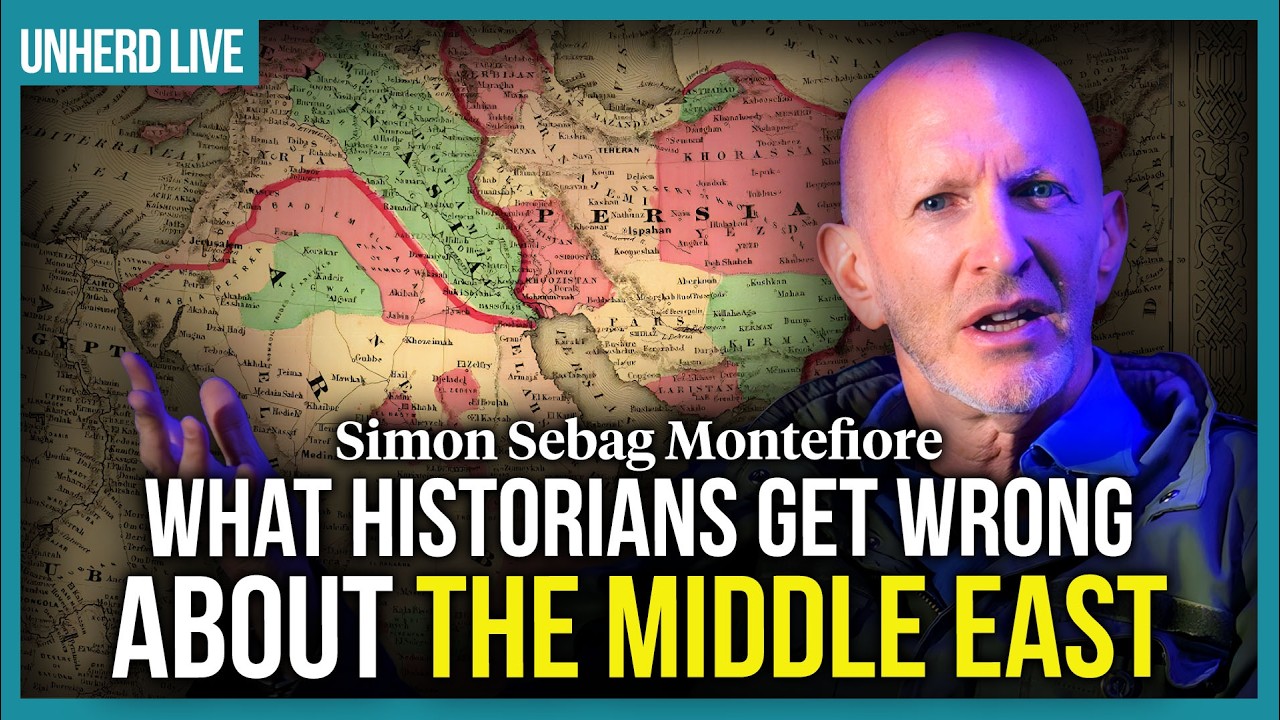
The Middle East’s Real History: Challenging the Western Narrative
For decades, the Western understanding of the Middle East has been filtered through a lens of colonial legacy, resource politics, and a persistent tendency to view the region as a monolithic bloc defined by conflict. However, a growing body of historical scholarship argues that this narrative is no
For decades, the Western understanding of the Middle East has been filtered through a lens of colonial legacy, resource politics, and a persistent tendency to view the region as a monolithic bloc defined by conflict. However, a growing body of historical scholarship argues that this narrative is not only incomplete but fundamentally flawed. By re-examining the region’s pre-colonial past, its economic structures, and its complex social fabric, historians are uncovering a story that defies the simplistic "ancient hatreds" trope.
The Myth of the Static Region
A central error in Western historiography is the assumption that the Middle East remained culturally and politically stagnant until the arrival of European powers. This perspective, often termed "Orientalism," portrays the region as a passive entity waiting to be modernized from the outside. In reality, the Ottoman Empire—which controlled much of the Arab world for four centuries—was a highly dynamic, multi-ethnic state.
The Ottoman legal system was not a rigid application of religious law but a complex, layered structure that accommodated diverse communities. The millet system, for instance, granted religious minorities a degree of autonomy over personal status laws, allowing for a functioning pluralistic society. This was not a "dark age" of despotism but a sophisticated system of governance that maintained stability through negotiation and local autonomy.
The Economy Before Oil
The modern association of the Middle East with oil wealth has created a dangerous historical blind spot. Prior to the 20th century, the region’s economic power did not derive from hydrocarbons but from its position as a global trade nexus. Cities like Aleppo, Basra, and Cairo were vibrant centers of commerce, connecting the Indian Ocean trade routes with the Mediterranean.
The shift to an oil-based economy did not simply bring wealth; it fundamentally distorted the region's political economy. It created a "rentier state" model, where governments derive most of their revenue from external sources rather than taxation. This dynamic, imported and encouraged by Western powers, reduced the need for governments to be accountable to their citizens, a structural issue that fuels many of the region's modern governance crises.
The Nation-State as a Foreign Imposition
One of the most controversial arguments put forward by revisionist historians is that the concept of the "nation-state" itself is a foreign import that clashes with the region's traditional social organization. The borders drawn by the Sykes-Picot Agreement and the subsequent League of Nations mandates carved up the Arab world into artificial entities that often ignored ethnic, tribal, and sectarian realities.
However, the reality is more nuanced. Local actors were not passive victims of this process. They actively negotiated, resisted, and adapted to the new state system. The failure of the post-Ottoman order is not that it ignored pre-existing "tribal" identities, but that it failed to integrate them into a functioning civic framework. The current instability is less a product of ancient sectarian hatred and more a symptom of the failure of the modern state to provide legitimate, inclusive governance.
The Colonial Legacy of "Divide and Rule"
The transcript’s critique of the "divide and rule" strategy is crucial. While it is true that colonial powers often exacerbated sectarian tensions to maintain control, the key insight is that these identities were not static. They were politicized and institutionalized through colonial administrative practices. For example, the preference for certain groups in military or bureaucratic roles created new hierarchies that did not exist in the same form prior to colonization.
This legacy persists. The current crises in the region are not a return to a primordial past but a direct result of the institutional frameworks established during the 20th century. The challenge for historians and policymakers is to move beyond the cliché of "ancient hatreds" and analyze how modern political, economic, and military pressures have weaponized identity.
Redefining the Narrative
The most significant contribution of this new historiography is the rejection of the notion that the Middle East is a "problem" to be solved. Instead, it is a region with a rich, dynamic history that has been consistently misread by external powers. The narrative of inevitable conflict serves a political purpose; it absolves external actors of responsibility for the consequences of their interventions.
To understand the Middle East, one must look beyond the headlines of war and extremism. The region is a complex tapestry of social movements, intellectual traditions, and economic aspirations. The task is not to impose a new order but to understand the historical currents that have shaped the present. Only by discarding the myths of the past can we begin to see the region as it actually is—a vital, evolving part of the global community, not a timeless battleground.
Related Editorials
The Sahel’s Hidden War: Why Mali’s Conflict Is Far Larger Than Reported
For years, the war in Mali has been framed as a remote insurgency—a localized struggle between government forces and Tuareg rebels in the country’s vast northern desert. But new evidence suggests that this framing is dangerously incomplete.
The Blame Game: How Modern Politics Abandoned Solutions for Scapegoats
A growing chorus of analysts argues that Western democracies are trading problem-solving for finger-pointing—and the consequences may be profound. Something has shifted in the machinery of democratic politics.