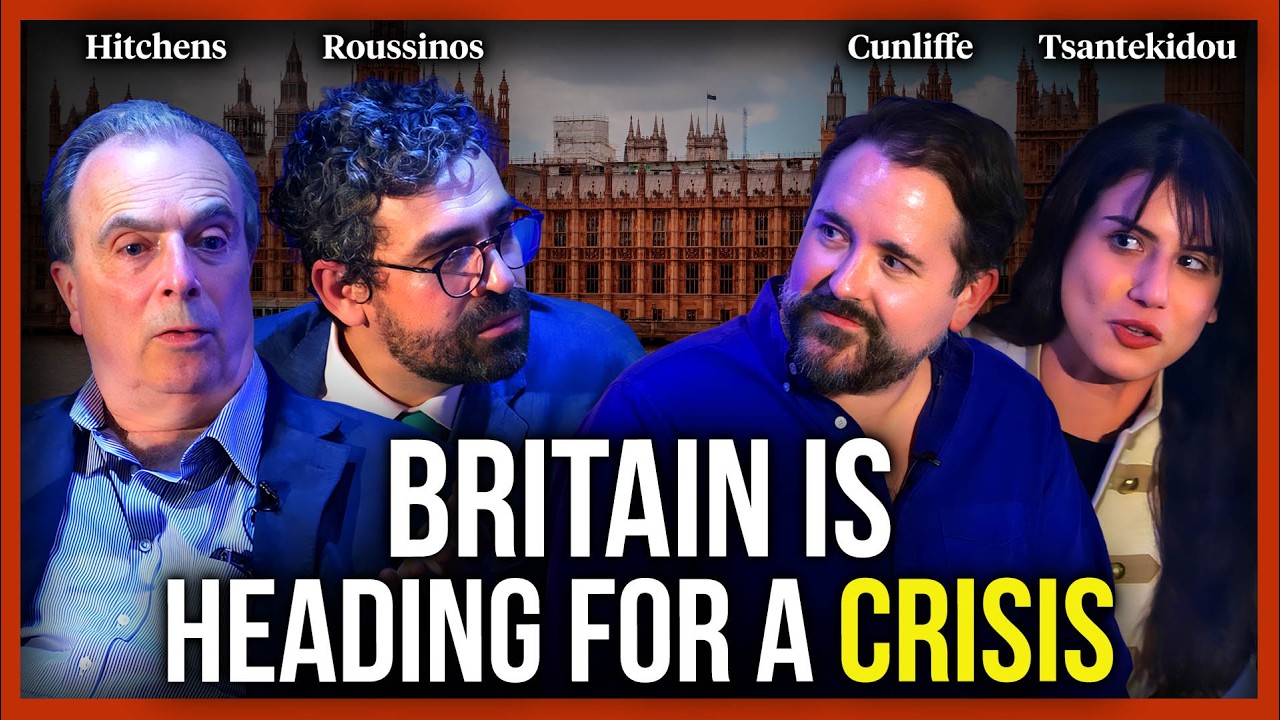
Britain’s Fiscal Trap: Why the Next Government Faces an Impossible Choice
The United Kingdom is not approaching a crisis; it is already inside one. The next government, regardless of which party wins the upcoming election, will inherit a set of economic conditions that make meaningful reform nearly impossible.
The United Kingdom is not approaching a crisis; it is already inside one. The next government, regardless of which party wins the upcoming election, will inherit a set of economic conditions that make meaningful reform nearly impossible. The country is trapped between high debt, stagnant growth, an aging population, and a public that refuses to accept the necessary medicine.
The Debt Spiral Has Begun
The core problem is simple mathematics. The UK is currently spending more on debt interest payments than it does on entire government departments. Interest rates, which were near zero for over a decade, have normalized. This means the cost of servicing the national debt has exploded. When a government spends roughly £100 billion a year just on interest, it has drastically less money for healthcare, defense, education, or infrastructure.
This is not a temporary blip. The structural deficit—the gap between what the government spends and what it earns, even when the economy is running normally—has not been closed. It was masked by years of quantitative easing and artificially low interest rates. That mask is now gone.
The Demographic Time Bomb
The UK’s population is aging rapidly. The ratio of working-age people to retirees is shrinking. This creates a vicious cycle: fewer workers pay taxes, while more people require pensions and healthcare. The National Health Service (NHS) is already buckling under demand. As the population ages, the cost of the NHS will rise faster than the economy can grow.
Politicians have avoided discussing this reality for decades. They promised tax cuts, increased spending, and stable public services simultaneously. Mathematics does not allow this. The "triple lock" on pensions ensures state payments rise with inflation, wages, or 2.5 percent—whichever is highest. This is politically untouchable but fiscally unsustainable.
The Growth Paradox
The standard solution to high debt is economic growth. If the economy grows faster than the debt, the problem shrinks. But the UK faces a structural growth problem. Productivity—the engine of long-term prosperity—has been flat for over a decade. Brexit has added friction to trade. Business investment is weak. The planning system makes it nearly impossible to build housing, infrastructure, or energy projects quickly.
Without growth, the only way to balance the books is to raise taxes or cut spending. Both options are politically toxic. The UK already has the highest tax burden in 70 years. Cutting spending means reducing services that a vulnerable population depends on.
The Trap of Public Expectation
This is the crux of the crisis. The British public has been conditioned to expect high-quality public services funded by relatively low taxes. This is a contradiction. Every major party knows this, but none will say it clearly during an election campaign. To win, they must promise everything to everyone. To govern, they must break those promises.
The result is a cycle of short-term fixes. Governments kick difficult decisions down the road. They borrow more, hoping growth will return. They use accounting tricks to hide spending. They blame the previous government for the mess. But the underlying arithmetic does not change.
The Inevitable Outcome
If nothing changes, the UK faces one of two scenarios. The first is a fiscal crisis: bond markets lose confidence, interest rates spike, and the government is forced into an emergency austerity program, similar to the 2010s but more severe. The second is a slow decline: persistent low growth, deteriorating public services, rising taxes, and a gradual erosion of living standards.
There is no painless way out. The next government will have to choose between betraying its voters or bankrupting the country. The crisis is not coming. It is here. The only question is how long the political system can pretend otherwise.
Related Coverage
Labour in Crisis: 75,000 Voters Could Topple Starmer in Thursday's By-Election
A single by-election in Greater Manchester this Thursday could decide the fate of Prime Minister Keir Starmer, as 75,000 voters in the Makerfield constituency prepare to cast ballots that may trigger a leadership collapse.
Oil, War, and a World on Edge: A Fragile Peace Holds the Global Economy Hostage
The global economy is caught in a brutal contradiction: a historic diplomatic breakthrough that could unlock the world’s most vital oil route is being torn apart by the very conflicts it was meant to end, leaving markets, consumers, and the world’s most vulnerable populations trapped between the hope of relief and the reality of relentless war and a worsening climate crisis.
Senate Races Could Decide Social Security's Fate as Trust Fund Runs Dry in 6 Years
Social Security's retirement trust fund is projected to run out of money in six years, and the senators elected this November will take office just as the program faces a funding crisis. Lawmakers from both parties are weighing options including raising taxes on high earners.
US Adds Only 57,000 Jobs in June — Economy Stalls as Trump’s Party Faces Midterm Wipeout
The United States added far fewer jobs than expected in June, signaling new trouble for the economy ahead of the midterm elections and putting President Donald Trump’s Republican Party under intense pressure.
UK PM in Crisis as Two Defence Chiefs Quit Over Russia Threat
Britain’s Prime Minister Keir Starmer is fighting for his political survival after his defence secretary and defence minister resigned over claims the government is not spending enough to protect the country from a potential Russian attack.
One Crisis, Not Many: How War, Oil, Water, and AI Converged to Reshape Global Politics in 2026
The world's most urgent problems—war, energy shocks, water scarcity, and the race for artificial intelligence—have merged into a single, self-reinforcing emergency. As ordinary households absorb record costs, a narrow set of powerful interests reaps record rewards, and the institutions meant to manage global affairs are straining under the weight.
Related Editorials
The UK’s Economic Stagnation: A Global Warning
The United Kingdom is currently serving as a cautionary tale for developed economies worldwide. After decades of policy missteps, structural stagnation, and a loss of strategic direction, the nation finds itself trapped in a cycle of low growth, declining living standards, and political instability
Britain’s Real Crisis Isn’t a Bad Leader—It’s a Broken State
For years, the world has watched Britain cycle through prime ministers with alarming frequency, from Brexit turmoil to the brief, chaotic tenure of Liz Truss. Yet focusing on the failures of individual leaders misses the deeper, more systemic problem.
Britain’s Broken State: Why the Machinery of Government Needs a Total Rebuild
The United Kingdom is running on a system designed for a different era. From sluggish infrastructure to a crisis in public services, the evidence suggests that the current model of governance is no longer fit for purpose.
Farage’s Victory in Clacton: A Symptom, Not the Cure, for Britain’s Political Crisis
When Nigel Farage finally secured a seat in the British Parliament, the political establishment braced for chaos. His victory in the coastal constituency of Clacton was decisive, but it raises a far more pressing question than the fate of one maverick MP: what does this signal about the state of Br
Inflation Is Rising. Will the Bank of England Finally Pull the Trigger?
The debate over the cost of living has shifted from academic circles to the kitchen table. As global supply chains strain and energy prices climb, the United Kingdom is facing a familiar yet uncomfortable specter: rising inflation.
Can Andy Burnham Rebuild Britain If the OBR Says No?
The United Kingdom faces a fundamental question about its economic future: can a government deliver large-scale national renewal when the country’s independent fiscal watchdog says the numbers don’t add up? Greater Manchester Mayor Andy Burnham believes the answer is yes—but only if Westminster cha