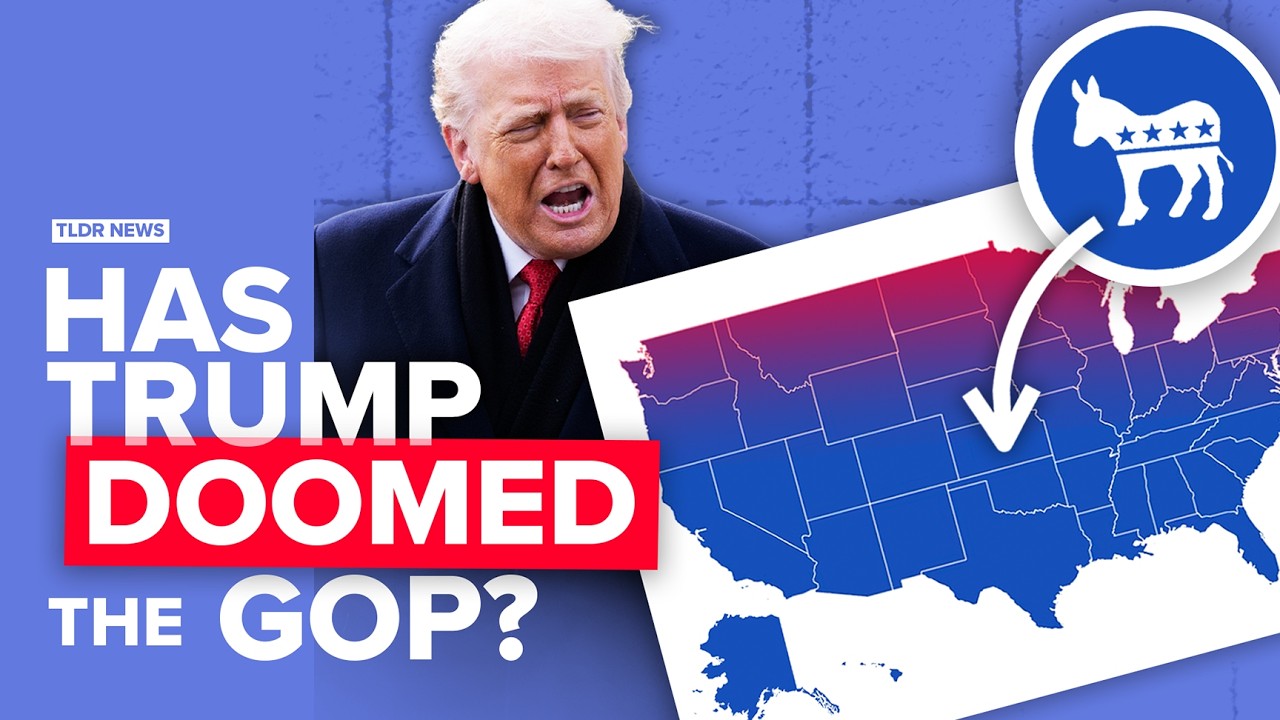
Why the Democratic Midterm Outlook Is No Longer a Certain Disaster
For much of 2025, the political consensus held that the Democrats were heading into the midterm elections with a structural disadvantage. Economic anxiety, lingering inflation, and historical precedent—where the party holding the White House almost always loses seats—painted a grim picture.
For much of 2025, the political consensus held that the Democrats were heading into the midterm elections with a structural disadvantage. Economic anxiety, lingering inflation, and historical precedent—where the party holding the White House almost always loses seats—painted a grim picture. However, a confluence of recent data and political developments suggests that the narrative is shifting. While the path remains narrow, the Democratic Party’s prospects for the upcoming midterms are looking considerably more viable than they did just a few months ago.
The Shifting Political Terrain
The primary driver of this renewed optimism is a change in the electoral environment. Recent polling indicates a tightening in the generic congressional ballot, with the Democrats closing a gap that once seemed insurmountable. This shift is not accidental; it is the result of specific policy wins and a recalibration of the party’s messaging strategy.
Specifically, the administration has successfully pivoted the public conversation toward economic issues that resonate with working-class voters. By focusing on measures to curb price gouging and lower household costs, the party has begun to neutralize the Republican advantage on economic competence. Voters are beginning to perceive the Democratic agenda as more directly responsive to their daily financial pressures, rather than as a series of abstract legislative victories.
The Republican Vulnerability
Conversely, the Republican Party is facing internal fractures that are complicating their ability to mount a unified campaign. The ongoing leadership battles within the House have exposed a party struggling to govern, which undermines their primary attack line against Democratic control. When the opposition is perceived as chaotic and focused on internal squabbles rather than solving national problems, undecided voters often look elsewhere.
Furthermore, the GOP’s hardline stance on certain social issues is proving to be a liability in suburban swing districts. These areas, which were crucial to Republican gains in recent cycles, are showing signs of fatigue with cultural warfare. The data suggests that these voters are prioritizing stability and economic pragmatism over ideological purity, a trend that favors Democratic candidates who position themselves as moderates.
The Data Behind the Shift
The analytics support this narrative. Approval ratings for the President, while still below 50%, have stabilized after months of decline. More importantly, the intensity of opposition is softening. In key battleground states, the number of voters who list "Democratic extremism" as their primary concern has dropped, replaced by a more general anxiety about the cost of living—an issue where Democrats are now polling competitively.
Voter turnout models are also being revised. The Democratic base, particularly younger voters and minorities, who were showing signs of apathy, are demonstrating renewed enthusiasm. This is largely attributed to the administration’s aggressive stance on student loan forgiveness and climate investment, which are mobilizing the progressive wing that often sits out non-presidential elections.
A Narrow but Real Path
It is crucial to maintain perspective. The Democrats are not the favorites. The historical headwinds remain strong, and the Senate map is inherently difficult for them. However, the race is no longer a foregone conclusion. The party has successfully navigated the most dangerous period of the cycle, avoiding the internal collapse that many predicted.
The next few months will be defined by whether the Democrats can sustain this momentum and whether the Republicans can resolve their internal disputes. For now, the evidence suggests that the midterms are a genuine contest. The Democrats have moved from a position of defensive vulnerability to one of competitive opportunity, a shift that few analysts predicted at the start of the year. The election, once expected to be a referendum on the incumbent party, is increasingly shaping up to be a choice between two very different visions for the country.
Related Coverage
Democrats Eye Six-Seat Senate Gain as Iowa Race Tightens in 2026 Midterms
Democrats could flip six Senate seats in 2026, according to a new forecast, while a surprisingly close race in Iowa emerges as a key indicator of national voter mood.
Democrats’ Civil War Goes Prime Time: 2 Progressive Wins, 2 Party Splits, 1 Messy Midterm
Democrats are heading into the midterms fractured, with progressive insurgents scoring major primary upsets while party leaders in Texas voted on dueling resolutions to abolish or reform ICE—exposing a divide that could cost them seats in November.
Democrats Gain Edge in 3 Senate Races, Majority Within Reach
Democrats have gained a clearer path to winning control of the U.S. Senate after nonpartisan forecasters shifted three key races in their favor, while a $50 million Democratic ad blitz targets conservative strongholds.
Democrats Flip 18 House Seats as Midterms Near
Democrats are gaining ground in key races with just weeks to go before the November 3 midterm elections, with new analysis showing 18 additional House seats shifting in their favor.
Oil, War, and the Ballot Box: How Chokepoint Crises, Ukraine's Agony, and a Far-Right Surge Are Reshaping Global Politics
From the Red Sea to the U.S. midterms, a wave of interconnected crises — energy shocks, escalating wars, AI fears, and democratic flashpoints — is squeezing households and testing the world's political order.
Democrats Lead by 8 Points as Nearly 100 Lawmakers Exit Congress Before Midterms
A new poll shows Democrats ahead by eight points as record numbers of lawmakers leave Congress and left-wing candidates win primary races ahead of the November 3 midterm elections.
Related Editorials
Early Voting Data Signals Democratic Momentum—But the Race Isn't Over
As millions of Americans cast their ballots ahead of Election Day, early voting data is offering the first concrete clues about voter enthusiasm and party turnout. While the numbers appear encouraging for Democrats, analysts caution that early voting patterns are not necessarily predictive of final
# The Unraveling of Democracy: How Economic Insecurity Is Reshaping American Politics
A growing body of research suggests that financial precarity—not ideological polarization—may be the driving force behind democratic backsliding in the United States. For decades, political scientists assumed that citizens who felt economically secure would be more likely to participate in demo
The Democrats’ Civil War: A Party at War With Itself
The Democratic Party, long viewed as a broad coalition united by shared opposition to Republican policies, is facing an internal rupture that threatens to redefine its identity. What was once a simmering tension between its progressive and moderate wings has now erupted into a full-blown conflict o
Can Democrats Finally Flip Texas? The Perfect Storm Behind Terico's Historic Bid
Texas was once a swing state, but it has been reliably red for decades. A Democrat has not won statewide office in the Lone Star State since 1994, a gubernatorial race since 1990, or a US Senate race since 1988.