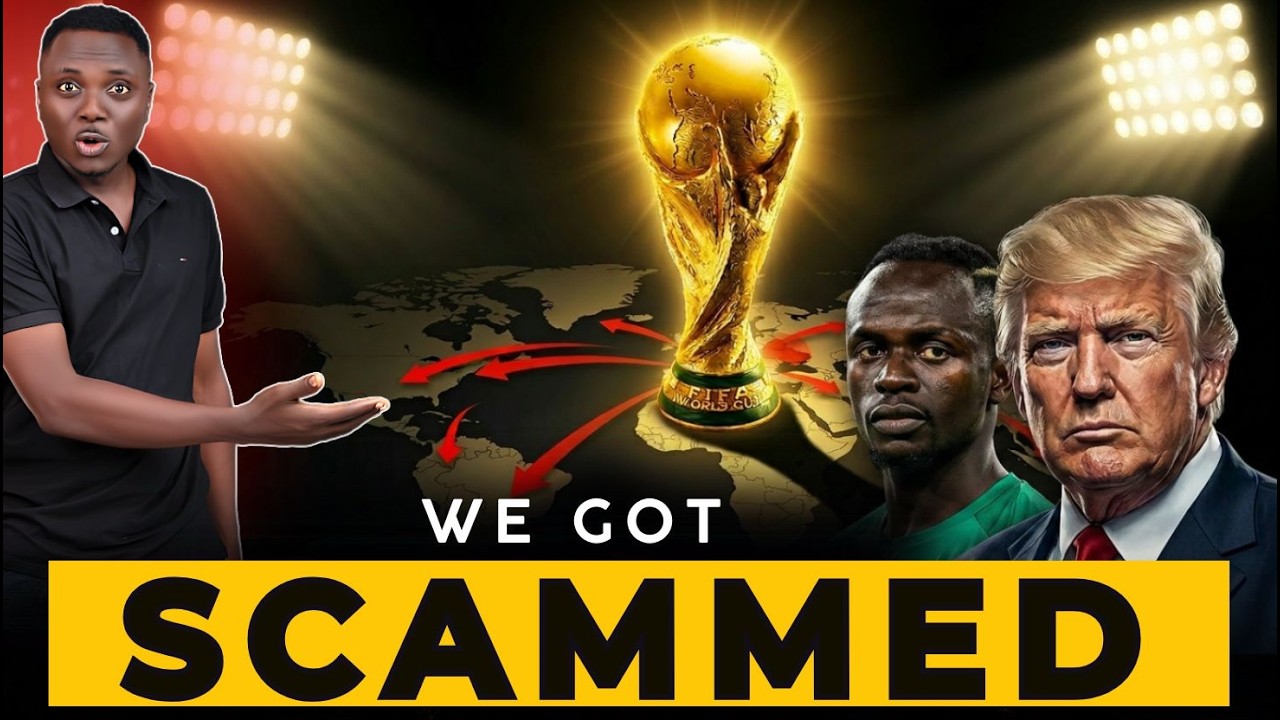
The $15 Billion Mirage: Why Governments Keep Losing Money on World Cups
Every four years, nations engage in a fierce bidding war to host the FIFA World Cup. The winning country then commits billions in public funds to build stadiums, airports, and infrastructure.
Every four years, nations engage in a fierce bidding war to host the FIFA World Cup. The winning country then commits billions in public funds to build stadiums, airports, and infrastructure. Governments promise economic growth, tourism booms, and national glory. But the numbers tell a different story: hosting the World Cup is almost always a financial loss for the public.
The core argument is simple. Governments spend heavily on stadiums that will rarely be used after the tournament ends. Qatar built eight new stadiums for the 2022 World Cup, at a cost of over $6.5 billion. Brazil spent roughly $3 billion on stadiums for the 2014 event. Russia’s 2018 World Cup cost an estimated $11.6 billion. In almost every case, these venues operate at a fraction of their capacity after the final whistle. Many become white elephants—expensive, underused structures that drain local budgets.
But if the economics are so poor, why do governments keep bidding? The answer lies in a mix of political incentives, national pride, and a powerful lobbying machine.
First, politicians gain enormous short-term visibility. Cutting a ribbon on a new stadium or announcing a winning bid generates headlines. The construction phase creates jobs, which voters notice. By the time the economic hangover arrives—when maintenance costs pile up and promised tourism revenues fail to materialize—the politicians who made the decision have often moved on or been re-elected.
Second, the bidding process itself is rigged in FIFA’s favor. Host nations agree to massive tax exemptions, relaxed labor laws, and complete control over commercial rights. FIFA keeps most of the revenue from broadcasting, sponsorship, and ticket sales. The host country absorbs the costs. This imbalance is not accidental. FIFA, as the governing body, has structured the deal to maximize its own profits while shifting risk onto the public.
Third, there is the "nation branding" effect. Governments believe that hosting a World Cup projects an image of modernity, competence, and global relevance. For emerging economies like South Africa in 2010 or Qatar in 2022, the tournament is a chance to signal that they have arrived on the world stage. This intangible benefit—prestige—is difficult to measure but powerful enough to justify billions in spending.
Yet the evidence for lasting economic benefits is weak. A 2017 study by economists at the University of Oxford analyzed all World Cups and Olympic Games since 1960. It found that cost overruns were the rule, not the exception. On average, every World Cup exceeded its budget by 157%. The promised "multiplier effect" of tourism and investment rarely materialized at the scale predicted. Instead, the money spent on stadiums could have been used for hospitals, schools, or infrastructure with higher long-term returns.
There is also a human cost. In Qatar, thousands of migrant workers died or were injured building World Cup infrastructure under harsh conditions. In Brazil, protests erupted over the billions spent on stadiums while public services remained underfunded. The social contract between citizens and their government is strained when public money is diverted to a month-long sporting event.
So why does this cycle continue? Because the decision to host is not a rational economic calculation. It is a political and emotional one. The promise of a global spotlight, the roar of the crowd, and the chance to write a national story of triumph override the spreadsheet of costs. FIFA, insulated from the consequences, has no incentive to change the system.
For the next host—the United States, Canada, and Mexico in 2026—the pattern will likely repeat. Stadiums will be upgraded, budgets will swell, and politicians will celebrate. The real bill, however, will arrive years later, paid by taxpayers long after the final goal is scored.
The World Cup is a celebration of sport. But its economics are a sobering lesson in how governments, driven by pride and pressure, can spend billions for a fleeting moment of glory.
Related Coverage
Ceasefires Collapse, Wars Escalate: How a Global Arms Trade Fuels a World on Fire
A fragile global order is fracturing as a cascade of collapsing ceasefires, escalating wars, and a deepening climate emergency converge, pushing energy markets into chaos and leaving millions of ordinary people to bear the costs of a system that prioritizes military spending and corporate profit over human welfare. From the Middle East to Ukraine, and from Europe to Africa, the machinery of war is diverting trillions of dollars away from healthcare, housing, and climate resilience, fueling a cycle of displacement, poverty, and death.
2026 World Cup in Chaos: Visa Bans, Trade Wars & $1,000 Tickets Threaten FIFA's Biggest Event
The 2026 World Cup is facing unprecedented political and logistical crises before a single ball is kicked, with strict U.S. border rules already blocking referees and officials, trade wars driving ticket prices past $1,000, and a potential US-Iran knockout clash threatening to turn the tournament into a geopolitical powder keg.
Related Editorials
The 2026 World Cup: A Tournament Too Big for Its Own Good?
FIFA’s decision to expand the World Cup to 48 teams for the 2026 tournament, co-hosted by the United States, Canada, and Mexico, was heralded as a celebration of global football. But beneath the fanfare lies a logistical and competitive puzzle that critics argue threatens the very fabric of the spo
Africa’s Boldest Gamble Since Independence: The Continent’s Push for a Unified Currency
For decades, the dream of a united Africa has lingered as a political fantasy—a relic of post-independence optimism. But now, a coalition of nations is taking what analysts call the continent’s most audacious economic step since the end of colonial rule: the creation of a single, shared currency.
FIFA’s $1.5 Billion Hypocrisy: How the World Cup Funds the Problem It Claims to Fight
In the summer of 2022, FIFA launched a high-profile campaign to support migrant workers in Qatar. The slogan was simple: “Better Work, Better Lives.