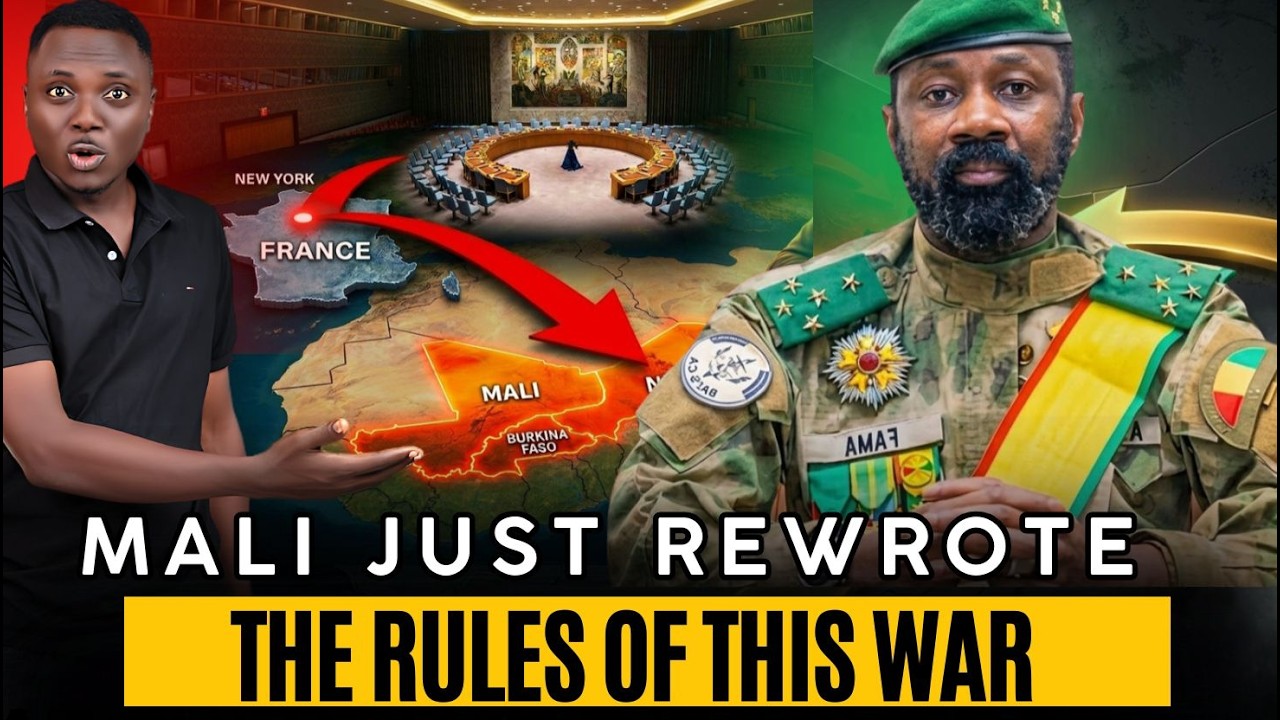
Title: Mali’s Offensive Breaks Rebel Siege: A Turning Point in the Sahel Conflict
Introduction In a dramatic reversal of fortune, Malian government forces have launched a counteroffensive that has shattered the momentum of two of the Sahel’s most formidable militant coalitions. The operation, which caught the al-Qaeda-aligned group JNIM and the separatist FLA off guard, mark
Introduction
In a dramatic reversal of fortune, Malian government forces have launched a counteroffensive that has shattered the momentum of two of the Sahel’s most formidable militant coalitions. The operation, which caught the al-Qaeda-aligned group JNIM and the separatist FLA off guard, marks one of the most significant tactical victories for Bamako in recent years. This article examines the strategic implications of the attack and what it reveals about the shifting balance of power in the region.
The Strategic Context
For months, the region around the central Malian town of Timbuktu had been under increasing pressure. JNIM (Jama'at Nusrat al-Islam wal-Muslimin), a coalition of jihadist groups, and the FLA (Front de Libération de l'Azawad), a Tuareg-led separatist movement, had been tightening their grip on key supply routes and staging areas. Their goal was to isolate government-held positions and force a withdrawal of Malian troops.
However, the Malian Armed Forces (FAMa), supported by Russian military contractors from the Africa Corps (formerly Wagner Group), prepared a decisive response. Utilizing intelligence from aerial surveillance and local informants, they identified a concentration of rebel forces preparing for a major assault.
The Counterattack
The operation began with a series of precision artillery strikes and drone attacks on rebel command posts. These strikes targeted logistics hubs and communication nodes, effectively blinding the insurgent leadership. Within hours, ground forces moved in.
Helicopter gunships provided close air support as infantry units advanced in a pincer movement. The FAMa forces, equipped with armored vehicles and heavy machine guns, engaged rebel fighters in direct combat. The speed and coordination of the attack prevented the militants from regrouping.
According to military sources, the offensive destroyed multiple rebel technical vehicles—standard pick-up trucks mounted with heavy weapons—and seized a significant cache of ammunition. Dozens of fighters from both JNIM and the FLA were reported killed or captured. The remaining forces retreated in disarray, abandoning their forward positions.
Why This Matters
This counterattack represents a critical shift in dynamics for several reasons:
- Breaking the Siege: The operation relieved pressure on Timbuktu, which had been effectively cut off from resupply. This allows the Malian government to reassert control over a vital economic and cultural hub.
- Intelligence Dominance: The success of the strike highlights a growing capability in signals intelligence and aerial reconnaissance. This is a capability that insurgent groups have struggled to counter.
- Coalition Friction: The joint nature of the attack against JNIM and the FLA exploits the inherent tensions between jihadist and separatist factions. The FLA seeks an independent Azawad state, while JNIM aims to impose a strict interpretation of Islamic law across the entire region. Forcing them to fight together under pressure can strain their fragile alliance.
The Human Cost and Civilian Impact
While the military victory is clear, the situation on the ground remains volatile. The displaced population from the surrounding villages faces a humanitarian crisis. As the Malian army advances, there are reports of reprisal attacks against communities suspected of harboring rebels. International observers have called for restraint, warning that heavy-handed tactics could drive more civilians into the arms of the insurgents.
Analysis and Outlook
The counterattack does not signify the end of the insurgency. JNIM and the FLA remain resilient forces with deep roots in the local population. They are likely to revert to guerrilla tactics—ambushes, IEDs, and hit-and-run raids—to avoid further set-piece battles.
However, the operation has dealt a serious blow to their prestige. For the first time in months, the Malian army has seized the initiative. The key question now is whether Bamako can hold the ground it has taken and, more importantly, win the trust of the local population. Without a political solution to the grievances that fuel the conflict, even the most successful military offensive will only provide a temporary reprieve.
Conclusion
Mali’s counterattack has shocked JNIM and the FLA, proving that the government is capable of sophisticated, multi-domain operations. It is a clear message that the era of uncontested rebel movements in the Sahel may be coming to an end. But the true test lies ahead: turning a tactical victory into a strategic advantage.
Related Coverage
Related Editorials
Title: Burkina Faso’s Revolt Against France Triggers an Irreversible Domino Effect in the Sahel
In a move that has reshaped the geopolitical landscape of West Africa, Burkina Faso’s decision to sever ties with its former colonial power has ignited a chain reaction that analysts now describe as irreversible. The country’s military junta, which seized power in a 2022 coup, has not only expelled
Title: The Sahel’s Quiet Revolution: Why Mali, Burkina Faso, and Niger Turned Their Backs on the West
In a move that has reshaped the geopolitical map of West Africa, three nations—Mali, Burkina Faso, and Niger—have collectively severed ties with their traditional Western allies. This is not a sudden coup or a fleeting protest; it is a calculated, strategic pivot that signals a new era of self-dete
Title: Niger’s Silent Coup: Why the Junta’s Own Soldiers Turned on General Tiani
Article: In a dramatic turn of events that has sent ripples through the Sahel region, Niger’s military junta faces its most significant internal challenge yet. Reports from Niamey confirm that a faction of the country’s own armed forces has moved against General Abdourahamane Tiani, the man who
Algeria’s Quiet Rearmament of the Sahel: A Strategic Shift with Regional Shockwaves
In a move that has recalibrated the balance of power in Northwest Africa, Algeria has begun a significant military supply program to the Alliance of Sahel States (AES). The deliveries, which include armored vehicles, artillery systems, and advanced drone technology, mark a decisive departure from A
Title: The Sahel Alliance Just Redrew West Africa’s Geopolitical Map—And ECOWAS Is Scrambling
Introduction In a move that has sent ripples through West African diplomacy, the Alliance of Sahel States (AES) has unveiled a significant new project that regional bloc ECOWAS did not anticipate. The development marks a decisive step in the consolidation of the AES as a standalone geopolitical