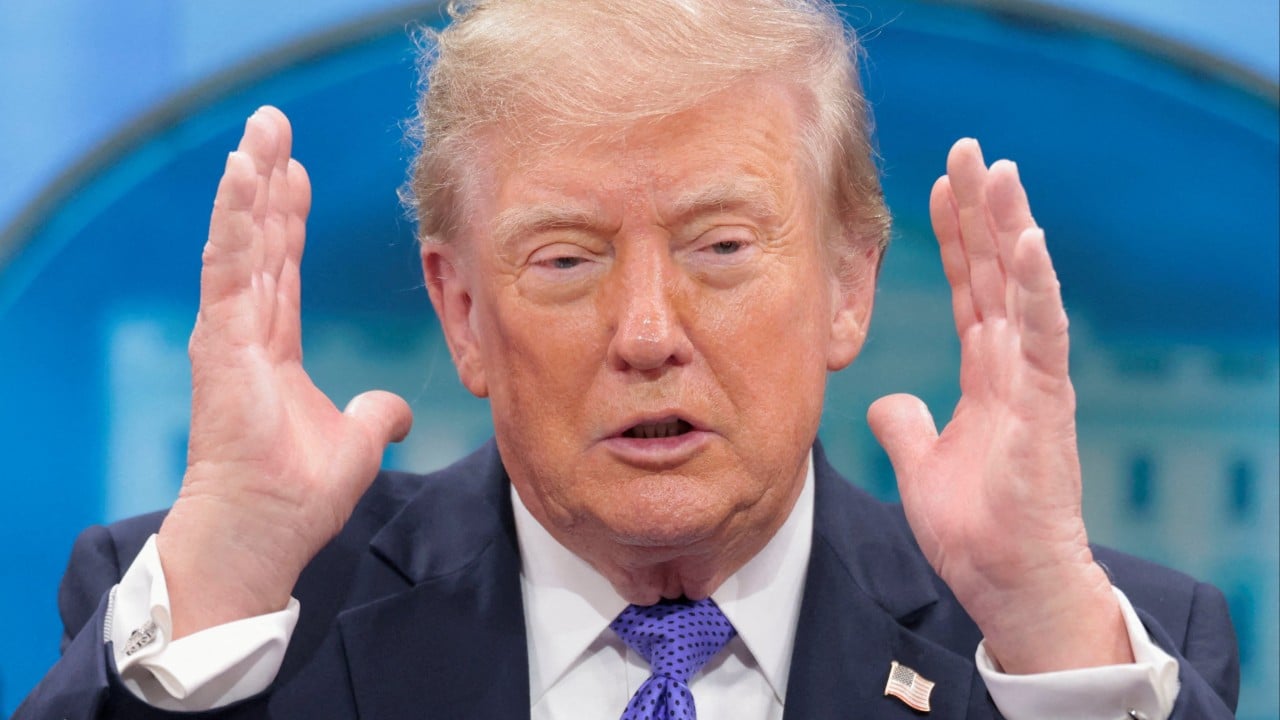
Trump
Donald Trump forced Nvidia to reinstate its scandal-hit chief while holding millions in the chipmaker's stock, dropped a tariff wall on 14 trading partners, pressed Vladimir Putin for a fast peace deal and ordered a probe of his own government's economic numbers.
Donald Trump's week ran on shock action: the Usa president pushed a $4 trillion company's board into rehiring its disgraced chief — while personally holding millions in the chipmaker's stock [294608] — unveiled import duties of up to 40 percent on 14 trading partners [294893][294564], told Vladimir Putin to end the Russia–Ukraine war quickly [295583][295558] and ordered an investigation into his own Commerce Department for publishing economic data he calls "fake" [295372]. Allies called it strength. Republicans, judges and markets pushed back.
The Nvidia affairThe defining fight centered on Jensen Huang. The Nvidia chief had been pushed out over an alleged relationship with a woman tied to Chinese intelligence and chip smuggling [293290]; eleven days later Trump forced the board to take him back [293020][292954], telling allies he "convinced them" [292945] and later claiming credit for a $1 trillion market surge [293359][293417]. A White House task force had ordered the reinstatement [293955], the president floated a pardon as "an option" [294198], and the Attorney-General was accused of "gaslighting" the public as shares fell 7 percent on the questions she dodged [293971][294149]. The bill is coming due: Congress questioned Trump's own security-clearance judgment on Huang [293326], Republicans openly turned on the deal [292955], and critics accused him of putting the stock market over national security [292966][293328] — with his personal Nvidia stake in the picture [294608] and JD Vance denying any DOJ probe [294611]. Washington blacklisted Megaspeed, the Chinese-linked cloud firm at the center of the scandal [293036]. Tech executives, analysts noted, had discovered they could flex power in the capital and win [294005][293919], while worry spread that the Ai bubble now threatens US pensions [295044] — and that Trump's weak hand on China will outlast the drama [295263].
Tariffs and the numbers fightThe tariff wall rose again: fresh duties of 20–40 percent hit China, the European Union, Japan and roughly a dozen more partners [294893][294564][294310][294011], with China facing an extra 20 percent [294606]. The global backlash was immediate [294901], Beijing and Tokyo pushed back together [294990], and markets wobbled under the combined weight of inflation, tariffs and AI nerves [295247][294244][293441] as gold's rally faded [293475]. Voters are angry about prices — but Democrats may not undo the tariffs even if they win [294704]. The stranger fight was with statistics: Trump called GDP data "fake" and ordered a probe of his own Commerce Department [295372], and by Thanksgiving a conspiracy theory about rigged economic numbers had gone mainstream [295522].
Peace push: Putin, Ukraine and IranTrump leaned on the Kremlin. He said he told Putin to stop the war [295583], pushed for a rapid end to the fighting [295558] and quietly froze US business deals with Moscow [294004][294547] — a partnership without trust, analysts warned [293008]. NATO chief Rutte defended the friendship as Trump "testing" Putin [295035]. Volodymyr Zelenskyy went to Congress to urge pressure on Russia if the Trump deal fails [293471], while Kushner tied any Ukraine security guarantees to US interests [293236]. On Iran the president went further: major combat operations launched [294575], Netanyahu pressing for new strikes as Israel's political crisis deepened [294948], Tehran vowing to use "all means" against the US naval blockade [293313] — and Democratic wins narrowing his options [292795]. The Saudi nuclear deal, pitched as a strategic gamble, is part of the same leverage game [293389].
The autocrats' embraceThe Shenzhen summit's shadow lingered. Trump's trilateral with Xi Jinping and Putin drew fire for denouncing "rogue globalist organisations" [294126] and was branded collusion with autocrats against the American-led order [292890]. The promised meeting with Kim Jong Un never materialized in Shenzhen [295423], Kim answered by ordering more nuclear weapons in defiance of Trump [295474], and the Asia tour closed without him [292892]. A US-China thaw raised the question of who needs whom more [295571][294142] — though the summit will not crack China's rare-earth licensing maze [295336], and Boeing left Beijing empty-handed all the same [292842].
Immigration, courts and moneyThe deportation machine kept moving. Kilmar Abrego García, the face of the crackdown, left the country for Spain [295031][294110][293976], ICE raids reached university campuses with a PhD student detained [295303], international students stayed away — costing universities millions [295076] — SNAP cuts reached school meals [295506], and Trump said only 2 percent of Minnesota's Somalis should stay [295460]. Courts kept stinging but rarely stopped him: a new shot at erasing the hush-money conviction on a faster clock [294582][293734], a BBC appeal against his $10 billion lawsuit [294960], a judge slamming the "weaponization" of law enforcement [294578], allies silent as he attacked the ICC [294064] — yet he keeps losing in court and getting what he wants anyway [292894]. The money moved too: SpaceX pledged $17.8 billion in shares to the "Trump accounts" for American children, its chief adding $2 million herself [294647][294692][295049], a new rule pushed ESG out of 401(k)s [293334], a Medicare drug deal cut $9.2 billion [293515] — and he still muses about "taking" Cuba [294973].