Israel Is Not a Democracy, Historian Says, Because Palestinian Votes Do Not Count
Israeli historian Ilan Pappé argues that Israel cannot be considered a democracy while the votes of its Palestinian citizens are excluded from real power. He makes the case in a new book and in interviews about Gaza's history and the future of the region.
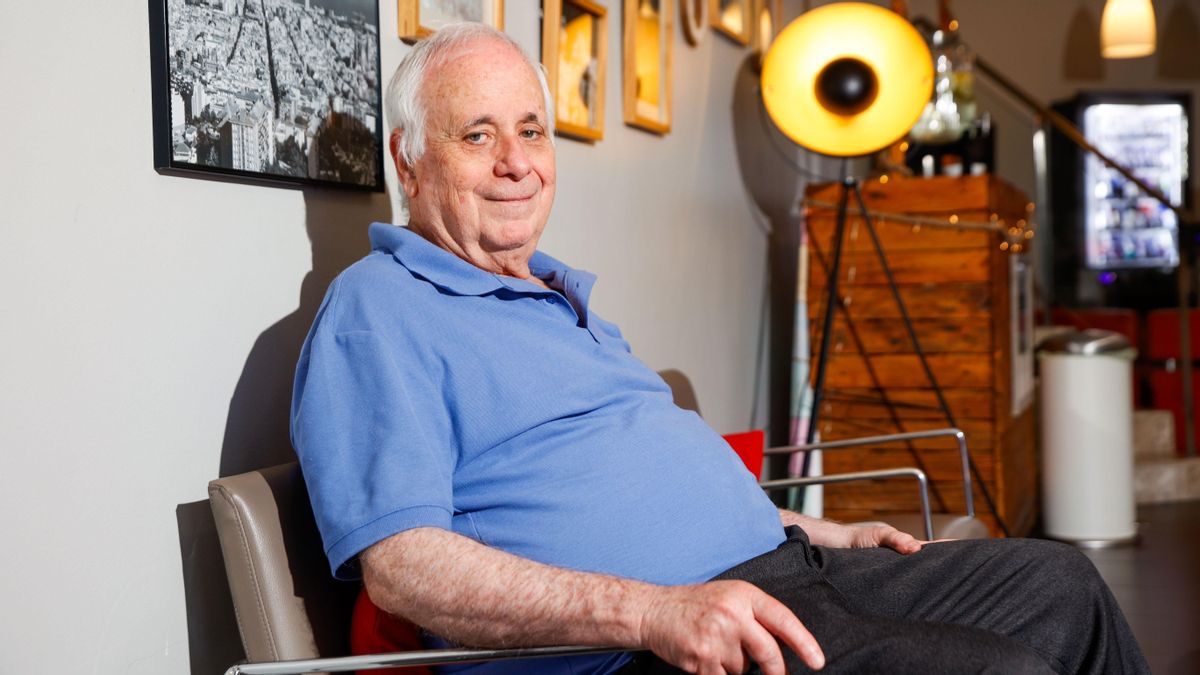
Israeli historian Ilan Pappé has said that Israel is not a democracy because Palestinian votes do not count, in comments made as Israel held general elections on October 27. Pappé, a professor at the University of Exeter and one of the strongest critics of his own country and of Prime Minister Benjamin Netanyahu's government, made the argument while presenting two books published in Spanish this month [290991].
The first book, *A Brief History of Gaza* (Capitán Swing, 2026), covers the territory from ancient times to the present, including the many conquests it has suffered and the heritage Israel has reduced to ruins. Pappé says that explaining to people that Gaza was a very important place — a prosperous and developed site that played a crucial role in the social, cultural, economic and political history of Palestine — helps to understand much of the collective trauma suffered by Palestinians in Gaza. That trauma, he adds, does not begin with the current genocide; it goes back to 1948 and has passed from generation to generation [290991].
The second book, *Judaism vs. Zionism: Why Israel Is Not a Jewish State* (Akal, 2026), argues that Europe owes a debt to Jews, not to Israel. Pappé says it is important for Europeans to understand that Israel does not represent all Jews and that Judaism is not the same as Zionism. "Israel is a Zionist state," he states, and the book seeks to dismantle one of the main reasons Europe has supported Israel unconditionally [290991].
Asked whether European foreign policy would change if Europe understood that Israel is not a Jewish state, Pappé says his goal is a clear position: "I will do everything in my power to stop the genocide in Gaza, the ethnic cleansing in the West Bank and the apartheid policy against Palestinians inside Israel." He rejects these policies, he says, not because Jews carry them out, but because of the policies themselves. "If you accuse Russia of committing crimes in Ukraine or North Korea of mistreating its own citizens, you are not accusing all Russian people or all Korean people, right?" He hopes his book will weaken the immunity Israel enjoys because people fear being called antisemitic [290991].
On economic and geopolitical interests, Pappé says these also drive European support for Israel. He argues that financial support for Israel often has practical reasons, but it is possible because a moral narrative justifies it. Those who sell weapons to Israel, he says, are not motivated by concern about antisemitism; they seek profit. He adds that non-democratic states still receive arms from Europe, but the situation becomes more complicated when those states are known to violate human rights. "It would be a small step forward if Israel were included in that category of states" [290991].
Asked about the October 27 elections, which much of the world considers democratic, Pappé argues that in a democracy a government in the minority in parliament should lead people to the streets to celebrate, as happened in Hungary, Serbia or Brazil. "However, in Israel nobody is happy, everyone feels they have lost," he says. "Why does this happen? Because Israel is not a democracy, because Palestinian votes do not count." The real question, he argues, is not how many seats the governing coalition holds versus the opposition in the Knesset, but how many Jewish members each side has. "If only people of a certain religion or ethnicity count, then we are not facing a democratic system. If certain citizens are prevented from participating in political life, we are facing a form of segregation, a kind of apartheid" [290991].
Palestinian citizens of Israel, more than 20% of the population, have tried to force change from within by voting in large numbers. Pappé says his prediction is that they will not be able to influence policy on the Palestinian question, although he would be very happy to be wrong. At best, he says, they might slightly improve the lives of Palestinians living inside Israel, but they will have no influence on Palestinians in the West Bank or Gaza. "In fact, I believe the U.S. elections have greater potential to influence the lives of Palestinians than Israeli elections" [290991].
Pappé does not expect any future Israeli government to take a more positive or constructive approach toward Gaza's population. If Netanyahu stays in power, he says, he will continue pressuring Palestinians to leave and, if they do not, will continue what Pappé calls a "gradual genocide": killing people not in large numbers but constantly, and trying to establish Jewish settlements in Gaza, at least in border areas. If another government forms, Pappé expects it to try to replace Hamas with the Palestinian Authority or another local leadership, replicating the West Bank situation in Gaza. That does not mean expelling Palestinians from Gaza, but returning to the 2022 situation: a population living under siege, with Israel controlling entry and exit points and punishing Palestinians with military action if they object. "This is not a solution: it is returning to the open-air prison model" [290991].
On the historical context of the October 7, 2023 attack, Pappé says it is very important to question Israel's narrative that Hamas acted as it did simply because its members are Muslims or because Iran ordered it. "Of course, I do not justify Hamas's actions on October 7 at all; it was a terrible massacre that did not help the Palestinian people in any way," he says. But not understanding the origin of the violence, he argues, prevents addressing its root cause and preventing repetition. "Both October 7 and the current genocide are symptoms of the violence, not its cause," Pappé says. The root of the violence, he argues, goes back to the moment Europe told the native population of a land: "This is no longer your homeland; it now belongs to people we do not want in Europe, and we will help them establish a European state at your expense." The situation has not changed, he says, because the local population never accepted this reality, has resisted and will continue to resist. "The only solution is to build a state based on equality, justice and freedom for all, from the Jordan River to the sea" [290991].
On keeping Gaza's history alive, Pappé says: "Palestinians can lose a building, a museum, a library or an archive, but they do not lose memory. You can erase a museum, you can erase a university, but you cannot erase memory or history." He hopes books like his — and he notes that Palestinians in Gaza themselves write constantly about this — help people understand what Gaza was like before its destruction, because that is what he would like it to become again. Something similar happened during the Nakba of 1948, he says. Villages, mosques, churches and libraries can be razed; people can be uprooted, but Palestine remains in their hearts, imagination and memory. "It is something no one can take from them" [290991].
Pappé says it is important to describe the destruction in Gaza, but equally important to describe what has been destroyed so people understand the scale of the catastrophe and also the aspirations for the future. Israel has controlled Gaza for almost 80 years, he notes, while the Ottomans ruled Palestine for 400 years. "Israel cannot think that because it has controlled a people for 80 years, it will continue to do so in the future." Gaza has been controlled and governed by many people and powers and has always survived. "It is true that now is the worst moment in its history, but resilience and resurgence are in its DNA" [290991].
Asked whether Gaza can rise again after the genocide, Pappé says that if Gaza is not going to be what it was and remains a strip turned into a prison, then Palestine will not be what it was either and will remain occupied and colonized. And if Palestine remains oppressed and colonized, he argues, the world is not heading toward a good destination, because there is a connection between ecological, social and economic justice globally and the future of Palestine. This goes beyond Nelson Mandela's statement that South Africa would never be free until Palestine was free, he says. "It is everyone's struggle in the world between two forms of politics," Pappé says. One is the politics of power and money, which does not care about the planet's future, employment, poverty or immigration. The other is the politics of those who do care. "I believe Gaza is an indicator. The world cannot deal with the real challenges it faces if it cannot help Palestinians free themselves" [290991].
Returning to the question, Pappé says it is not a matter of knowing whether Gaza will rise again. He is sure of two things: first, Gazans will want to and will do everything they can to rise again; second, it is in the interest of peoples around the world to support that attempt and that ambition [290991].