Israeli Forces Seize Palestinian Homes in Hebron, Turning Them into Military Bases
Israeli occupation forces on Thursday forced several Palestinian families in Hebron to leave their homes and converted the buildings into military barracks, in a move that coincided with settler attacks, arrests, and property confiscation [1].
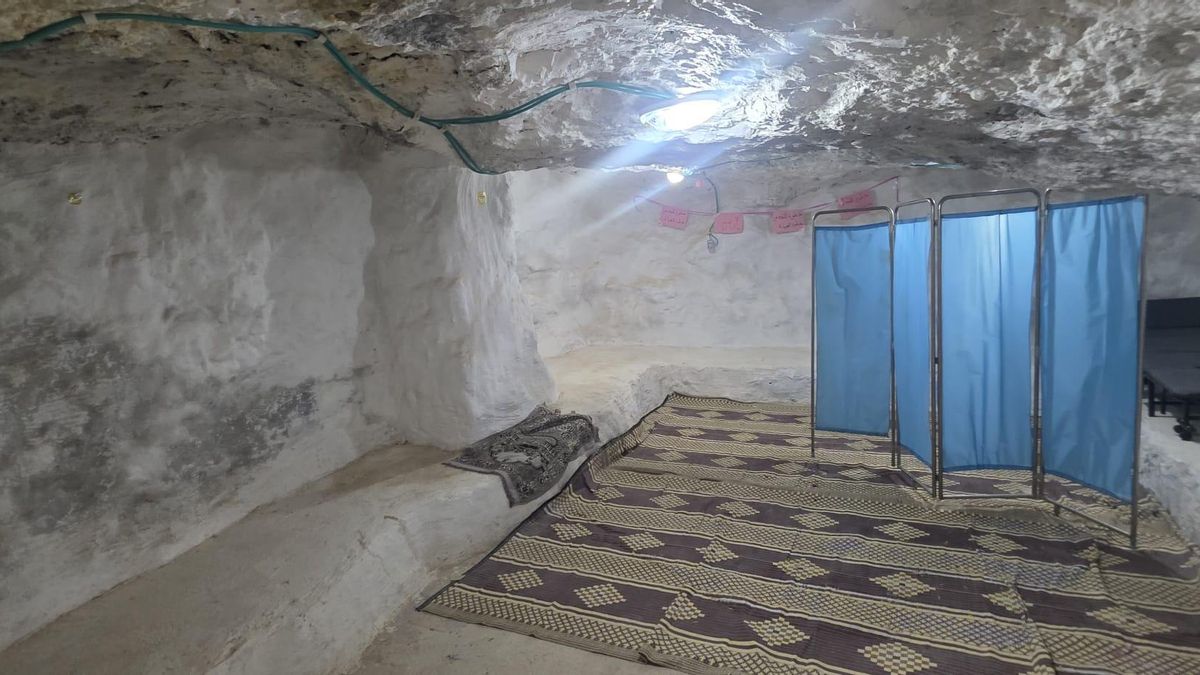
The forced evacuations in Hebron are part of a wider pattern of displacement across the West Bank, where Israeli demolitions have left about 112 Palestinians in the village of Khallat al-Dabe' with no choice but to move back into ancient caves [2]. The village, part of the Masafer Yatta area, has faced nine rounds of demolitions since 2018, with the largest recent demolition on May 5, 2025, destroying most of the community's buildings and leaving only three structures standing, including the school [2].
Before the demolitions, 22 families lived in Khallat al-Dabe'. Now only 18 families remain, as difficult conditions push others to leave [2]. "Every time we build, they demolish it," said resident Jaber Dababseh [2]. Families are now repairing old caves to make them livable, but the work takes time, effort and money, especially for large households [2].
Water and electricity are major daily challenges. After supply networks were damaged and water deliveries cut, residents dug wells to collect rainwater [2]. Dababseh said Israeli settler attacks, Israeli forces' actions and Israeli authorities' measures have damaged water sources and infrastructure [2]. About a month before the interview, authorities confiscated water tankers, saying the area is a live-fire military training zone, and agricultural vehicles were also held [2]. Residents rely on solar panels for basic electricity [2].
The challenge is not just finding a place to sleep. Families must turn a cave into a livable space with water, food, privacy and protection from cold and heat [2].
Residents depend on farming and herding, but Dababseh said these livelihoods are repeatedly hit by settler attacks, including uprooting trees and stealing livestock [2]. He also described frequent drone flights over the area and said residents have organized 24-hour watch shifts to warn each other of possible attacks [2].
The situation in Khallat al-Dabe' is part of a wider pattern reported in other parts of Masafer Yatta. Testimonies and reports from the area describe settler attacks on Palestinian homes and residential structures, assaults on farmers during the olive harvest, theft of livestock, olives and farm equipment, damage to property and threats of displacement against families [2].
Risks extend beyond homes and farmland. Confiscation of vehicles has forced some residents to use donkeys to reach nearby towns for supplies, traveling on routes they describe as dangerous because of settlers and reported attacks on people passing through the area [2].
Demolitions and movement restrictions also limit access to essential services. The remaining school in Khallat al-Dabe' serves early primary students, while older students must travel to the nearby town of al-Tuwani, about four kilometers away [2]. Checkpoints, closures and movement restrictions force some students onto alternative routes, turning a short distance into a trip that can take two or three hours [2].
The demolition of the clinic and community center has further reduced services in the community [2]. For families, these difficulties add to the daily obstacles of getting water and food, ensuring children can attend school and receiving medical care amid a lack of stable housing and basic infrastructure [2].
For residents of Khallat al-Dabe', re-excavating the caves is not the end of the crisis but a continuous effort to find shelter when no viable alternatives exist [2]. Even as families make these spaces livable, they remain exposed to the risk of further demolitions, attacks and the loss of property and livelihoods [2].
Many Palestinians are returning to caves used by earlier generations, not because they want to return to the past, but because the homes they built are gone [2]. As they dig into rock for shelter, their ability to stay on the land depends on whether they can live safely and protect what remains of their homes, land and livelihoods [2].
Dababseh summed up his message simply: "People just want to live. We don't want war; we just want to live" [2].
Meanwhile, UNRWA continues working to assist Palestine refugees in the West Bank. About 4,000 agency professionals provide essential services such as education, health care and protection [2].