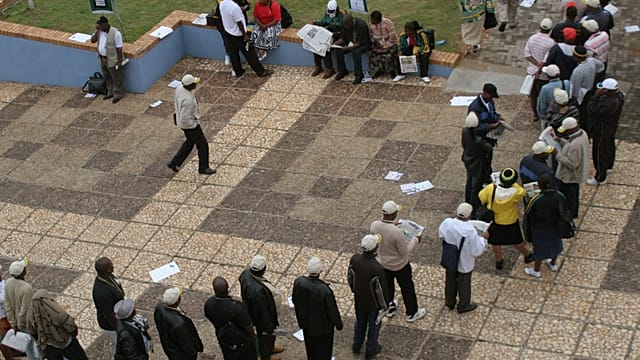
Johannesburg Voters Turn Out in Droves to Punish ANC Over Dry Taps and Piles of Garbage
Residents cast ballots at Hyde Park High School and across the city, driven by water cuts, uncollected rubbish, and years of broken service delivery.
South Africans voted on Wednesday in local government elections, with unemployment, crime, water shortages, and basic service delivery dominating voters' concerns [279346]. The vote is widely seen as a test for the African National Congress (ANC), the ruling party, which is under pressure to reverse the country's decline [278372].
In Johannesburg, residents lined up at polling stations on streets filled with potholes and bordered by piles of garbage, with the question being not whether the ANC would be punished, but by how much [279620]. At Hyde Park High School, Johannesburg residents cast their ballots voicing hopes for better service delivery and accountable leadership, and President Cyril Ramaphosa was expected to vote later in the day [279704].
Frustration over failing basic services shaped individual votes. A Sophiatown voter, Joanna Moleko, cast her ballot for Pieter Groenewald and the Freedom Front Plus, citing daily water cuts, uncollected rubbish, and urban decay as her reasons; she said she was seeking order and hoped the party could deliver it [279700].
Disillusionment was especially sharp in townships. Political parties campaigned heavily across Alexandra township, yet many residents said they no longer believed the promises after persistent service delivery failures left them questioning whether the election would bring real change [279696]. Young residents of Ivory Park Extension 2 said voting felt meaningless, pointing to long-standing water shortages and high unemployment [279697].
Ahead of election day, delays, broken scanners, and missing pens during special voting in Germiston raised concerns about readiness and logistics [278393]. On the day itself, voting was disrupted at multiple stations due to technical glitches, missing ballots, and voter roll errors, causing long delays and rising tensions as frustrated residents were turned away [279695]. The Electoral Commission of South Africa (IEC) closed two voting stations in KwaZulu-Natal after ballot papers and a security stamp were stolen in eThekwini, while severe weather cut off voting stations in Umzumbe; the commission introduced strict verification protocols in response to the theft [279698].
As parties competed to fix collapsing municipalities, restore crumbling infrastructure, and end corruption [275218], candidates in some wards put service delivery at the center of their campaigns — Paul Nkhumane, candidate for Ward 90 councillor, pledged to prioritise infrastructure and youth participation for Ekurhuleni residents [279691]. Several candidates under the age of 30 ran for ward seats across municipalities, aiming to bring fresh leadership and address service delivery problems [279690].