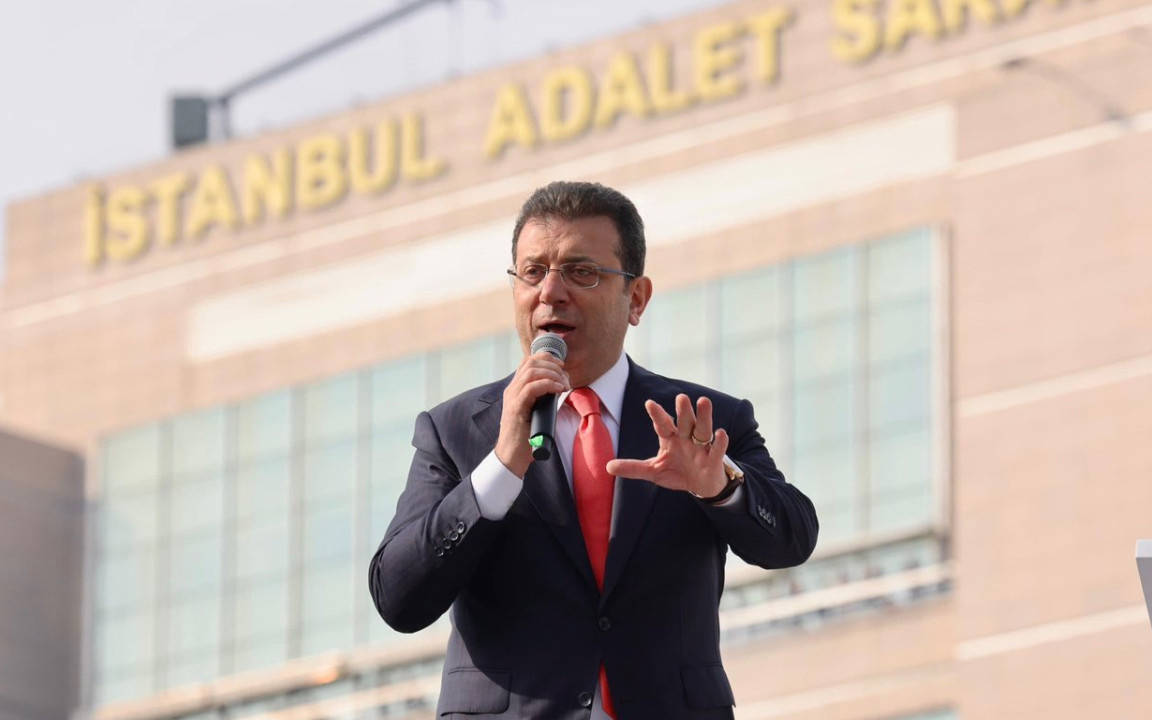
Turkey Cracks Down on 31 Opposition Mayors as ECHR Takes Up İmamoğlu Case
Turkey faces growing international scrutiny as rights groups intervene at Europe's top human rights court over the detention of Istanbul's mayor and a wider crackdown on opposition politicians.
Turkey is facing mounting international scrutiny over its treatment of political opponents as the European Court of Human Rights prepares to examine the detention of Istanbul Mayor Ekrem İmamoğlu, with three rights organizations arguing that Turkish authorities systematically misuse detention and prosecution to keep opposition figures out of elections and political life [279199].
The Turkey Litigation Support Project, Human Rights Watch, and the International Commission of Jurists filed a third-party intervention with the Strasbourg-based court, arguing that İmamoğlu's case reflects a broader pattern of silencing political opponents in Türkiye [279199]. İmamoğlu, a leading opposition figure, was arrested on March 19, 2025, and placed in pretrial detention the same day his party, the Republican People's Party (CHP), named him a candidate for a future presidential election. He remains detained, has been suspended as mayor, and faces charges including "establishing and leading a criminal organization," "accepting bribes," and "interfering with public tenders" [279199].
His case at the European Court of Human Rights claims violations of the European Convention on Human Rights, including the right to liberty and security, limits on restrictions of rights, and the right to free elections [279199]. The rights groups say his detention is part of a wider crackdown: between March 2025 and August 2026, 43 municipalities run by the CHP reportedly faced judicial proceedings, and 31 CHP mayors were detained [279199].
In May 2026, an Ankara regional court of appeal removed Özgür Özel as elected head of the CHP. Most of the party's members of parliament then left to form the New Party (Yeni Party) in July 2026 [279199].
The groups compare the case to the 2016–17 arrests of leaders of the opposition Peoples' Democratic Party (HDP). The European Court of Human Rights previously ruled that those detentions, including those of co-chairs Selahattin Demirtaş and Figen Yüksekdağ Şenoğlu, aimed at "stifling pluralism and limiting freedom of political debate, the very core of the concept of a democratic society" [279199]. Aisling Reidy, senior legal advisor at Human Rights Watch, said the court "immediately ordered their release" in those cases and found Turkish authorities responsible for politically motivated detentions [279199].
The groups also argue that Turkey's courts have shown systematic disregard for legal safeguards, using "terrorism" and "organized crime" charges against elected officials. They say this creates a chilling effect that interferes with the right to run for office and with voters' right to their chosen representatives [279199]. The brief also cites the erosion of judicial independence in Türkiye, including lower courts' failure to comply with Constitutional Court rulings, which it says leaves opposition politicians without meaningful protection at home [279199]. Temur Shakirov, director of the Europe and Central Asia Programme at the International Commission of Jurists, said the court should continue to apply "the closest scrutiny" to the prosecution and detention of opposition politicians in Türkiye [279199].
The intervention at the human rights court comes amid a broader crackdown on civil society and political opposition in Turkey. Turkish authorities detained 20 journalists, arrested six, and left 162 media workers unemployed in October, according to a report by the Press Freedom Foundation (DFG). The findings show that pressure on journalists comes from multiple directions at once: court cases, administrative penalties, digital censorship, and economic hardship [278725].
Days before the COP31 climate summit, police in Antalya raided homes and detained two union officials and one lawyer [278732]. Human Rights Watch has raised concerns about whether independent civil society can participate safely at COP31, noting that Türkiye has a long record of suppressing free speech, breaking up peaceful protests, and jailing critics, journalists and environmental defenders [279191]. "The Turkish government has ignored the need for environmental protections and turned on local people who are speaking out against environmental damage to their communities," said Deniz Bayram, assistant Europe and Central Asia researcher at Human Rights Watch [279191].
In a separate case, Istanbul prosecutors arrested 39 people as part of a corruption investigation into Bakırköy Municipality. The suspects were among 63 people detained in a probe into "bid-rigging" and "embezzlement" [276567].
The European Court of Human Rights will further examine whether Turkey violated article 18 of the European Convention, which bans restricting rights for ulterior purposes. Since 2019, the court has issued eight judgments finding Turkey in violation of article 18 in cases involving HDP politicians and human rights defender Osman Kavala [279199].