Tanzania's Election Bloodbath: 518 Dead, Zero Arrests One Year Later
A year after Tanzania's disputed election left at least 518 people dead, security forces face no accountability while critics are charged with treason and families still search for missing relatives.
One year after Tanzania's disputed October 2025 election, the government has made no arrests for the hundreds of killings committed by security forces during protests, even as it escalates prosecutions of government critics on capital charges.
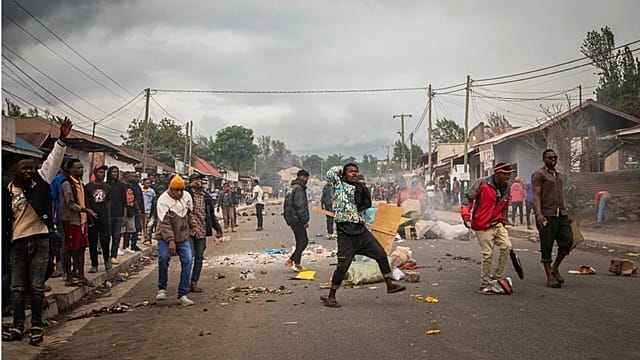
President Samia Suluhu Hassan won the election with 98 percent of the vote after most opposition candidates were excluded [274751]. The result triggered days of protests that security forces brutally suppressed, leaving at least 518 people dead according to a government commission of inquiry [273456].
Amnesty International said authorities have failed to hold anyone accountable for the violence that left hundreds dead and thousands injured [273119]. Families of those killed still do not know what happened to their relatives, and some have buried loved ones without a body [273456].
Authorities arrested more than 2,000 people, accusing them of destroying government property and treason, though some were later released. Some told Human Rights Watch that police beat them while falsely accusing them of taking part in protests [273456].
The crackdown extends beyond election day. In the months before the vote, authorities sharply increased repression of opposition politicians, critics and the media. Humphrey Polepole, a former Tanzanian ambassador to Cuba, went missing weeks before the vote after publicly criticizing the ruling party, Chama Cha Mapinduzi. His whereabouts remain unknown [273456].
The repression continues. The treason trial of Tundu Lissu, leader of the main opposition party Chama Cha Demokrasia Na Maendeleo (CHADEMA), continued this year. On October 21, authorities charged John Pambalu, a CHADEMA official, with treason for allegedly forming an "intention to persuade the public to cause obstruction" of the elections through protests. Treason carries the death penalty in Tanzania [273456].
Government critics report ongoing intimidation, including fears of abduction and arbitrary arrest [276069]. Some describe living in constant fear of sudden midnight raids on their homes since 2020, forcing them into unstable and precarious lives [272985].
Tanzania has also been accused of trying to abduct dissidents who have fled to neighboring Kenya. Human rights activists condemned the alleged abduction of Twaha Mwaipaya, a Tanzanian government critic and former opposition official, in Kenya [272294].
President Hassan set up a commission of inquiry into the violence in November 2025. It found at least 518 people were killed but did not meaningfully examine the role of security forces. She has since established another commission that will reportedly investigate how the unrest was planned and the excessive use of force, though it is unclear whether this includes prosecuting those responsible [273456].
Families of those killed or missing are still waiting for answers and justice. Rights groups are calling on Hassan's government to stop targeting critics and instead ensure credible investigations into disappearances and abuses by security forces [273456].