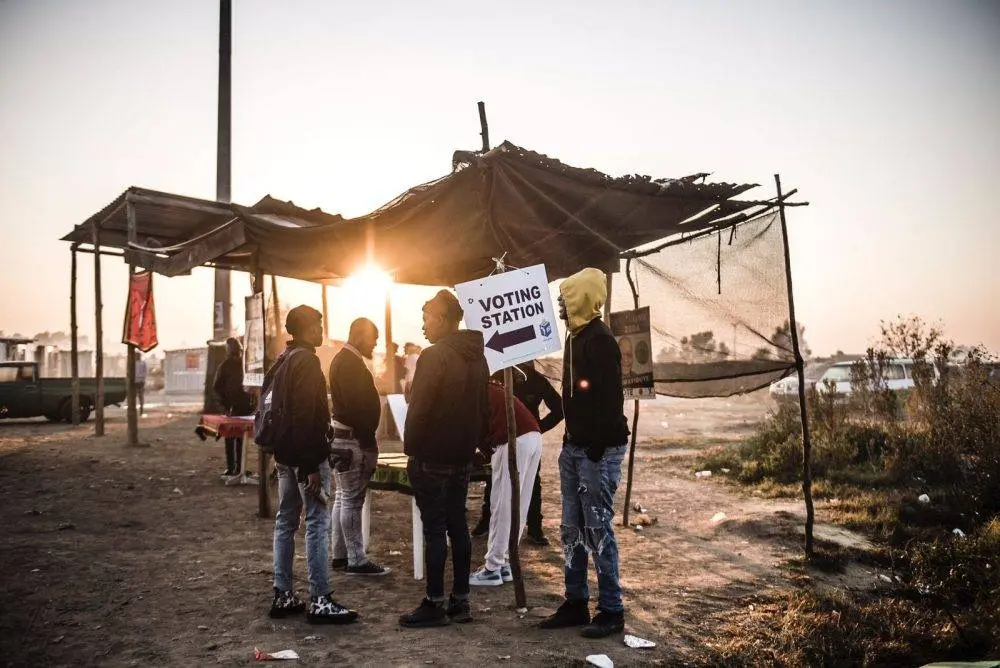
ANC Faces Toughest Test Yet as South Africans Vote in Local Elections on 4 November 2026
South Africans will head to the polls on 4 November 2026 to elect local government representatives, with more than 500 political parties competing and the ANC's three-decade grip on power hanging in the balance.
South Africans will go to the polls on 4 November 2026 to elect their local government representatives, in what analysts describe as the toughest challenge yet to the African National Congress's (ANC) three-decade hold on power since the end of apartheid in 1994 [271885][275230].
Voters are frustrated by poor public services, including unreliable electricity and water, and opposition parties are gaining support as a result [275230]. Major political parties have released competing manifestos, each promising to fix the country's collapsing municipalities, restore crumbling infrastructure, and end corruption [275218].
With more than 500 political parties competing for local government seats, the Independent Electoral Commission (IEC) faces serious logistical challenges in managing the vote [275228]. The IEC says it is fully prepared, with Chief Electoral Officer Sy Mamabolo comparing the commission's readiness to the high intensity of the Soweto derby, one of the country's biggest football matches [275232]. Mamabolo outlined the systems and safeguards in place to protect the voting process and highlighted programs aimed at getting young people involved in the elections [275232].
Major cities may now require coalition governments, where parties must share power, because no single party is likely to win a majority [275230]. In Johannesburg and Cape Town, the ANC and the Democratic Alliance (DA) are preparing to compete for control, with analysts suggesting a coalition between the two major parties could emerge as a governing solution after the vote [275209].
Beyond campaign promises, the real test for incoming municipal councils will be whether they can govern effectively, with three challenges standing out: administrative competence, maintaining infrastructure, and holding together unstable coalitions [275211]. Voters should look beyond manifesto promises and instead assess whether political parties have the capacity to recognise failure, coordinate effectively, and adapt responsibly [275234].
Young South Africans are asking a difficult question ahead of the elections: is voting worth it? Many feel a growing disconnect between civic duty and political disillusionment, and they demand real accountability and basic service delivery from their leaders [275226].
Widespread failures in service delivery have fueled public anger across the country, and some citizens respond by withdrawing from local elections [275233]. However, this approach fails, as boycotting elections only empowers the status quo; the only route to municipal accountability is active democratic participation, with citizens turning their frustration into votes [275233].
Deputy President Paul Mashatile has called on South Africans to honour liberation leader O.R. Tambo through active citizenship and responsible voting, saying ethical leadership was also key to carrying forward Tambo's legacy [273916].
The results will show whether the ANC can still command the trust of South Africans — or whether the era of one-party dominance is ending [275230].