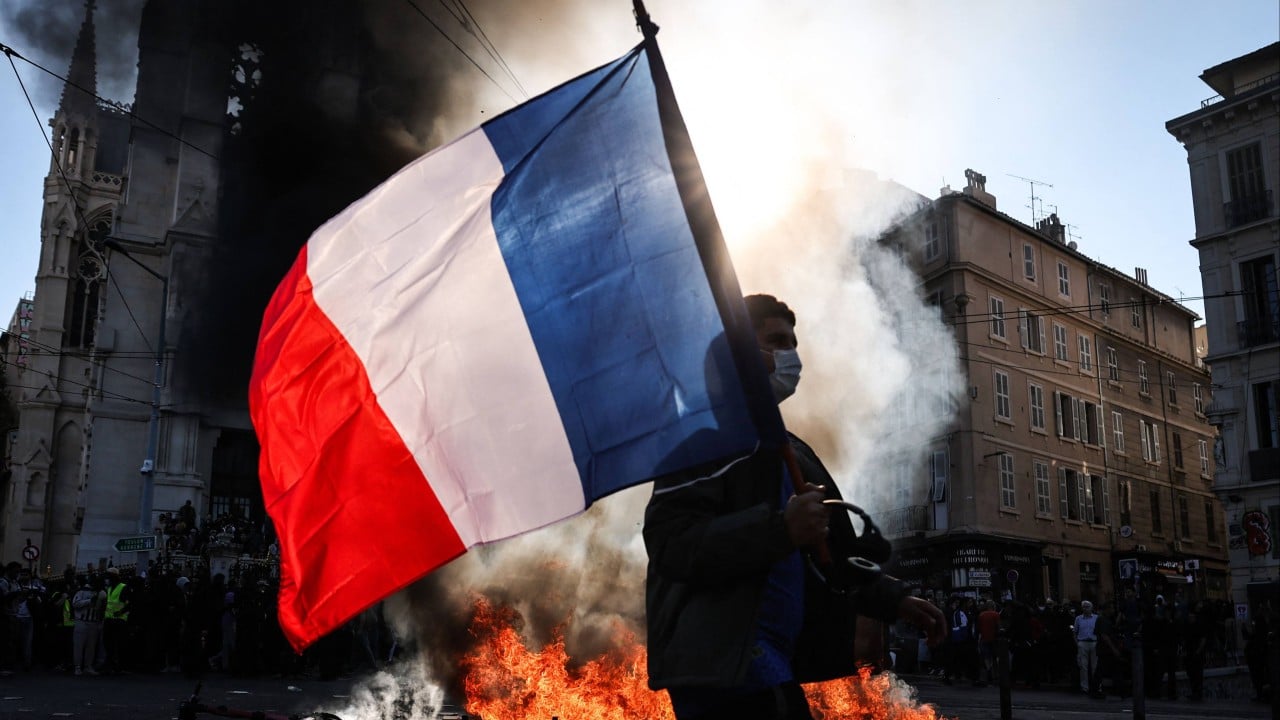
France Bans Protests as 2,500 Arrested and Unrest Spreads to Six Nations
France has granted regional officials power to ban demonstrations outright after more than 2,500 people were arrested in a single wave of cost-of-living protests, as unrest over food, energy, housing, and wages spreads across Belgium, Italy, Portugal, Spain, and Albania.
French President Emmanuel Macron authorized prefects—government-appointed regional officials—to ban public gatherings before they occur, a significant expansion of executive power over public assembly [265584]. The crackdown follows demonstrations on October 17 that drew around half a million people and ended in violence, prompting the United States, China, Germany, and the United Kingdom to warn their citizens to exercise caution when visiting France [266063]. Local curfews for high school students were imposed in Lille, Paris, Lyon, and Nice, and unions have scheduled further action for October 24 and November 5 [266098].
The protests share common demands across borders: action on high food and energy prices, unaffordable housing, low wages, and inadequate public services [266109]. In France, student anger over crumbling classrooms and teacher shortages first signaled the scale of discontent. In Spain, a tent camp grew in central Madrid as residents protested soaring housing costs. Clashes have also shaken Albania's capital, Tirana [267364].
The United Nations human rights chief, Volker Türk, raised concerns over the mass protests in Albania, Belgium, France, Italy, and Portugal, saying the demonstrations are raising human rights issues [267277]. Hong Kong issued an amber travel alert for France—the lowest of three levels—advising residents to exercise caution due to clashes and damage in major cities [267091].
The unrest shows no sign of abating, with governments across the continent struggling to answer public demands and further discontent looking likely [267364].