Africa’s 54 Votes vs. 5: The Fight to Fix the UN’s Most Powerful Club
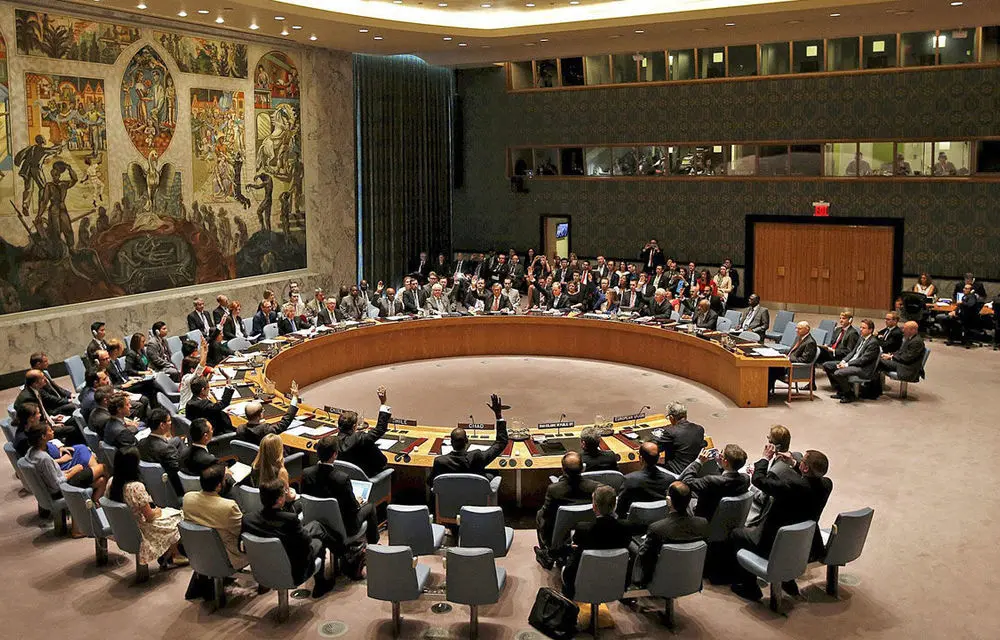
The UN Security Council faces growing pressure to give Africa a permanent seat, with 54 member states currently shut out of the veto-holding group.
South Africa, Portugal, and the UN Secretary-General are among those demanding reform as the body faces mounting criticism for reflecting a post-World War II world that no longer exists.
---
South Africa is pushing for permanent African representation on the United Nations Security Council (UNSC), arguing that the body cannot claim legitimacy while a continent of 54 nations has no permanent voice [247503]. The country is using ongoing UN reform talks in New York to back the African Union's long-standing demand for a seat at the table [247503].
The United Nations Secretary-General added his weight to the debate, saying the Security Council remains "unjust" as long as Africa has no permanent seat [248737]. Speaking on September 23, 2026, he pressed again for reform of the council — the body that holds the most power at the UN [248737].
Africa has demanded permanent representation for years. The continent has 54 member states but no permanent seat [248737]. The five permanent members — the United States, Russia, China, France, and Britain — hold veto power, meaning they can block any resolution [248737]. Any change to the council's structure requires their approval, which is why the debate has stalled for years [248737].
The push is not coming from Africa alone. Portuguese Prime Minister Luis Montenegro has called for permanent seats on the Security Council for Africa, Brazil, and India [249242]. Montenegro said the council needs greater representation to reflect a changing world, and called for a UN that is "more agile" and "effective" [249242].
Critics say the current structure reflects the world as it was after World War II, not as it is today [249242]. The five permanent members were chosen in 1945, when most of Africa was still under colonial rule [248737][249242].
The debate is happening as the UN faces broader questions about its relevance. As Secretary-General António Guterres prepares to leave his post, critics call him a placeholder for a dying institution, saying the UN is ignored, mocked, and harangued [249734]. Yet countries continue to fight for a seat at the table — a sign that the body still matters, even to its critics [249734].
For now, the numbers tell the story: 54 African nations, zero permanent seats, and five countries holding the power to keep it that way [248737].
---