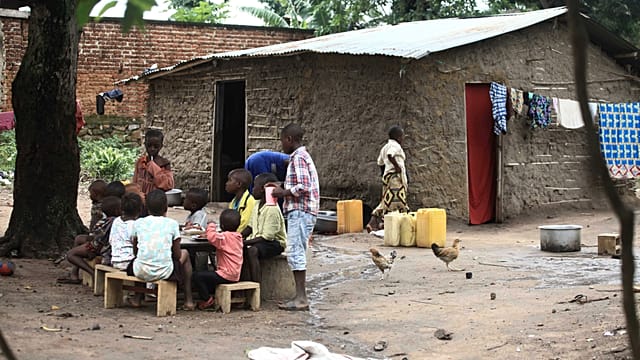
1,000 Pygmies Stranded in Congo City, Cut Off From Forest Life After ADF Attacks
Families from the Indigenous Pygmy community in Beni, eastern Democratic Republic of Congo, are stranded in the Boikene district after fleeing violence blamed on the Allied Democratic Forces (ADF) armed group, leaving them cut off from the forests that provide their food, medicine, and cultural identity.
Since May 2026, displaced Pygmy families have been living in extreme hardship in Boikene, a district of Beni in eastern Democratic Republic of Congo (DRC) [1]. They fled violence blamed on the Allied Democratic Forces (ADF), an armed group active in the region [1].
For these families, the displacement means more than losing their homes. They are now far from the forests that provide their food, medicine, and traditional way of life [1]. In Boikene, they struggle to survive without access to their usual means of subsistence [1].
The ADF has been a persistent source of instability in eastern DRC, forcing many communities to leave their land [1]. For the Pygmy people, who have deep cultural and economic ties to the forest, the distance from their environment makes this crisis especially severe [1].
Decades of conflict and land encroachment have pushed these indigenous groups into makeshift settlements on the outskirts of towns [2]. Here, they lack legal rights to the land they now occupy and are often excluded from local decision-making [2].
Without access to their traditional hunting grounds, many Pygmies have been forced into low-paid labor on farms owned by outsiders [2]. Others rely on small-scale trade, but their lack of formal education and political representation leaves them highly vulnerable [2].
Local aid workers report that the community’s cultural identity is eroding [2]. The loss of ancestral territory means younger generations are growing up without the knowledge of forest survival, rituals, and language that defined their elders [2].
“We are strangers in our own country,” said one community elder. “The forest gave us everything. Now we have nothing.” [2]
The DRC government has yet to implement specific protections for the Pygmies of Beni [2]. While international human rights groups have called for urgent action, no clear resettlement or land-rights plan has been announced [2].
For now, the Pygmies of Beni remain—but not as they once were. Their survival is no longer tied to the forest, but to the mercy of a society that has largely forgotten them [2].
DRC’s Pygmy refugees stranded in city, cut off from forest life