Sweden’s Climate Silence Could Cost $3.8 Billion—And 10,000 Protesters Aren’t Having It
With Sweden’s election days away, over 10,000 protesters hit Stockholm’s streets to demand climate action, but the ruling party’s website still says nothing about its policy—leaving voters on the hook for a potential 40 billion Swedish kronor ($3.8 billion) EU fine.
---
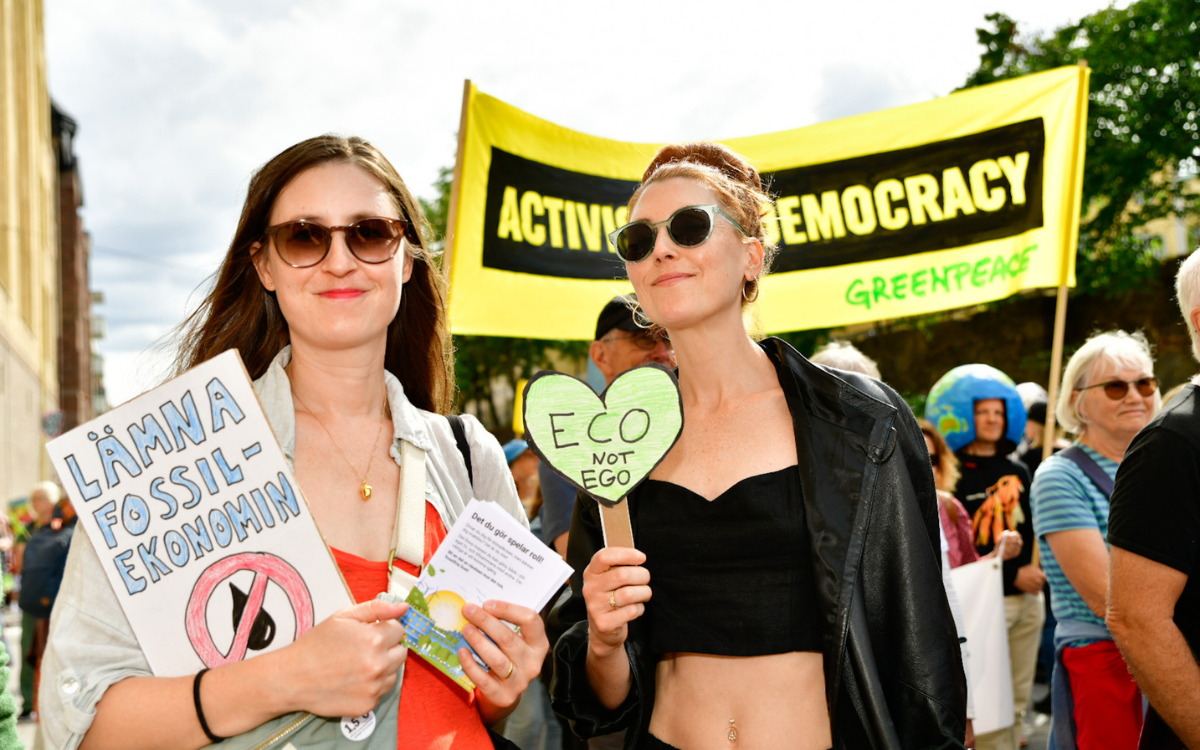
Sweden is facing a political storm just days before its general election on September 13, as mass demonstrations and internal party pressure collide over the country’s stalled climate commitments. More than 10,000 people marched in Stockholm on Saturday to demand urgent government action on greenhouse gas emissions, urging lawmakers to accelerate the transition away from fossil fuels [227158]. The protest comes amid growing frustration that the ruling party has remained silent on climate policy in its election materials, despite the country facing a potential penalty of up to 40 billion Swedish kronor (roughly $3.8 billion) from the European Union for missing binding emissions targets [227920].
Filmmaker and demonstrator Pelle Mårtenson has been vocal about the stakes. “The biggest government party is silent on climate ahead of the vote,” he said. “We need to know who will foot the bill for failing our commitments” [227920]. EU rules require member states to meet binding climate goals, and if Sweden falls short, the bloc can impose financial penalties. The 40-billion-kronor figure reflects the estimated cost of non-compliance, but the ruling party has not publicly responded to the looming fine [227920].
The protests reflect broader public pressure on politicians to prioritize environmental policy as voters prepare to head to the polls. Demonstrators are demanding that lawmakers cut emissions and speed up the country’s transition away from fossil fuels [227158]. The silence from the ruling party has sparked anger among activists, who argue that climate policy—and its potential price tag—must become a central campaign issue [227920].
Meanwhile, Swedish political leaders are calling for a more measured tone in the campaign’s final stretch. Social Democratic leader Magdalena Andersson has urged politicians to reflect on their words following a recent school attack in Fagersta, saying, “I think everyone should take a moment to reflect on what they write or say” [226800]. She has also criticized parties for drawing “red lines” ahead of the election, arguing that “politicians who open doors are better than those who close them” [229089]. Former Center Party leader Annie Lööf has echoed similar sentiments, hoping the election will produce a government anchored in the political center and calling for “more calm and balance, reasonableness, and broader cooperation in Swedish politics” [227910].
The climate debate has also sparked discussion among political figures about how to frame the issue. A local Moderate Party politician in southern Sweden argues that ambitious climate action aligns with traditional conservative values, rejecting the idea of a conflict between the two. “Sustainable climate policy and bourgeois values are not opposites,” writes Roland Thord, adding that “ambitious climate policy works perfectly within a Moderate framework” [225747].
At the same time, commentators are pushing for practical solutions. A leading Swedish columnist argues that most citizens are ready to change their habits for the climate, but they will not do it if it feels difficult or costly. Isobel Hadley-Kamptz of the newspaper *Expressen* writes that people genuinely want to live more sustainably—they recycle, take the train, and buy less meat when they can—but individual effort has limits. “When public transport is unreliable, bike lanes are missing, or plant-based food is expensive, good intentions collapse,” she writes. Her message to policymakers: “Do not assume people are lazy or selfish. Assume they are busy. Then build a system where doing the right thing does not require a daily battle” [229048].
As the election approaches, the question remains whether the ruling party will break its silence on climate policy. For Mårtenson and other demonstrators, the silence is not acceptable. “This is not about politics anymore,” he said. “It’s about accountability” [227920].