Glacier Collapse Triggers Deadly Flash Floods in Nepal, Killing 157 and Leaving Hundreds Missing
A massive glacier collapse on the Nepal-China border unleashed a wall of mud and water that killed at least 157 people and left hundreds of tourists missing.
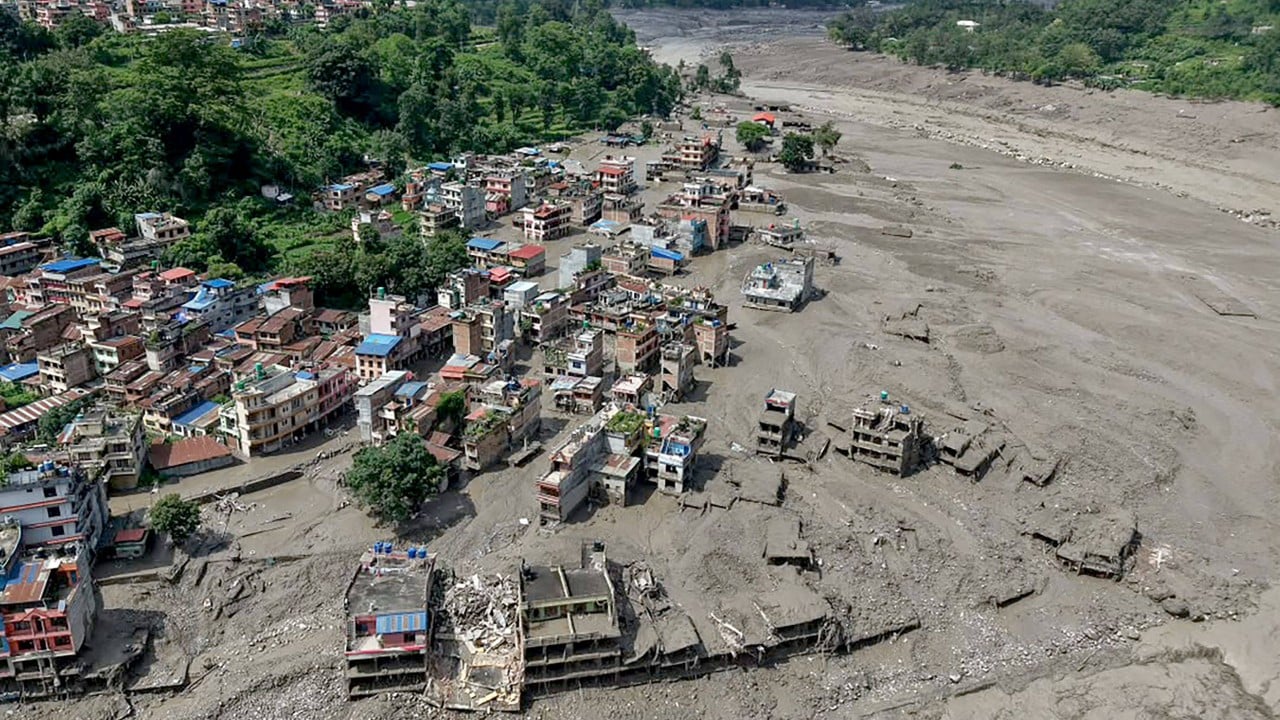
A massive wall of mud and rock collapsed into a river on the Himalayan border between Nepal and China’s Tibet region on Wednesday, triggering catastrophic flash floods that killed at least 157 people and left hundreds of tourists missing [228109]. The disaster began when a large section of hillside gave way, sending a torrent of rock, mud, and water into the river below, overwhelming riverside communities and popular trekking routes [228109]. Verified videos from the border area show dozens of people being swept away by the rushing water, while footage released by the Nepal Red Cross displays floodwaters engulfing roads and structures at full power [228109][228142].
The immediate trigger appears to be the collapse of a glacier high in the Himalayas, which released a massive burst of trapped water and ice, creating a violent torrent downstream [228240]. One researcher cautions against a simple explanation, noting that underlying conditions such as unstable rock formations, unusual weather patterns, or long-term climate shifts may have made the region dangerously vulnerable [228240]. A separate report describes a massive block of ice snapping off a glacier and plunging more than a kilometre, triggering what experts describe as an “ice avalanche” with destructive force comparable to a bomb blast [228140].
The landslide also struck a key checkpoint at the China-Nepal border, causing “major casualties” and burying part of the main crossing used by travelers and traders between the two countries, according to Chinese state media [228089]. Houses, roads, and power projects were washed away on the Nepali side of the border, and access to the hardest-hit areas remains difficult due to damaged infrastructure and ongoing flooding [228109].
Nepali authorities have not yet confirmed the exact number of missing foreign nationals, but local officials say hundreds of visitors were in the region at the time of the flood [228109]. South Korea announced Thursday that it is dispatching a rapid government response team to Nepal after nine South Korean nationals were reported missing in the country [228487]. The team will work to locate the missing citizens and coordinate with local authorities [228487].
China’s Tibet region has also reported damage, though officials there have not released casualty figures [228109]. Chinese President Xi Jinping has called for all-out rescue and relief efforts following the mudslide, stressing the need to prioritize saving lives and minimizing casualties [227601]. Both governments have pledged to cooperate on rescue and recovery efforts [228109].
Search teams are working to reach isolated villages and guesthouses, though heavy rain and unstable terrain are slowing their progress [228109]. Officials urge people in affected areas to remain alert and follow evacuation orders [228142]. The flood is one of the deadliest natural disasters to hit Nepal in recent years, and the full scale of the human and economic toll is expected to become clearer in the coming days [228109].