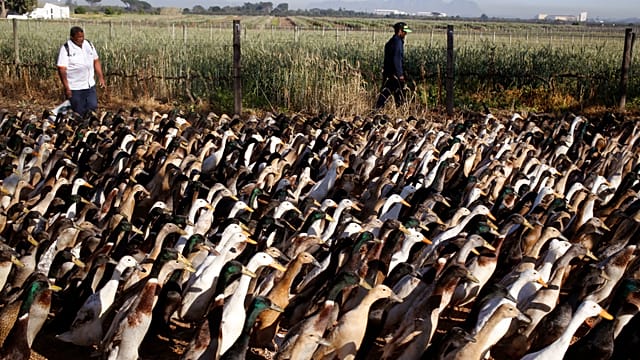
Ducks, Solar Slugs, and Shade Panels: Nature’s Comeback Wins Big in 2026
A South African vineyard has swapped chemical sprays for a squad of 30 Indian runner ducks, while a grain-of-rice-sized sea slug that runs on sunlight just won a global popularity contest—two wins for nature-based solutions this week.
At Vergenoegd Löw wine farm, the feathered patrol now handles pest control across the vineyards, replacing synthetic pesticides. The ducks march through the rows eating insects that would otherwise damage the grapes, while sheep and cattle trim weeds and manage vegetation without machinery or herbicides. The result is a working farm that blends old-school animal power with modern wine production, cutting environmental damage while keeping vines healthy [1].
Meanwhile, the leaf sheep—a neon green sea slug known scientifically as *Costasiella kuroshimae*—has been crowned the Guardian’s Invertebrate of the Year 2026. The tiny creature, comparable in size to a grain of rice, uses sunlight for energy through a process that has inspired at least one Pokémon character. It beat hundreds of other spineless animals in a global public vote that attracted hundreds of thousands of readers. Naturalist Chris Packham stressed that life as we know it depends on such invertebrates [2].
These developments come as other nature-based innovations gain traction. Egyptian farmers are increasingly using agrivoltaics—placing solar panels above crops to generate clean electricity while shading plants from harsh sun. The added shade slows water evaporation and reduces heat stress, helping crops thrive in arid climates while offering farmers a new income source from selling power [3].
In Somerset, England, the National Trust’s Holnicote estate has shown that rewilding—restoring rivers to natural courses and reviving wetlands—has kept the land lush and vibrant through five separate summer heatwaves, while the surrounding countryside turned parched and dry. The visual proof suggests ecological restoration can build resilience against drought, wildfires, and flooding [4].