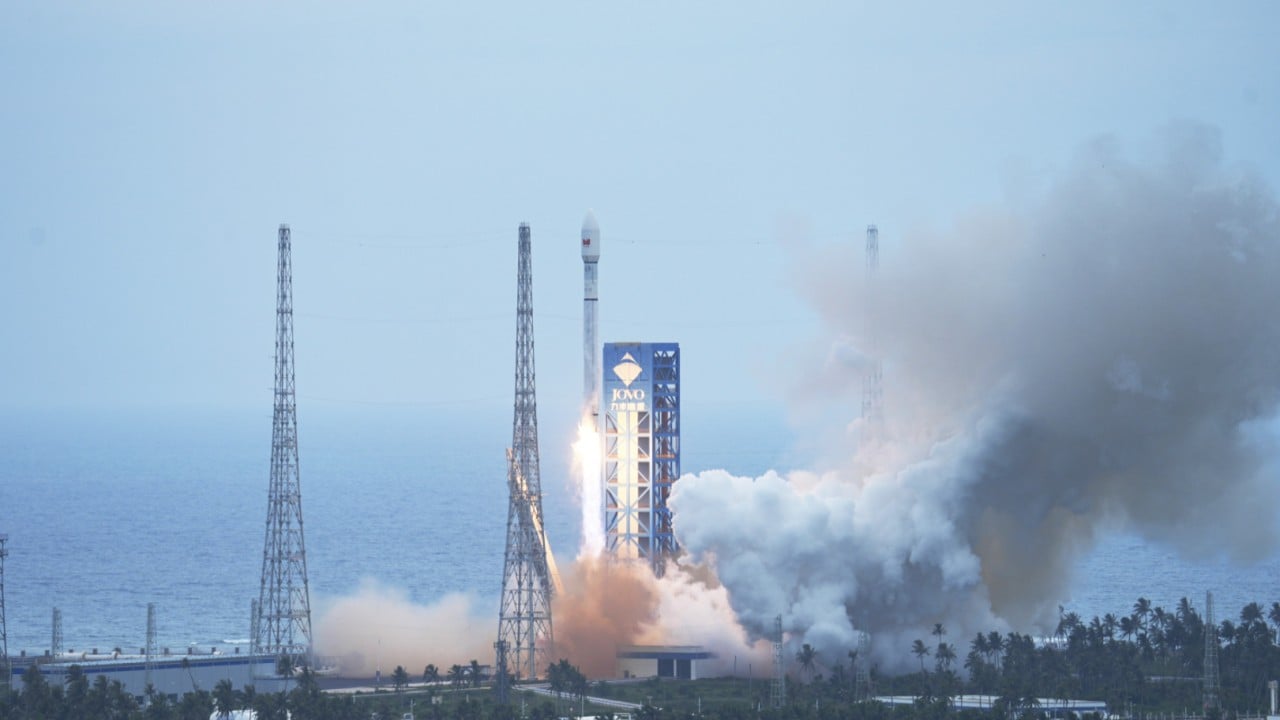
Hong Kong Goes All-In on Space: From Finance Hub to Science Powerhouse
Hong Kong is betting big on a future beyond banking, positioning itself as a key middleman and tech partner in China’s push to dominate the $1 trillion global space economy.
Hong Kong is no longer content to just finance the future — it wants to build it. As China’s commercial space industry accelerates, the city is pivoting hard from its traditional role as a financial center toward science, technology, and space services. Executives at Beijing-based satellite firm GalaxySpace say Hong Kong and neighboring Macau hold “irreplaceable strategic positions” in China’s plan to build a world-class commercial space sector and take its technology overseas [192321]. The company is betting on the two cities to serve as a launchpad for international expansion.
At the same time, Hong Kong is positioning itself as the legal and financial middleman for the fast-growing global space economy. Secretary for Justice Paul Lam Ting-kwok said the city’s “sharpest competitive edge” lies in professional services for commercial space, particularly arbitration for satellite contracts and disputes [188701]. As private companies and nations launch more missions, legal fights over property rights, liability, and insurance are expected to rise — and Hong Kong’s common law system and established arbitration expertise offer a neutral, trusted venue outside mainland China’s legal framework [188701].
The shift is already producing hardware. A cutting-edge greenhouse gas monitor developed by the Hong Kong University of Science and Technology (HKUST) has started working aboard China’s Tiangong space station, installed by Lai Ka-ying, Hong Kong’s first home-grown astronaut [189706]. The device, called the Multi-Spectral Imaging Carbon Observatory (Musico), will track carbon dioxide and methane levels from orbit for at least two years, feeding data on climate change and pollution sources to scientists worldwide [189706].
Analysts and officials argue this pivot is essential for Hong Kong’s survival. China’s new development strategy puts science and education at the core of long-term growth, and the city must create a platform that fits that national plan or risk falling behind [192335]. To remain relevant, Hong Kong needs to align itself with China’s focus on innovation and learning — not just banking [192335].
---