Spain Gets 1 Million Migrant Applications in Just 3 Months – "A Better Country" Says PM as Deadline Closes
More than one million undocumented migrants have applied for legal residency in Spain under a massive government regularization program, with Prime Minister Pedro Sánchez announcing a €500 million integration plan to back it up.
The application period for Spain’s extraordinary regularization scheme closed on Tuesday, with the government receiving over one million submissions [185645][185749]. The program, launched in April by Spain’s left-wing government, was initially expected to benefit around 500,000 people, but the final number doubled that estimate [185645]. Most applicants come from Latin America, primarily Colombia, Peru, and Venezuela, with others from Morocco and Algeria [184561]. Notably, 60% of applicants assisted by Spain’s largest trade union, Comisiones Obreras (CCOO), are women [184561].
Prime Minister Sánchez defended the mass regularization as "a key step to bring hundreds of thousands of people out of invisibility" and announced a €500 million annual integration plan on the same day the deadline closed [185749]. "The regularization is a success in migration management," Sánchez said, adding that the integration plan "turns that first step into a life project" [185749].
The integration strategy includes four pillars: creating a state agency for human mobility (requiring parliamentary approval), over €150 million for vocational training targeting high-demand sectors, €30 million for language learning and community programs, and €200 million to strengthen public services and combat hate speech [185749]. Sánchez stressed that migrants must respect Spanish laws, democratic values, and LGTBI rights, calling them "the rules for everyone" [185749].
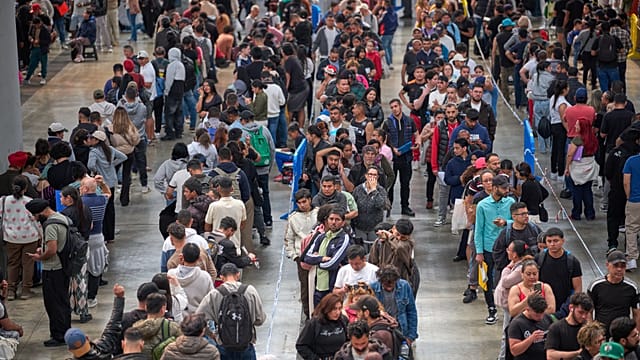
However, the processing system is already under strain. CCOO warned that the fingerprinting appointments needed to issue Foreigner Identity Cards (TIE) are overwhelmed, creating a bottleneck that threatens the entire process [184561]. "We have detected problems with both Social Security and the fingerprinting," said Sofía Castillo, CCOO’s secretary for Migration and Care, blaming poor coordination and a lack of police staff [184561]. The union, which has processed over 7,500 applications, says many applications cover entire families, meaning the real number of people affected is much higher [184561].
The Spanish government now has three months to process the record number of applications and resolve the fingerprinting crisis [184561][186346]. The program goes against a wider European trend of cracking down on irregular immigration [185645].
Meanwhile, Spain’s Supreme Court has asked whether it should refer the case to the Court of Justice of the European Union (CJEU) to determine if the regularization violates EU directives [185747]. But the government has assured migrants their permits are safe. "The law was written strictly to be compatible with EU law," said sources from the Ministry of Inclusion, Social Security and Migration [185747]. Even if the EU court finds a problem, government sources say it will be "practically impossible" to revoke permits already granted, as all applications will have been processed by the time any ruling comes [185747].
The Supreme Court’s move follows appeals from the regions of Aragon and Valencia. The court previously rejected a request from Madrid to suspend the process, saying there was no proof the regularization would collapse public services [185747].