Vegans Face Daily Hate Speech as Activist Links Attacks to Fascist Tactics
A new report reveals that people who stop eating animals face constant verbal attacks and harassment, with an activist now warning that the same strategies used against vegans are being employed by fascist and authoritarian movements to spread hate and control public discourse.
People who adopt a plant-based diet are often accused of being extremists and face daily verbal attacks, such as “lettuce feels pain too” or “we have canine teeth,” according to activist Kris Nogal. These comments mock the suffering of animals and are part of a wider problem of hostility [170934]. For years, being vegan was a lonely fight, with activists having to arm themselves with facts to defend against constant criticism. While social media and support groups have helped, the hostility remains [170934].
Nogal argues that the same strategies used against vegans are now used by fascist and authoritarian movements. These groups accuse others of the very things they do themselves, spread hate, create hostile environments, and control public discourse [170934]. “The control of the media and public discourse forms the basis for spreading hate ideologies,” Nogal writes, noting that this includes harassment, threats, and false information. These tactics target the most vulnerable people, just as they target vegans for choosing a plant-based diet [170934].
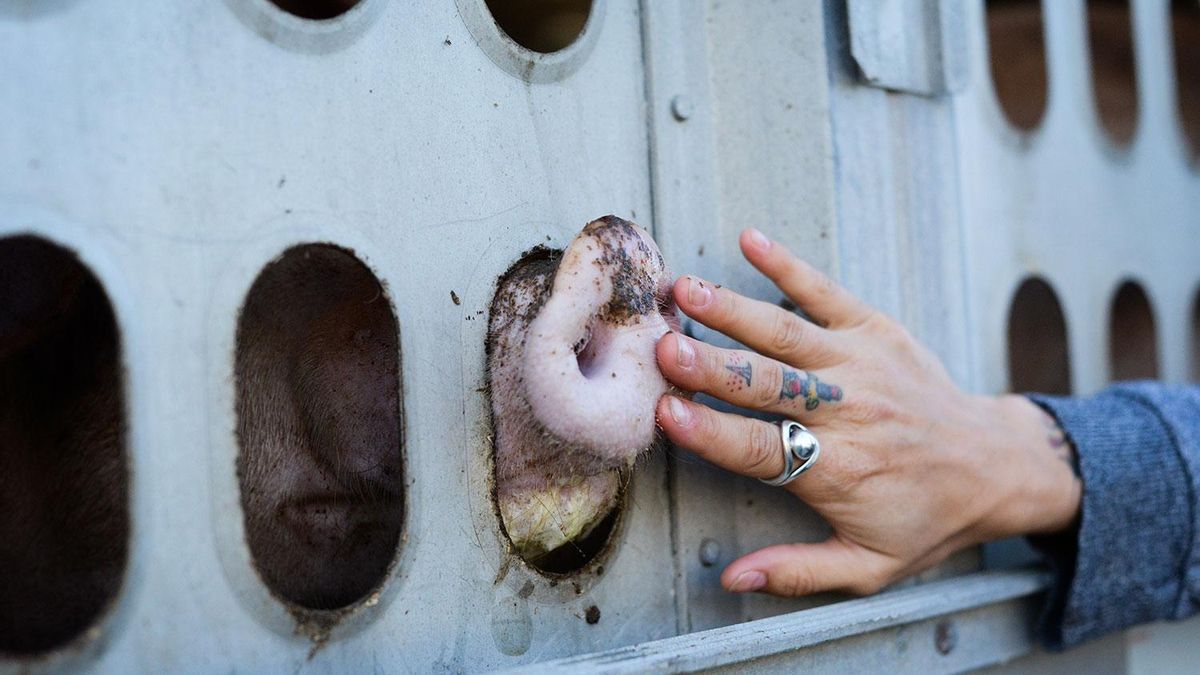
The rise of these hateful ideologies is linked to a broader trend where racist and misogynistic speech is gaining support, attacks on LGTBIQA+ people are increasing, while animals remain in cages and the poor struggle to make ends meet [170934]. Nogal believes it is time to give the animal rights movement more attention, arguing that fighting for the most defenseless beings can teach us about human cruelty—and also about our capacity for kindness. Understanding this struggle, Nogal says, can help us fight all forms of oppression [170934].
A separate analysis of how the system treats the vulnerable reinforces this pattern. A recent case in Lillo del Bierzo, Spain, highlights the problem: several hunting dogs disappeared, and activists linked the case to animal abuse, saying public agencies are not built to protect non-human animals. When help comes, it is too late, too weak, or only symbolic [168680]. Impunity for those who exploit or harm animals is not an exception but the logical result of a system that treats animals as resources, not as lives [168680].
The same logic applies to endangered species. Several Spanish regional governments recently blocked a proposal to declare the eel a protected species, despite scientists having clear evidence the species is collapsing. Protecting the eel would hurt certain economic interests, and when the choice is between life and profit, the system chooses profit [168680]. This pattern extends to vulnerable humans: homeless people are treated as a public order problem, women facing abuse encounter slow, ineffective systems, and racialized people face structural discrimination and police control [168680].
The source material points to a long tradition of analysis. Anarchist thinker Emma Goldman argued the state is not neutral but designed to keep a social order based on domination. Piotr Kropotkin showed that state structures protect private property and elite privilege, even when that means suffering for many [168680]. Murray Bookchin linked state power to the domination of nature, arguing that social hierarchy legitimizes the control of all living beings [168680]. From this view, the lack of protection is not a failure but a structural feature: the system is designed to prioritize what is profitable, and lives that do not generate profit become disposable [168680].
Action still happens, but it comes from below. Mutual aid networks support homeless people, feminist groups support women facing violence, and anti-speciesist activists rescue animals from abuse. These groups act without institutional backing, often facing criminalization themselves [168680]. The conclusion is clear: talking about the vulnerable should not just be an exercise in compassion but a starting point to question the structures that create that vulnerability [168680].