Climate Crisis Is Now a Daily Reality, Pushing Nature and Health to the Brink
Climate Crisis Is Now a Daily Reality, Pushing Nature and Health to the Brink A cascade of extreme weather, ecological collapse, and severe health impacts defined 2025, signaling that the climate crisis has shifted from a future threat to a present-day, global reality. Scientists and major institutions warn that relentless heatwaves, floods, and storms are becoming the new normal, with the most severe consequences falling on the world's most vulnerable populations [36941][49594][37775]. Last year was Earth's third hottest on record, but the defining feature was a relentless series of costly disasters [49594]. In Europe, a destructive cycle began and ended with major storms, with severe droughts and wildfires in between, pushing wildlife and landscapes to a "breaking point" [36898][36941]. Conservation groups labeled these events "alarm signals we cannot ignore" as nature is strained to its limits by climate breakdown [36898]. The human cost is escalating into a direct health emergency. Former United Nations climate chief Christiana Figueres, co-chair of a new Lancet Commission, stated that rising sea levels are a present-day health crisis, harming physical and mental health, livelihoods, and cultures [123347]. She warned that the world is being "held hostage" by fossil fuel reliance, calling the health impacts "the mother of all injustices" because the communities suffering the worst did the least to cause the problem [123346]. This inequity is underscored by human rights analyses. Amnesty International reports that droughts, floods, wildfires, and extreme heat disproportionately devastate already marginalized groups, a stark reality facing global leaders ahead of key climate negotiations [121912]. The environmental damage is both widespread and foundational. In Europe, flying insect populations have crashed by up to 80% over the past 30 years, a collapse scientists attribute to intensive agriculture, pesticides, and climate change that threatens food security and entire ecosystems [122935]. The United Nations Environment Assembly recently concluded with an urgent call for accelerated global action, emphasizing that international cooperation is essential to address the intertwined crises of climate change, biodiversity loss, and pollution [21446]. Experts agree that without a rapid and coordinated global effort to cut greenhouse gas emissions, the extreme weather of 2025 will simply be a preview of coming decades [36941][49594]. Former UN Climate Chief: World "Held Hostage" by Fossil Fuels Sea-Level Rise Is a Health Crisis, Says Climate Leader Insect Apocalypse in Europe: Populations Crash by 80% Europe's 2025 Weather: A New Normal of Extremes? 2025: The Year the Weather Broke UK Wildlife Pushed to "Breaking Point" by Extreme Weather in 2025 UN Environment Assembly Demands Urgent Global Action on Climate and Biodiversity Climate Crisis Hits Vulnerable Hardest, Amnesty Warns Before Key UN Summit 2025: Climate Crisis Becomes Daily Life
Articles in this Cluster
Former UN Climate Chief: World "Held Hostage" by Fossil Fuels
Sea-Level Rise Is a Health Crisis, Says Climate Leader
Astronaut's Moon View Sparks Hope and Fear for New Space Race
Title: Africa's Week: From Coup Fallout to Climate Cash and a $15 Billion Energy Gamble

Insect Apocalypse in Europe: Populations Crash by 80%
New Economic Superpower Could Force Global Fossil Fuel Retreat

Hormuz Blockage Threatens Gulf's Economic Lifelines
A Global Push to Curb Carbon Emissions
Europe's 2025 Weather: A New Normal of Extremes?
2025: The Year the Weather Broke
UK Wildlife Pushed to "Breaking Point" by Extreme Weather in 2025
War's Toxic Toll: Iran's Environment Under Fire
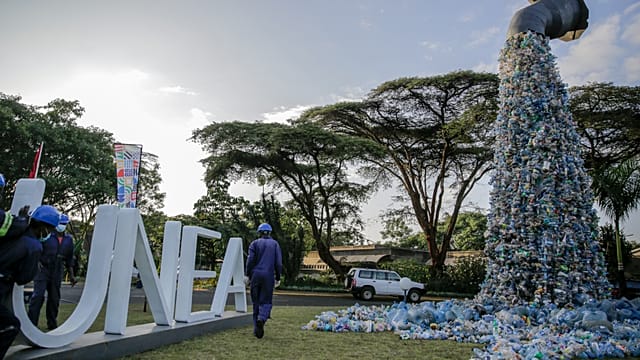
UN Environment Assembly Demands Urgent Global Action on Climate and Biodiversity