Will the EU Survive Its Own Elections?
Spain has started a wave of elections across Europe that could end the European Union as we know it. After Spain's vote this Sunday, France, Italy and Poland—three of the bloc's most influential members—will hold elections before 2027. In total, two-thirds of the EU's population will vote in national or regional elections. The paradox: this exercise in democracy could bring to power far-right parties that want to destroy the EU.
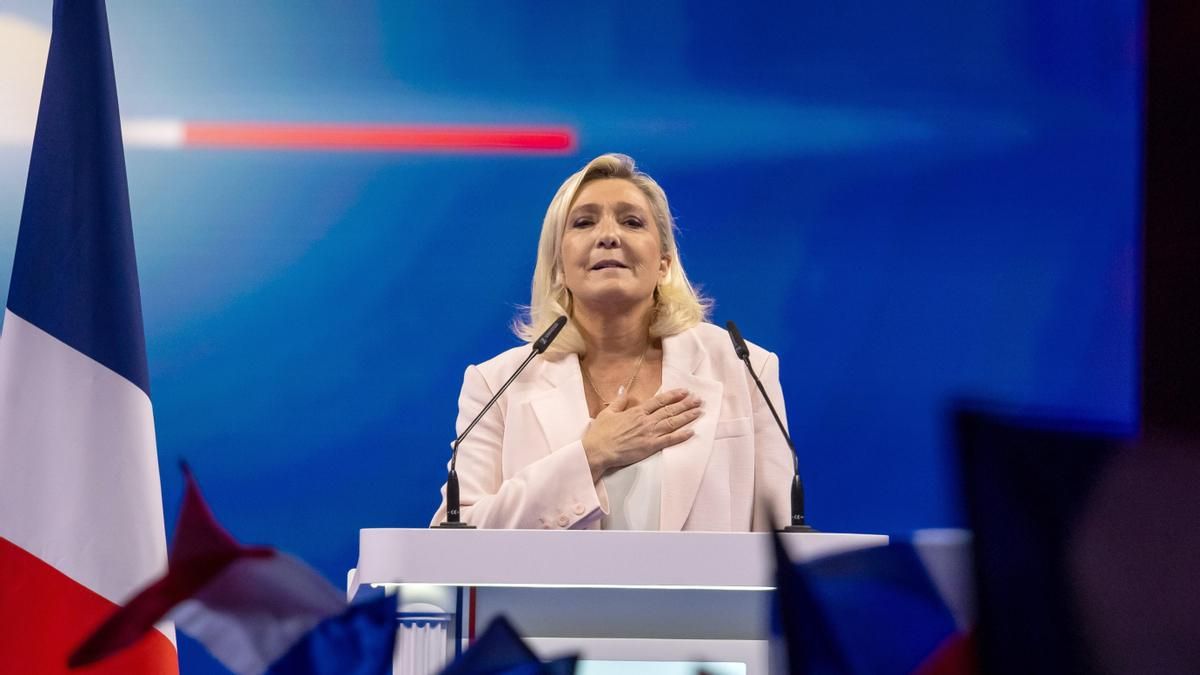
The warning signs are already clear. Polls show Marine Le Pen's far-right party winning France's presidential election. In Italy, Giorgia Meloni leads the polls, while pressure from a new ultra party could push her further right. In Poland, the broken Law and Justice party could form an ultra coalition against the conservative government. And in Spain, polls suggest the far-right party Vox could enter the government for the first time since democracy began.
This did not happen overnight. For years, Europe has seen its party politics fragment, with new ultra parties appearing. This division has produced fragile governments across the EU, forcing coalitions, shortening how long governments last and multiplying early elections. Ultra parties have used this weakness to push simple solutions: cutting rights and taking a hard line, at a time when Europe's economy suffers from weak growth and high inflation.
"Overcoming the 'fragmentation trap' is essential if Europe wants to resist the appeal of demagogues of all stripes and preserve the social and democratic foundations of its integration project," says André Sapir, a researcher at Bruegel. "Europeans do not want a social model with less protection and more inequality."
Far-right support has grown across Europe. Ultra parties have gone from about 10% of the EU vote in the mid-2000s to 23% today. They have entered coalition governments or support them in parliament in six EU countries.
Marco Damiani, a political sociology professor at the University of Perugia, explains the rise of radical right parties this way: "It is not that citizens and voters have stopped caring about social justice, but the perception that the European left's political agenda has moved away from material concerns in recent years—precisely when these have become an urgent priority again."
Now the key question: can far-right parties entering national governments end the European Union as we know it?
Fabian Zuleeg, director of the European Policy Centre, says ultra parties have changed strategy: "The goal is not to reform the Union, but to empty it from within." He points to a position paper by Germany's far-right AfD party and a report by two ultra-leaning think tanks, Hungary's Mathias Corvinus Collegium and Poland's Ordo Iuris Institute.
Zuleeg says both documents "propose replacing the directly elected European Parliament with delegations appointed by national parliaments. Both would reduce the Commission to a mere administrative service, turn the Court of Justice into an intergovernmental arbitration body, place national constitutions above EU law and allow opt-outs at will. Both present EU support for civil society, gender equality and climate action as ideological impositions."
The AfD even sets out a roadmap to weaken the EU as much as possible: "cuts under current law within three years, treaty reform in seven, the German veto on the budget as a pressure tool, and the goal of a right-wing majority in 2029." The party has already won regional elections in some German states.
Zuleeg warns that "if the EU is stripped of its courts, its Commission and its ability to enforce common rules, what remains is a negotiating table where governments face no limits." It is no coincidence that the recent meeting of the US, Russian and Chinese presidents ended with a declaration calling for UN reform, more oil production and a negotiation to "prevent the proliferation of nuclear weapons"—plus a commitment to immunity for heads of state and that the International Criminal Court "not abuse" its powers.
**"Explicit support for Euroscepticism"**
With geopolitical rivalry returning, Europe's adversaries have intensified efforts to weaken the EU. Russia has led this strategy by supporting far-right parties, says Thomas Laffitte, a researcher at the Brussels Institute for Geopolitics. He cites a loan from a Russian bank that financed Marine Le Pen's 2017 presidential campaign—the same year she visited Putin in the Kremlin—and close ties between AfD and Russia, including a manifesto drafted by the Kremlin. Both AfD and Le Pen's National Rally have said they would cut or eliminate aid to Ukraine if they take power.
Laffitte adds that "explicit support for Euroscepticism also comes from across the Atlantic. In the 2025 edition of the US National Security Strategy, the Trump administration warns of the 'disappearance' of European civilization and openly calls on European far-right parties to 'cultivate resistance' against the current establishment."
Other analysts do not believe the far right will destroy the EU, but they do see it weakening the bloc's geopolitical power. Stefan Lehne of Carnegie Europe says "a greater weight of the radical right would hardly dismantle the EU as it exists today, but it could prevent it from becoming what it needs to be to face future challenges. A prolonged inability to deepen economic and security integration could cause a gradual loss of relevance, as more and more decisions are taken elsewhere."
A Le Pen victory in France, however, could hit European institutions hard. Charles Grant, director of the Centre for European Reform, explains: "The EU has shown it can function with a few far-right leaders of small countries around the European Council table. But the country that really matters is France, where polls suggest Marine Le Pen has a strong chance of winning the presidential election. Le Pen has hinted she would be far more disruptive to the EU than Giorgia Meloni in Italy or Law and Justice in Poland: she would withhold contributions to the EU budget, block EU aid to Ukraine and claim the primacy of French law over European law."
Zuleeg concludes: "Illiberalism is not simply another political program that can be reversed after an election. Its fundamental goal is to dismantle the institutional, political and social limits on the exercise of power. Independent courts, free media, civil society, public administration, academic freedom and the rules of democratic competition are all targets of this offensive. Once weakened, these pillars are extraordinarily difficult to rebuild." The European Union will gamble its existence on democracy by 2027.