Turkish Mafia's War Reaches Spain: Leader Killed Inside Hospital
A Turkish mafia leader was shot dead inside a Spanish hospital in Tarragona on October 29, exposing how a violent war between new-generation Turkish criminal gangs has spread across Europe.
Mekin Büyükdeniz, 35, was killed around 3 a.m. after a gunman entered the Joan XXIII hospital through the emergency department, walked to the fifth floor, and shot him in his room. Büyükdeniz had been in intensive care since October 16, when he survived a first shooting in Salou. He had round-the-clock police protection in the ICU, but that same week he was moved to a regular floor and the protection was removed. His enemies knew.
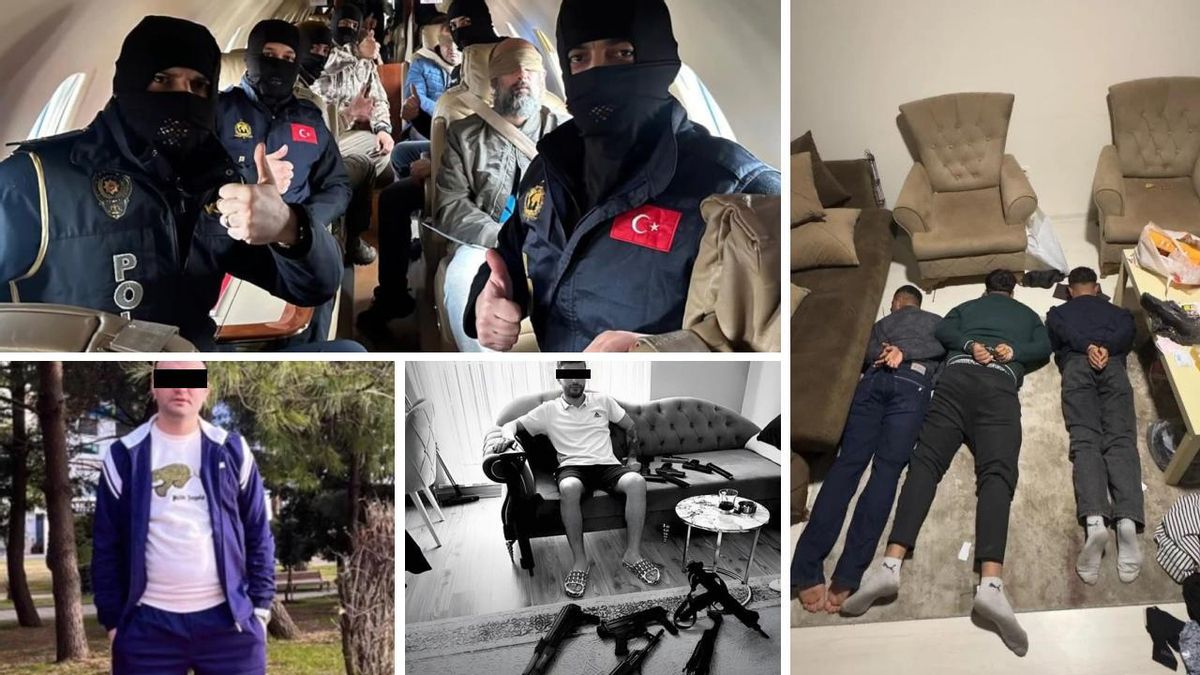
In February, Büyükdeniz's name appeared in a major Turkish police operation that led to 42 arrests. The target was the "Ten Brothers" gang, based in Istanbul's Küçükçekmece district and accused of drug and weapons trafficking, extortion, and other crimes. Büyükdeniz was believed to be the group's leader. Investigators suspect the hitman had direct information from Büyükdeniz's inner circle—a mole.
Authorities have not revealed a motive or named suspects. But Cevheri Güven, a Turkish journalist who studies the country's criminal networks, told elDiario.es that "this is the latest episode in a war over drug trafficking that began in Istanbul and continued in Athens." He said Büyükdeniz's rivals were the clan led by Naci Yılmaz ("Naci the Fast") and Uğurcan Gündoğmuş. Last year in Athens, Büyükdeniz wounded a member of the rival gang. The victim survived despite being shot eight times. In retaliation, Büyükdeniz became the target. He survived a first attack but was killed in a second.
Yılmaz's faction, which reportedly runs one of Europe's largest cocaine trafficking networks and has ties to Latin American cartels, is fighting another mafia leader arrested in Italy who has built a coalition against Yılmaz to set up a new distribution network on the continent, Güven said. Battles in this war have been fought in Spain, Italy, and Germany, among other countries.
In Yılmaz's faction is a dangerous rising gang known as the Dalton. On the other side, the Casper are part of the enemy coalition. Both mafia groups are at war.
On the night of September 22, Ümit Yalçın was having dinner on a restaurant terrace at the Muelle Uno shopping center in Málaga when a hitman approached and shot him in the face. Yalçın founded an ultra group linked to the Fenerbahçe football club, is also associated with cocaine trafficking, and belongs to the Casper faction. Experts consulted link the attack to the war between the two sides. That war became clear in Spain after another shooting on July 20, 2025, in the parking lot of an Aldi supermarket in Estepona targeting Caner Koçer, one of the Dalton leaders. Koçer survived but was later shot dead in another attack in Torrevieja a few days later, on August 4.
**"Much more violent"**
"In the past, Turkey was a country on international cannabis and heroin routes. These substances, coming from Afghanistan and Iran, passed through Turkey on their way to Europe," Güven said. "However, in the last decade, Turkey has entered the cocaine trade and quickly become a hub for this business. Cocaine arriving at Turkish ports from South America is distributed mainly to the Middle East and, to a lesser extent, to Europe."
"This phenomenon has led to the emergence of new mafia groups. For the first time, cartel-style organizations have appeared in Turkey. In recent years, major mafia wars have been fought inside Turkey, conflicts that have later moved to the streets of Europe," the journalist said.
Mahmut Cengiz, a member of the International Coalition Against Illicit Economies (ICAIE) and a professor at the University of Kansas, where he directs the global crime specialization, noted that "unlike traditional Turkish mafia organizations, which historically relied on established hierarchies, business relationships, and political protection, these newer groups are characterized by younger members, aggressive recruitment, a strong social media presence, and extreme violence."
Their members have hundreds of thousands of followers on social media, where they display a life of luxury that helps them recruit young soldiers. According to judicial investigations, they even use the same networks to order and plan operations.
A December 2025 image reflects the level of violence and impunity. During a mass trial at an Istanbul prison involving more than 350 people linked to the Dalton, the judge ordered one defendant expelled. The others responded by attacking officers and throwing chairs. Police responded with pepper spray and batons as the judges left quickly through a side door.
The Dalton leader, Beratcan Gökdemir, lives in Russia. Just one day after the attempted assassination of Yalçın in Málaga, two masked men set fire to a Starlink satellite ground station in Poland. Elon Musk's company provides a critical service to Ukraine's armed forces. Days later, the investigation led to the arrest in Germany of two Turkish citizens belonging to the Dalton group, according to German public television. Poland accuses them of acting as agents of Russian intelligence services.
Many leaders of these new Turkish mafias are on European soil and have brought members of their criminal groups with them for protection. "The need to arm these sizable groups has led to the establishment of weapons trafficking networks, and that, in turn, has created a weapons market in Europe. All of this is in addition to drug trafficking and extortion," Güven said. Some came fleeing criminal investigations or rival groups; others simply seek access to the European market.
"The Costa del Sol and the Costa Blanca are attractive environments for criminals with international mobility, due to their connections with European commercial and transport networks, the presence of an international population, and the existence of consolidated transnational criminal markets," said Cengiz, who worked in Turkey's police force for two decades fighting organized crime.
The war is no longer only about controlling the European market, "but has acquired a strong dimension of retaliation," Cengiz said. "When prominent members are killed, their organizations are pressured to respond. In turn, failing to retaliate can be interpreted by rivals as a sign of weakness, which would undermine the group's credibility and internal cohesion. This creates a cycle of violence in which each murder serves as justification for the next. The conflict is no longer exclusively economic; it has become personal, symbolic, and organizational, and this makes any possibility of reconciliation extremely difficult, even when reducing violence would be financially advantageous for both organizations."
**From Black Sea nationalists to Kurdish cartels**
On September 26, Devlet Bahçeli, leader of the far-right MHP party and an ally of President Erdogan, organized a large banquet to celebrate reconciliation between two old Turkish mafia groups that had been at war for years: the Saral and the Şahin.
The old generation of Turkish mafia groups originated mainly in the Black Sea region. "They are very nationalist and have links to the MHP, the most nationalist party in Parliament," Güven said. "By contrast, the new-generation groups, such as the Dalton, the Casper, and others, are of Kurdish origin."
The MHP is currently part of Turkey's governing coalition. "Such meetings would be a major scandal in a normal democratic country," the journalist said. "The Saral and the Şahin are two nationalist mafia groups. If these two families went to war with each other, they would create space for new-generation Kurdish mafia groups to expand and grow faster. Bahçeli's goal is to prevent that. The MHP does not want Kurdish groups to gain prominence, even within the criminal underworld," he said.
The Turkish mafia has significantly increased its power in recent years. Cengiz believes part of the problem lies in the purge Erdogan launched after the 2016 coup attempt. "We must analyze the profound transformation of political institutions and security forces," he said. "Institutional capacity was interrupted. This is not just simple personnel changes; it meant a substantial loss of institutional memory, specialized investigative experience, professional contact networks, and international expertise."
"According to UNODC, cocaine seizures in Turkey went from approximately 400 kilograms in 2014 to 2.8 metric tons in 2021. While this expansion cannot be attributed exclusively to police purges, it is true that it took place during a period of serious destabilization in specialized security force institutions," Cengiz concluded.