Spain's High-Stakes Election: Will the Far Right Take Power on November 29?
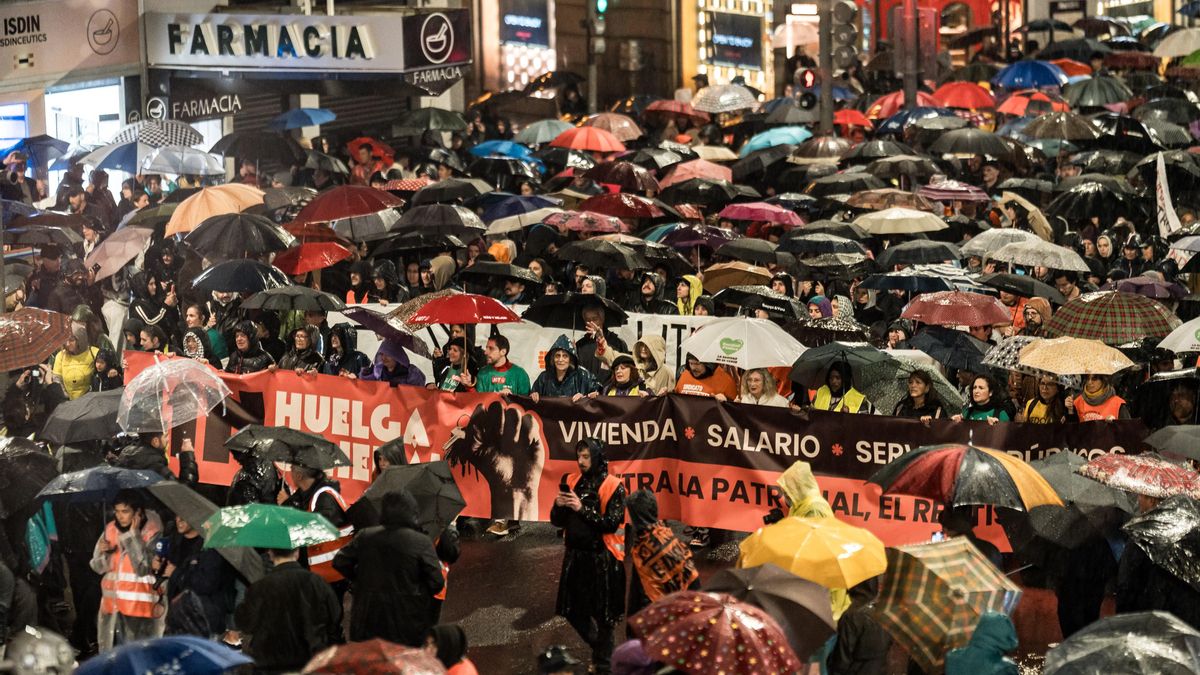
Five and a half million workers, called by the CCOO and UGT unions, brought Spain's main production and service centers to a standstill on November 11, 2026. They demanded the right to housing, decent wages, and the defense of public pensions, among other goals.
The eviction and subsequent death of Maricarmen publicly exposed the relentless greed of real-estate speculators who treat one of the most basic citizens' rights as a commodity, making decent housing practically impossible for most people. This was the tipping point that moved the Tenants' Union, neighborhood associations, UGT, CCOO, and other unions to call a 24-hour general strike. That afternoon, millions of citizens—with a strong presence of young people—filled streets across Spain in massive demonstrations, capping the day of union mobilization.
After November 11 (11N) comes November 29 (29N). The Democratic Intervention Platform drafted a manifesto titled "From the Strike to the Ballot Box," warning of what is at stake in the November 29 elections. These elections take place within a worldwide offensive by reactionary forces aimed at dismantling the social and political rights won after World War II. Yet this far-right offensive has recently suffered important defeats, giving hope to progressive forces—among them Lula's major victory over far-right candidate Bolsonaro in Brazil, against all predictions, and Trump's resounding defeat in the U.S. midterm elections for both the Senate and the Congress. Now it is Spain's turn.
In our country, we face an unprecedented situation. For the first time in our democratic history, far-right forces like Vox—linked to the dark dictatorial past—and a PP that has surrendered to Vox and heavily copied its messages and proposals could come to govern the country, according to most polls. The far right has already announced it wants to eliminate Spain's autonomous regions, repeal the Democratic Memory Law, roll back the rights of women and LGTBI people, move to a mixed pension system with privatization, and impose "national priority" and "remigration," including the expulsion of migrants.
The PP accepts the core of that program, which it already applies in several regions, and further commits to ending the euthanasia law, restricting the abortion law, scrapping the Ministry of Equality, repealing the law that ties pension increases to the CPI (consumer price index)—which it voted against every year—leaving minimum wage increases in the hands of employers' associations, privatizing the control of sick leave through private insurers (Mutuas), along with the usual tax cuts for the rich, eliminating the bank tax, and widening the privatization of public services that began years ago.
Nor can we forget their attitude toward unions. Ayuso called unions "garbage" and "the mafia," boasting that she had asked Feijóo to eliminate "union garbage" and that he had replied he would. The PP is returning to its goal of weakening and distorting the role of unions enshrined in the Constitution itself—now with language of deep contempt for workers and their representative organizations.
None of these reactions happens by chance. In recent years, under the progressive coalition government, key aspects of people's lives have improved. This includes pension increases, rises in the minimum wage and average total salary, a substantial increase in employment—3.5 million new jobs between late 2018 and 2026, mainly stable jobs with a rise in permanent contracts thanks to this government's labor reform—a very significant drop in youth unemployment, and many other indicators of improving lives. The right has opposed all of these, voting systematically against them in the Congress of Deputies, while also opposing taxes on banks and energy companies.
"National priority," proposed by Vox and already accepted and applied by the PP in the regions they share, is not only unconstitutional but represents a very serious democratic setback. It means moving from a concept of citizenship that universalizes and equalizes rights for all people living in a territory to a concept of identity, in which those belonging to a common ethnicity, origin, or religion have more rights than others. The far right wants to impose an identity-based nationalism with very old, deep roots that hates migrants—especially if they are poor—and discriminates by origin, taking us back not one hundred years, but to a pre-Enlightenment world.
Hence the far right's xenophobia, with statements like "hunting migrants one by one" or using the Navy to stop cayucos (small boats) from reaching the Canary Islands. That is why PP-Vox have rejected the recent regularization of migrants, clearly showing they prefer them to keep working irregularly, subjected to double exploitation—as poor workers and as people "without papers"—rather than let them exercise their most basic rights as citizens in Spain. The most recent peak is both parties' enthusiastic support for deporting irregular migrants to Rwanda, which five European Union countries have signed, in an anti-humanist rush with no legal future.
Substantial aspects of democracy as we know it and of the welfare state are at stake—a rollback of values and rights that we must and can prevent. The transformations we need to keep advancing social rights and avoid going backward, to keep improving people's lives, and to decisively tackle the housing problem—on which PP-Vox have systematically opposed the progressive government's proposals in Parliament, with regional governments refusing to apply state regulations—will only happen if we fill the ballot boxes with progressive votes. That would allow a Parliament with a progressive majority and leave the right in the minority. Therefore, just as we supported the general strike on 11N, we now ask citizens to carry that mobilization through to 29N by going to the polls.
Also signing this article: Luis María González, Toño Abad, Juan Puig de la Bellacasa, Bruno Estrada, Paloma Vega, Isabel Vilabella, Julio López de la Sen, and Borja Puig de la Bellacasa, for the Democratic Intervention Platform.