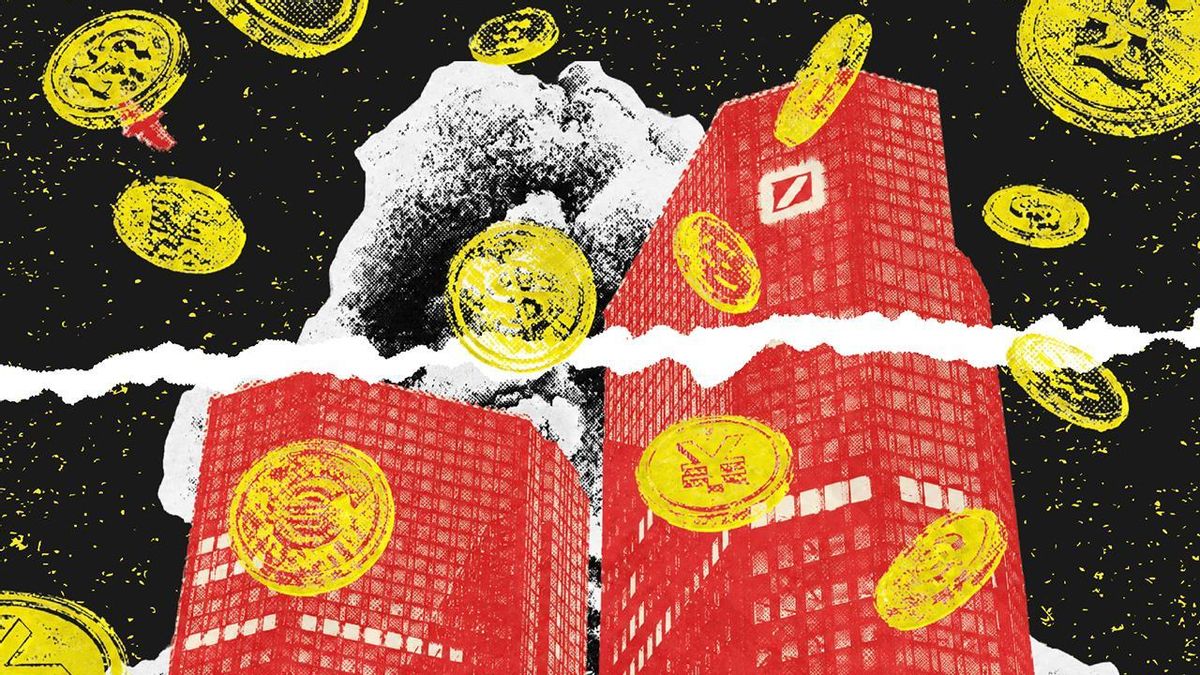
Deutsche Bank leak: 15 million files expose Epstein, Trump, and Russian oligarchs
Deutsche Bank built a huge system to stop financial crime. Leaked documents show it often failed.
More than 15 million internal documents from Deutsche Bank have been leaked to journalists. The files include emails from top executives, secret risk assessments, and reports on suspicious transactions. They reveal the bank's dealings with Donald Trump, Jeffrey Epstein, Russian oligarchs, and authoritarian regimes.
More than 200 journalists from over 50 media outlets spent months analyzing the leak, known as "Inside Deutsche Bank." The documents expose how the bank's anti-money-laundering and sanctions units struggled to do their jobs.
Deutsche Bank has tried to rebuild its reputation since Christian Sewing became CEO in 2018. Sewing promised a more stable and "a bit more boring" bank. The leak tests that promise. It shows a bank that built a massive compliance system but often could not make it work.
**How the leak happened**
Two whistleblowers copied the files and gave them to Indian journalist Josy Joseph and South African journalist Khadija Sharife. A nonprofit called Barracuda Media was created to share the data with journalists worldwide.
The whistleblowers' lawyer said they also gave the files to the U.S. Department of Justice, the U.S. Financial Crimes Enforcement Network, and UK tax authorities. They clearly wanted to expose Deutsche Bank's ties to Russian oligarchs and Russian money.
"To please powerful clients, the bank bypassed its own rules, letting business concerns override its compliance system," the documents show.
**Epstein and Trump**
Deutsche Bank accepted Jeffrey Epstein as a client in 2013, years after he was convicted of soliciting prostitution from a minor. The leak shows the bank identified nearly $600 million in suspicious transactions linked to Epstein and his network — more than double what was previously known.
Trump and Epstein both turned to Deutsche Bank when other banks rejected them. The files contain many details about oligarchs Oleg Deripaska and Roman Abramovich, allies of Vladimir Putin.
In 2016, after Trump won the U.S. presidency, the bank created a special project around him called "Novus Ordo" (Latin for "new order"). Access to Trump-related documents was restricted and communications were encrypted. But Trump's companies still wanted things from the bank, such as changes to existing loans.
Deutsche Bank declined to comment on Trump. It said banks are legally prohibited from discussing conversations with U.S. regulators or suspicious activity reports.
**Spain and corruption**
In Spain, Deutsche Bank financed multiple projects in Angola, Cameroon, and the Dominican Republic. Many failed or were investigated for corruption. The companies involved — including Defex, Mercasa, Eurofinsa, Elecnor, and Ibadesa — are regulars in judicial investigations. Most projects had Spanish state support.
**Russian money**
After Russia occupied Crimea in 2014, Western sanctions forced banks to decide which Russian clients were still acceptable. "We started making lists: good oligarchs and bad oligarchs," a former Deutsche Bank employee told journalists.
The files show the bank repeatedly processed transactions for sanctioned or politically exposed Russians. In May 2020, when executives planned to expand business in Russia, one financial crime specialist compared the plan to throwing her team under a train.
**A pattern of failure**
The leak reveals a case that was never made public: in 2019, employees discovered a vast money-laundering network that had moved hundreds of millions of euros through the bank's systems using companies in Cyprus, Britain, Ukraine, and Hong Kong. The bank's control systems caught some pieces but could not see the full picture. It took three years for one employee to detect the pattern. A manager mocked him as "employee of the month" before adding: "Our systems clearly failed to detect it."
In Colombia, an internal investigation called "Project Cali" found that in 2019 the bank had processed thousands of transactions for companies linked to online pornography. Money was sent to women in Colombia through suspicious methods, and the bank failed to report most transactions to authorities. The investigation flagged eight companies for "money laundering" and another for "organized crime." By the time the bank filed 230 suspicious activity reports and banned payments, millions had already been transferred.
**Environmental promises broken**
Deutsche Bank promised in 2020 it would no longer finance new oil and gas projects in the Arctic. Months later, it processed a €1.5 billion payment related to Trafigura's investment in the giant Vostok Oil project. The internal justification: the bank was only processing the transaction for Trafigura, not financing anything.
The bank also backed a huge gas complex in Ust-Luga, Russia, despite internal concerns about environmental impact and reputation. "It's very important and we have to get it," the head of commercial financing wrote. The deal was approved.
**The bank's response**
Deutsche Bank said the issues raised by journalists "date back many years, in some cases decades." "Where appropriate, these issues were reviewed at the time and discussed with regulators and authorities," the bank said. "Today we are a different bank."
The bank said it invested €7 billion between 2019 and 2025 to improve its control processes, with major technology investments. "This work has helped resolve legacy issues and meet important regulatory milestones," it said.
Deutsche Bank also said it "recognizes its mistake in accepting Epstein as a client in 2013 and regrets its historical relationship with him."
**What comes next**
Since 2000, Deutsche Bank has paid more than €20 billion in fines and settlements for issues related to mortgage securities, interest rate manipulation, mirror trades in Russia, and anti-money-laundering failures.
The leak comes at a sensitive time. In 2026 alone, there have been at least four raids on its offices. The bank has filed several voluntary notifications to authorities.
The list of prominent figures in the leak is enormous: Trump, Epstein, Deripaska, Abramovich, Jho Low, and even King Rama X of Thailand. For many of these clients, the key issue is not misconduct but the leak of highly sensitive data about their finances, families, and businesses.
The bank had already warned of this danger. After a smaller incident involving mistakenly sent client information in 2021, an employee warned that law firms might exploit the business of suing the bank for data protection failures.
The lesson of "Inside Deutsche Bank" may be that the problem was never a lack of rules. The bank employed an army of compliance officers and built huge oversight systems. It promised regulators repeatedly that it had learned from past mistakes.
But those rules clashed with business. Again and again, the documents show the same sequence: someone raises a warning, compliance teams express concerns, executives debate the risks, and the bank finds a reason to proceed. Sometimes the client was an oligarch. Sometimes the business involved a sanctioned market or a lucrative energy project. And sometimes the bank's systems simply did not register what was happening at all.
For years, Deutsche Bank decided what regulators could see, what clients could see, and what the public could learn. That era is over.