Israel's Prisons: A Weapon of Genocide, Says Palestinian Lawyer
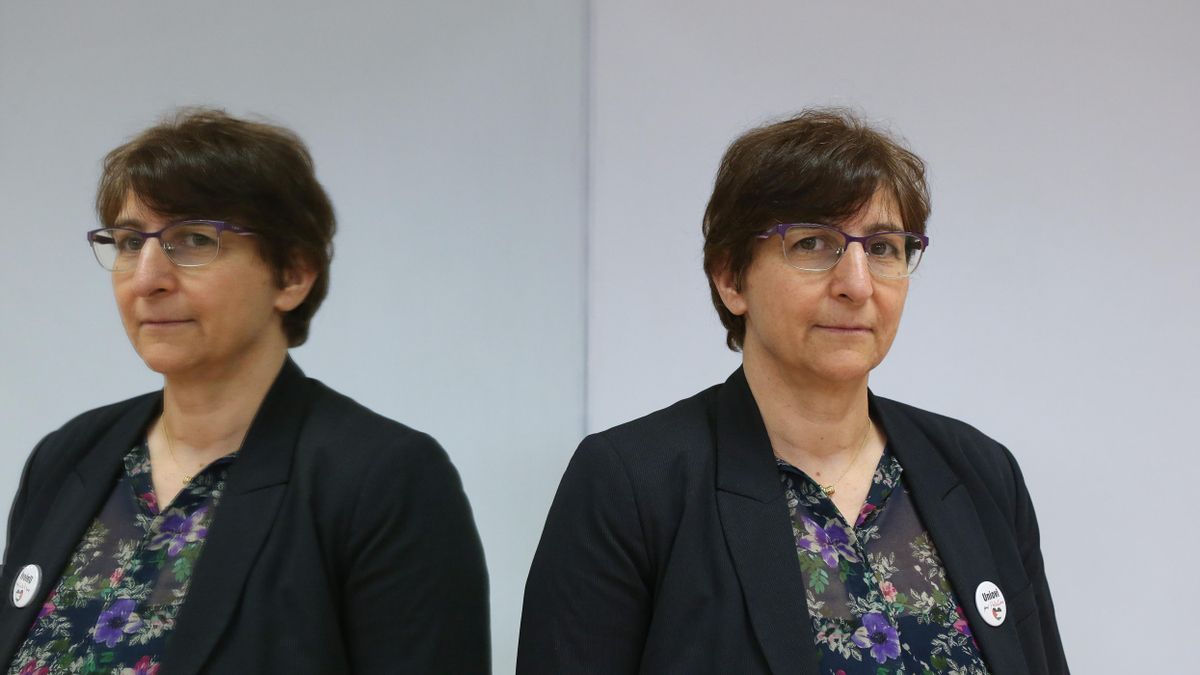
Israel has turned its prison system into a tool of genocide against Palestinians, according to Sahar Francis, former director of Addameer, a leading Palestinian prisoners' rights group. In an interview, Francis said more than 100 Palestinian detainees have died in Israeli custody in the past three years from torture, abuse, medical neglect, or starvation. She called these practices "part of the genocide" against Palestinians.
The interview comes after Israel last Thursday returned the body of Walid Jaled Ahmed, a 17-year-old Palestinian who died in an Israeli prison in March 2025. The judge overseeing the investigation said he "probably died of hunger," and the autopsy recorded acute malnutrition. Authorities had held his body for more than a year and a half.
Francis said detention is no longer only about depriving Palestinians of freedom. "It is used to attack their very existence," she said, describing "systematic torture" documented at every stage of detention. She listed forced starvation, denial of food and water, refusal of medical treatment, and sexual violence including rape. She said such abuse was used to "destroy the dignity of prisoners."
Addameer has no direct access to prisons, but provides legal support and relies on testimony from former detainees. Up to one million Palestinians have been detained by Israel since 1967, including tens of thousands of minors. Arrests have surged in the last three years, overcrowding prisons and detention centers again.
Francis pointed to Sde Teiman, a military detention center where five reservists were accused in 2024 of assaulting a Palestinian prisoner with a sharp object. A video leaked to the press led the army to open an investigation, but the charges were dropped this year, drawing criticism from human rights groups.
She also cited the case of journalist Sami al Sai, who spoke openly about sexual abuse during his arrest. "I interviewed many prisoners who described forms of sexual harassment, from body searches while fully naked to objects inserted into intimate areas, such as batons or even a carrot," she said.
Francis said at least 1,000 Palestinians from Gaza are forcibly disappeared, with some estimates reaching 2,000. "We don't know if they died, are under rubble, or are detained," she said, calling it "a very serious issue in Gaza."
After the October 7, 2023 attacks, cells became overcrowded and violence escalated sharply. A Palestinian minor from East Jerusalem, released in the first hostage-prisoner exchange, said guards beat and insulted detainees "almost constantly." This year Israel also passed a law legalizing the death penalty for those convicted of deadly "terrorist" attacks — a measure that applies in practice to Palestinians. Addameer called it "a legal framework for systematic killing."
About 5,000 Palestinians were in Israeli prisons before the Gaza war. The number doubled to more than 10,000 after Israel's invasion of Gaza and repeated raids in the occupied West Bank, where Israel applies military law to Palestinians while hundreds of thousands of Israeli settlers live under civil law.
According to Addameer, more than 9,300 Palestinians are currently detained. Of these, over 3,100 are held under administrative detention, which allows arrest without charge or trial for years. Another 1,419 are classified as "unlawful combatants" under a 2002 law that permits indefinite detention during conflict without formal charges or a court date, and without access to a lawyer for 75 days.
Since October 7, 2023, "more than one hundred detainees from Gaza and the West Bank died from torture, ill-treatment, medical negligence, or hunger," Francis said. That is nearly a third of the 329 Palestinians who have died in Israeli custody since 1967. She described searches up to four times a day during which soldiers, police, or guards committed severe assaults and sexual abuse, in some cases causing death. Other prisoners were attacked by security dogs, she said. "We recorded cases of detainees who said dogs attacked them, scratched them, and urinated on them. The Palestinian Center for Human Rights documented a case of a person who said a dog raped him."
Medical care also collapsed. After October 7, prison clinics were closed and sick prisoners were no longer transferred to civilian hospitals, severely affecting the elderly, the chronically ill, and cancer patients. Water and electricity were cut, and the lack of access to water continues, preventing many prisoners from washing. "As a result, scabies keeps spreading dangerously in prisons," Francis said.
She returned to Walid Ahmed, the 17-year-old who died of starvation in Megiddo prison in May 2025. "The report of the doctor who performed the autopsy is shocking. He said he had never seen a body that had lost weight so severely from forced starvation," she said. She also cited Omar Assaf, a 75-year-old activist who lost more than 20 kilos during six months of detention. "I could not recognize him when he was released," she said.
In 2021, Israel designated Addameer as a terrorist group. Recently, the Israeli army raided an office linked to the NGO in Ramallah, seizing documents and materials. Israel says the group receives funding from the Popular Front for the Liberation of Palestine (PFLP), a leftist faction with an armed wing that Israel also lists as a terrorist organization. Addameer rejects the accusations, calling them a pretext to criminalize Palestinian civil society.