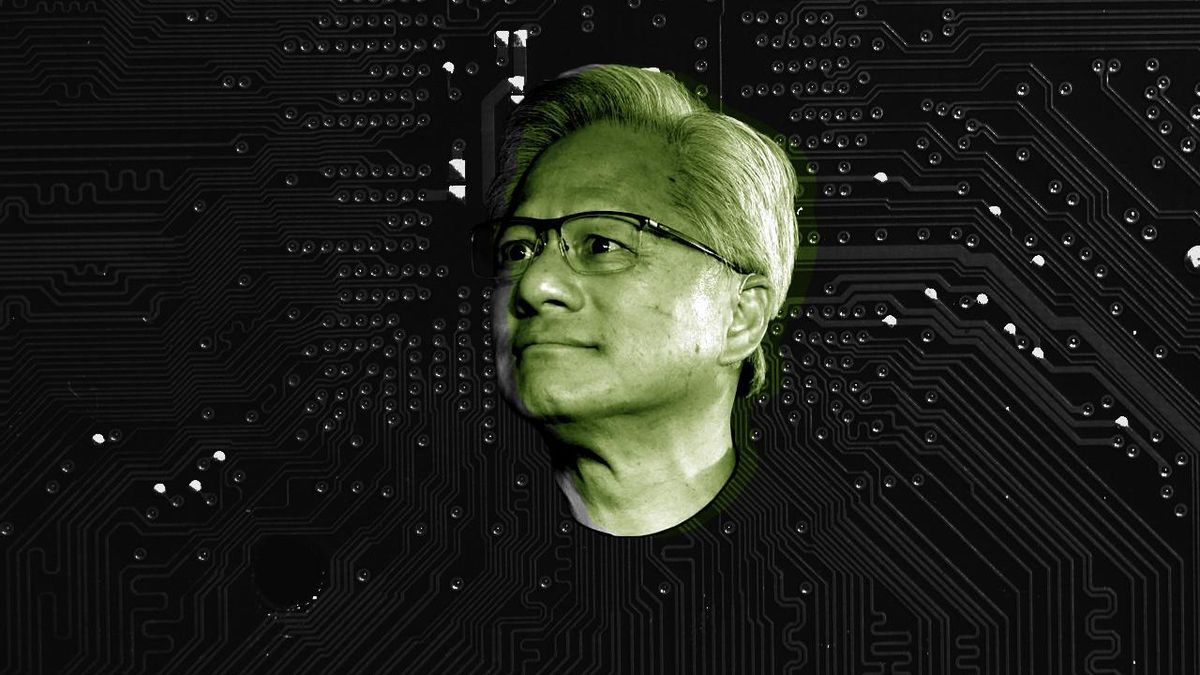
Nvidia CEO Resigns: Sex Scandal Exposes Illegal Chip Sales to China
Jensen Huang, co-founder and CEO of Nvidia, resigned on Thursday. His departure follows revelations of extramarital affairs that connected his private life to the shadowy world of US-China tech warfare.
The 63-year-old executive built Nvidia from a video game company into the world's most valuable corporation. He was one of the few people who could enter both the Oval Office and the highest levels of China's Communist Party without an appointment.
Now, two affairs have ended his career. The first was with Alice Huang, an alleged Chinese spy. The second was with Kimberly Powell, a vice president at Nvidia. A third relationship with another employee emerged late Thursday.
**The Smuggling Scandal**
The scandal goes far beyond infidelity. Reports since Sunday suggest Huang was deeply involved in illegal trafficking of Nvidia processors to China.
Alice Huang was CEO of Megaspeed, a Singapore data center giant that Jensen Huang personally endorsed. The company bought about $4.8 billion in advanced Nvidia chips. Of that, roughly $2.4 billion was for boards with Blackwell processors, which were banned from sale to China. According to Bloomberg's investigation, those machines were never installed at Megaspeed's data centers.
Singapore police arrested Alice Huang in mid-2025 after uncovering a network of shell companies linked to Megaspeed. She was questioned and released with charges after agreeing to cooperate. During that period, Jensen Huang visited her repeatedly and ordered Nvidia's top legal counsel to intervene with the US Commerce Department and slow the investigation.
**Billions in Hidden Sales**
Culper Research, a financial analysis firm, reports that Nvidia's sales to Megaspeed included 50,000 more graphics cards than the company had reported to the US government. The firm estimates that up to $43.18 billion—20% of Nvidia's total revenue in fiscal year 2026—came from covert sales to China.
Nvidia has neither confirmed nor denied the figure. It directly contradicts Huang's repeated claims to investors that direct data center revenue from China was "zero" due to export bans.
Investigators are now examining Huang's role in these operations. They are also looking at Nvidia's decision in late 2025 to change its financial policies—recording revenue based on the buyer's tax location rather than where the data centers actually operate.
"Maybe he had no idea, but that would make him one of the stupidest men in the world," said Ed Zitron, a tech industry analyst. "It's not an 'error' to sleep with another woman decades after getting married, nor is it an 'error' to sell that woman's company billions of dollars in chips, nor is it an 'error' to have your communications team repeatedly lie, nor is it an 'error' to use your general counsel to intimidate the Commerce Department into looking the other way."
China denies that Alice Huang is a spy or that she organized an influence operation. Nvidia had also said there was nothing "unusual or unexpected" about the relationship and that company secrets were not compromised. Earlier this week, before the affairs with two employees became public, Nvidia was still criticizing journalists for spreading "morbid gossip."
**White House Connections**
Huang's access to the White House came partly from Nvidia's strategic importance. It also came from his close relationship with Donald Trump. The president defended him until the end, calling him an "honorable man" and an "incredible guy."
David Sacks, the White House advisor on AI and cryptocurrency, was another key ally. Both argued that banning chip exports would hand the massive Chinese market to local companies like Huawei.
Under that logic, Huang convinced Trump to allow sales of some less advanced chips to China. The deal came at a price: Huang offered the US government a 15% commission on all Nvidia revenue from China. That would have brought in about $2 billion per year, but the arrangement lasted only months before Trump reversed course and cut off sales again.
**Investigation Just Beginning**
The collapse came from within. The New York Times revealed Huang's second affair with a direct subordinate. Nvidia's board had no room to maneuver because company policy prohibits intimate relationships between employees. Huang chose to resign before the board could act.
Chief Financial Officer Colette Kress has taken over temporarily. Wall Street reacted with a sharp selloff. Nvidia shares fell as much as 14% at the opening bell before recovering to a loss of just over 4%.
Huang owns 3.6% of the company and has an estimated fortune of $150 billion. He had 60 executives reporting directly to him. He always said he didn't believe in a "number two" and for 30 years was the only person who knew every move across Nvidia's operations. He had also ignored calls to prepare a succession plan. The company itself acknowledges in its investor risk reports that it is "highly dependent" on its "long-tenured executive team."
Reuters has now revealed a third extramarital relationship with another employee, deepening suspicions about Huang's conduct. The world's most valuable company and the reference point for the AI revolution is now leaderless. It faces threats from ongoing revelations about chip smuggling amid the US-China tech cold war.
The impact extends beyond Nvidia's offices. For three years, the AI industry has experienced a continuous boom in valuations based on Nvidia's enormous profits, which the company then reinvested in the ecosystem to fuel chip sales. This circular financing model led Nvidia to take stakes in OpenAI, Anthropic, xAI (Elon Musk's AI lab), Mistral (Europe's leading startup), Perplexity, and dozens of other labs. These companies now wait to see how far the investigation into the finances of the company supporting the entire boom will reach.