Gaza Floods: 70,000 Tents Underwater as Winter Crisis Deepens
Part of composite article Gaza Floods: 70,000 Tents Underwater as Winter Crisis Deepens View full article →
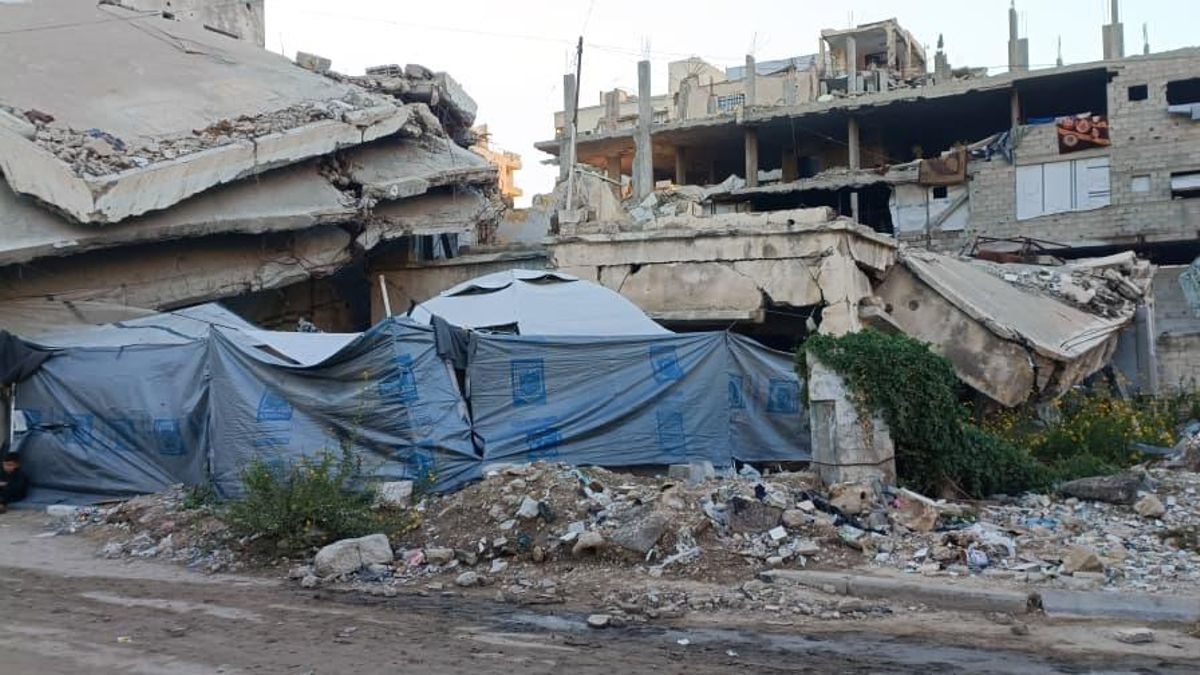
A severe winter storm has flooded tens of thousands of tents in Gaza, leaving displaced families without shelter, food, or dry belongings as humanitarian agencies warn conditions will worsen.
Duaa Obeid, 36, has already lost her husband and her home. Israeli forces killed her husband as he waited for food aid in southern Khan Yunis, and an airstrike destroyed the residential building where she lived with her family. Now alone with five children, she lives in a tent — and says the floods have made her life even harder.
"Since I started living in a tent, we have suffered terribly," she said. "Living in a tent affects every part of life, especially the extreme summer heat and the winter rains."
Obeid had hoped to receive aid to buy plastic tarps to cover her tent before winter. But the rain came first. "We were talking about buying tarps and building dirt barriers around the tent to prepare for the rainy season, but a strong storm hit Gaza, flooded us, and left our tent completely underwater," she said.
The storm struck the Gaza Strip from the evening of Friday, November 6, until Sunday, November 8, causing major damage, mainly in camps for displaced people. "Because the rain was so heavy, our tent flooded and our few belongings were submerged. Our mattresses, blankets, and clothes were completely soaked," Obeid said. Food supplies were also ruined. "All our stored food — flour, lentils, rice — got wet, so we will have to buy food to replace what we lost."
With no stable income since her husband's death, Obeid cannot afford to rent a room, and no housing is available. "When we flooded, I didn't think about myself. I thought about my children, whom I couldn't protect or give a safe place to live," she said.
The scale of the crisis is enormous. About 90% of homes in Gaza are destroyed, and more than 1.5 million people are displaced across roughly 2,100 camps housing around 270,000 tents — many pitched among rubble in areas unfit for habitation. According to Gaza's Higher Emergency Committee for Winter, about 70,000 tents flooded within the first 12 hours of the storm, affecting more than 350,000 displaced people.
The storm also brought deadly risks. Five members of one family died when sand collapsed onto a tent sheltering displaced people in central Gaza. At least three buildings housing displaced people collapsed, and dozens of walls gave way under heavy rain and strong winds.
Israel's ongoing blockade of Gaza and its ban on bringing in shelter materials will deepen the housing crisis during the cold months. UNRWA, the UN agency for Palestinian refugees, has warned that conditions will deteriorate with the cold and rain, noting that about 58% of the population faces critical or catastrophic shelter needs. The agency activated winter emergency teams across Gaza and worked with local organizations to clear storm drains, trenches, and sewage networks, and to place sandbags in flood-prone areas. But these efforts remain insufficient given the scale of need and Israeli restrictions on humanitarian aid.
UN Deputy Special Coordinator Ramiz Al-Akbarov urged Israel to lift all restrictions and unnecessary obstacles blocking the entry of water extraction trucks, heavy machinery, engine oil, drainage pumps, blankets, and winter clothing. "We can certainly bring in much more aid. We just need permits from the Israeli authorities to bring it through the various border crossings," Al-Akbarov said recently.
As the UN and humanitarian groups call on Israel to ease reconstruction and allow winter aid into Gaza, Obeid keeps laying her mattresses, blankets, and clothes out in the sun to dry. "While I hang out our mattresses, I look at the clouds in the sky and feel terror at the arrival of another storm that will turn our already destroyed lives into a new nightmare," she said.