Missing 200 million years of Earth’s history? Scientists say they found the answer
For over 150 years, scientists have puzzled over a massive gap in Earth’s rock record. Now, a new study suggests the answer lies deep inside the planet.
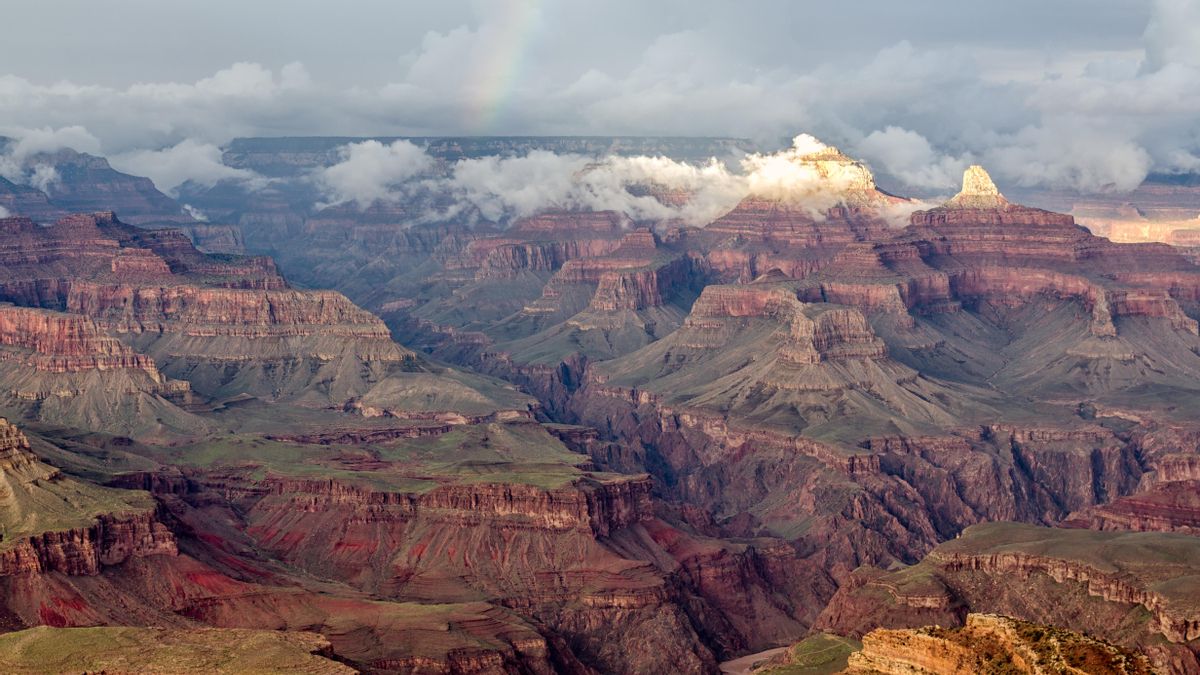
In 1869, geologist John Wesley Powell explored the Grand Canyon and noticed something strange. Rocks nearly 2 billion years old sat directly next to much younger rocks. It was as if a huge chapter of Earth’s history had simply vanished.
Geologists call this missing section the “Great Unconformity.” It is a gap of about 200 million years in the geological record. Until now, no one could fully explain why it happened.
A new study published in the journal *Nature* may have solved the mystery. Researchers Santosh Dhungana and Nicolas Flament from the University of Wollongong in Australia say the answer is connected to movements deep inside the Earth.
**What happened to the missing rock?**
The researchers ran computer simulations of the Earth’s mantle — the hot, slowly moving layer of rock beneath the crust. They found that during the Neoproterozoic era, between 1 billion and 540 million years ago, movements in the mantle pushed parts of the continents upward.
This uplift exposed large areas of rock to erosion. Wind and water slowly wore the rock away. Later, the continents sank again, and the sea covered the eroded surface with new sediment. The missing rock was gone forever.
“Imagine a book missing a large section in the middle,” Dhungana said. “The Great Unconformity is that gap in Earth’s history, where the story jumps from the early chapters to a much later part. Our research suggests these pages were not lost by accident.”
**A possible link to the rise of life**
The study also raises an interesting question. The erosion happened around the same time as the “Cambrian explosion” — a period about 540 million years ago when animal life on Earth rapidly diversified.
The researchers suggest that the intense erosion may have washed large amounts of nutrients into the oceans. This could have helped fuel the explosion of animal life.
“Sometimes, what is missing can tell us more about Earth’s history than what we can see,” Flament said.
**Experts react**
Nahúm Méndez Chazarra, a geologist and science communicator, said this was one of the great unsolved mysteries in geology. “This new study proposes that the responsible party is inside our planet: the mantle and how it moves,” he said.
Daniel Pastor Galán, a researcher at IGEO-CSIC in Spain, said the idea is elegant and the models are physically strong. “This article gives a solid basis to think that this is a serious hypothesis worth considering,” he said. However, he noted that the models rely on reconstructions of ancient tectonic plates that remain uncertain.
J. Javier Álvaro, also from IGEO-CSIC, said the study connects surface processes with the deep dynamics of the planet. He called the most suggestive part the question it raises: could Earth’s internal movements have indirectly contributed to the great diversification of animal life during the Cambrian period?
The study was published Wednesday in *Nature*.