Olive harvest under fire: Palestinian families face record attacks as tradition slips away
Part of composite article Record 272 Settler Attacks as Israeli Forces Wound One Palestinian and Arrest Two During Olive Harvest View full article →
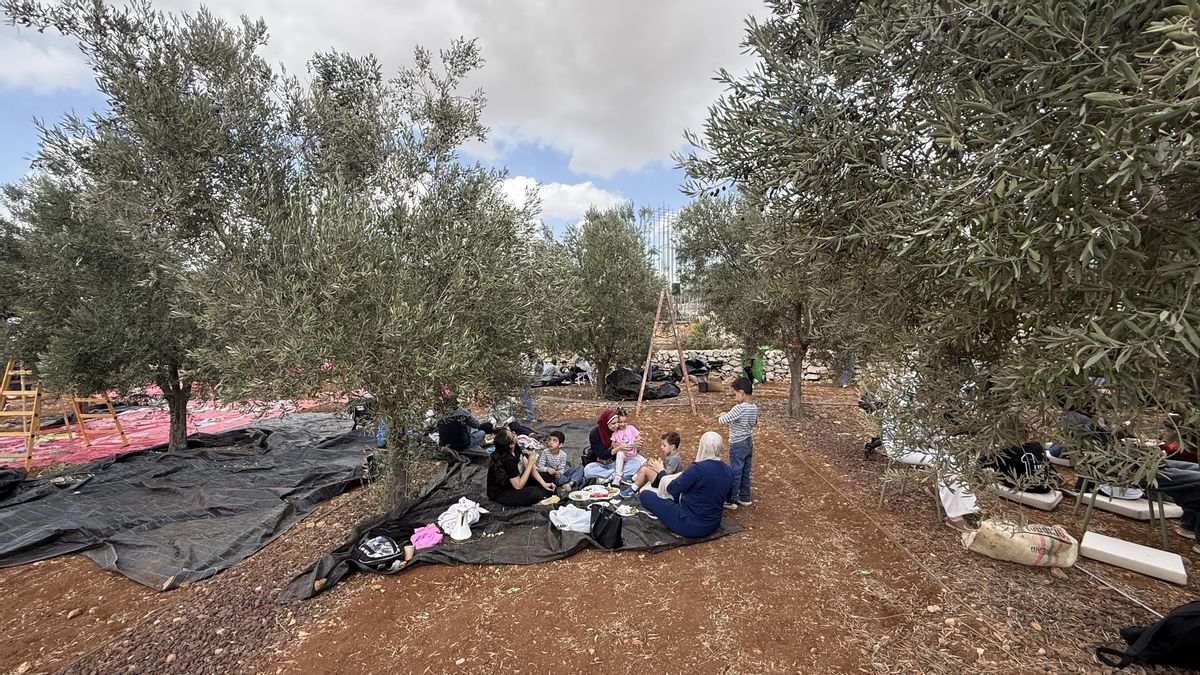
In Palestine, the olive harvest is more than farming. It is a social and cultural tradition that ties families to their land. But this year, that tradition is under severe strain.
Each autumn, Palestinian families return to their olive groves. Several generations gather around trees their parents and grandparents knew. The harvest is not only about picking fruit. It is a chance for relatives and neighbors to meet, share knowledge, and keep alive customs rooted in collective memory. The olive tree is not just a source of food and income. It is part of daily life, popular culture, and Palestinian identity.
For Issam Jabr, a Palestinian farmer and expert in agriculture and the environment, the bond between Palestinians and the olive tree goes far beyond economic value. The tree, he explains, is essential to life, food, and cultural heritage. He adds that the olive tree holds a prominent place in Palestinian folklore and is closely linked to Palestinians' relationship with their land and their determination to remain on it.
**A tradition of mutual help**
The *Awneh* is one of the most significant traditions linked to the olive harvest in Palestinian villages. In this practice, relatives, neighbors, and community members help grove owners pick their crops, reflecting the spirit of cooperation and mutual support in rural Palestinian communities. According to Jabr, the word comes from the Arabic term *awn*, meaning help or assistance.
This tradition matters because the harvest season is relatively short. Cooperation between relatives and neighbors helps farmers finish the work on time and transport olives to presses, where they are turned into olive oil. But the *Awneh* goes beyond practical help. It brings families together to share food, conversation, and work. It also offers chances to learn the customs and traditions of people from other villages and governorates. Jabr describes these gatherings as an important part of the season and highlights the joy, pride, and sense of belonging that come from working together and reconnecting with the land.
These gatherings also pass agricultural knowledge between generations. Younger family members learn how to care for trees, pick fruit, and preserve the harvest. They also learn about the foods, customs, and memories linked to this time of year. In this way, the olive harvest becomes a way to preserve living heritage, not just a seasonal job.
Olive trees are widespread in Palestine's mountainous areas and are an integral part of the landscape of many villages and towns. Olive oil and preserved olives also hold an important place in Palestinian gastronomy. As Jabr explains, Palestinian families preserve olives to eat throughout the year, while olive oil remains an important source of both nutrition and income.
These practical functions cannot be separated from the tree's cultural meaning. Its presence in folklore and popular memory makes it a symbol of the relationship between people and the place they belong to, and of the lives and traditions that develop around the land and its seasonal cycles. Jabr describes the harvest as a chance to reconnect with the land, an experience that fills Palestinians with joy and pride when they pick the fruit of a year's work.
**A harvest facing growing challenges**
Although the olive harvest keeps its social and cultural importance, Palestinian farmers face growing difficulties in reaching their land and picking their fruit, due to access restrictions and settler attacks. According to OCHA, between September 1 and October 19, 2026, 272 Israeli settler attacks were documented, causing one death, 200 injuries, and damage to more than 3,200 olive trees. This exceeds the totals recorded during the full harvest seasons of 2024 and 2025.
Because of these attacks and access restrictions, according to data from the Palestinian Ministry of Agriculture, olive harvest losses have exceeded $157 million since 2023. About 286,000 olive trees in the West Bank were damaged between 2023 and the end of September 2026. The ministry also reported that Israeli authorities have prevented farmers from accessing about 250,000 dunums of land used for olive cultivation, or about 25,000 hectares. That is nearly 30% of the total area used for this crop in the West Bank, estimated at about 750,000 dunums.
These challenges have coincided with attacks reported in different parts of the West Bank in recent days. On October 16, olive pickers from several villages and towns faced incidents including assaults, injuries, stolen harvests, burned trees and vehicles, and blocks on farmers reaching their land.
The consequences go beyond immediate economic losses. When farmers cannot reach their land, they lose not only part of their harvest but also the chance to take part in a season that is central to the social and cultural life of rural communities. Families are deprived of gatherings and traditions practiced and passed down for generations.
Jabr describes the current season as exceptionally difficult. He explains that many farmers have not been able to pick their olives as they usually would. Their absence from the fields affects production and limits the ability of families who depend on the harvest for food and income.
**Protecting the trees, preserving heritage**
For Jabr, protecting the olive tree is inseparable from safeguarding the heritage that has grown around it. He calls for attention to the trees and for support to protect them, given their importance to Palestinian life and their link to the land. He describes the olive tree as a national symbol that helps Palestinians remain steadfast on their land. He stresses that its value goes far beyond the fruit it produces, extending to its cultural and social meaning.
During the harvest, these meanings come alive in everyday scenes: families gathered among the trees, neighbors helping each other pick fruit, generations learning from one another, and olives traveling from fields to presses and finally to the family table.
In Palestine, the olive tree remains much more than a crop. It is part of the history of a place and its people, a memory passed from generation to generation, and a tradition that, every autumn, renews the link between land, identity, and community life.